In brief
Why kidneys fail in diabetes
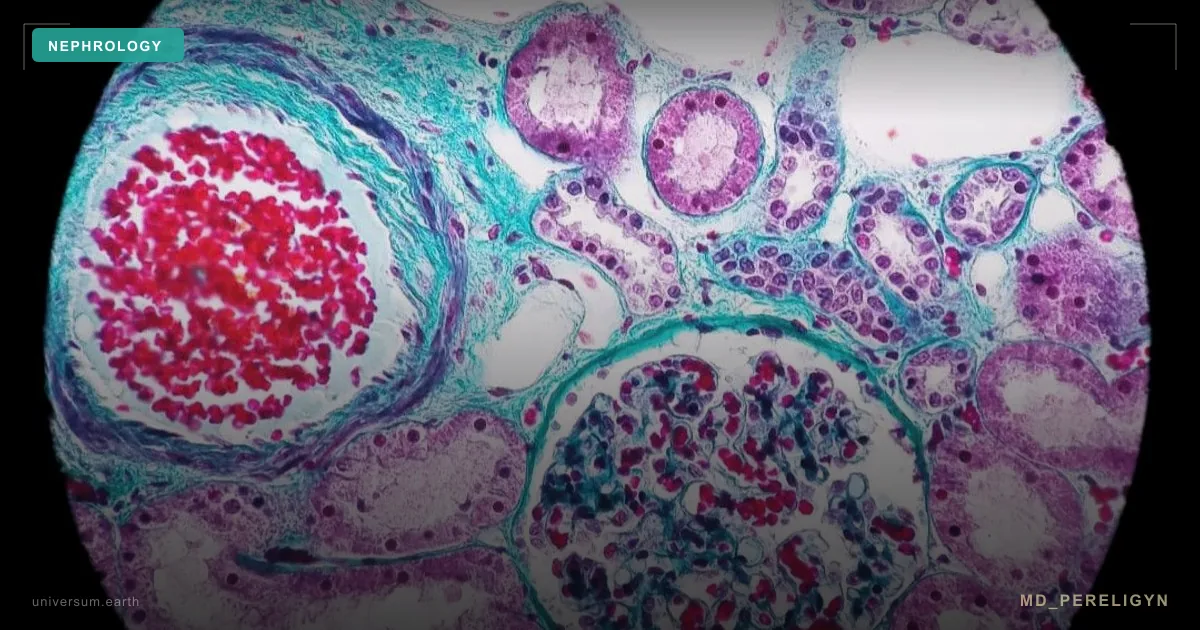
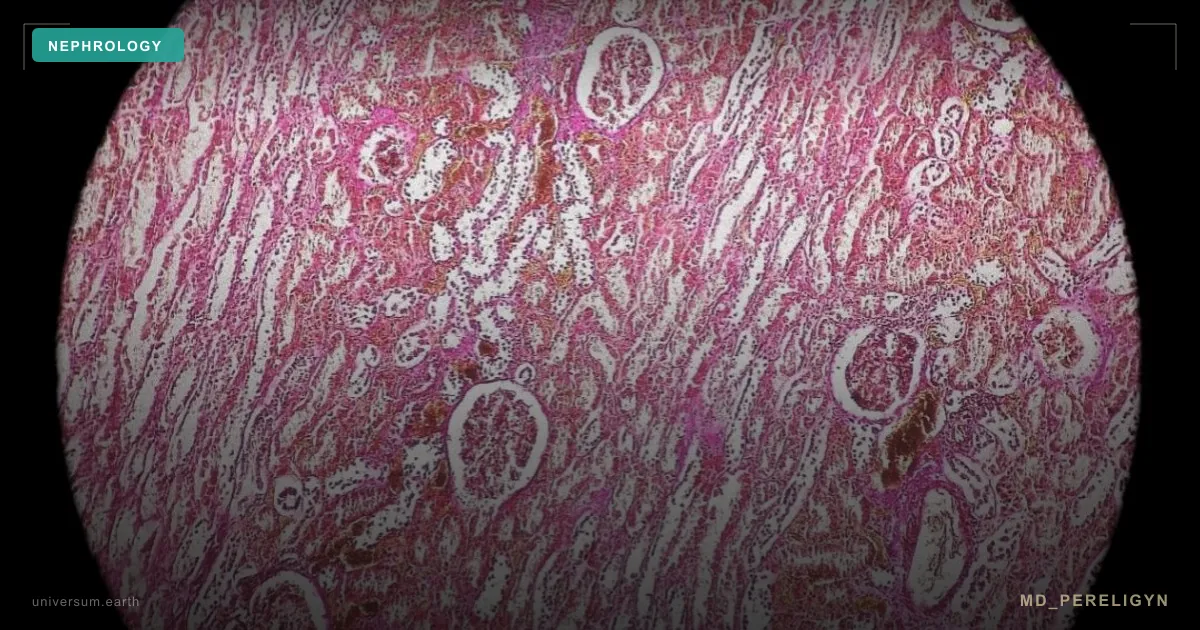
Years of high glucose damage the glomeruli, the kidney's filters. Protein begins to leak through them (albuminuria), and filtration then declines slowly. In parallel a second, less obvious mechanism switches on: aldosterone, the adrenal hormone, acts on the mineralocorticoid receptor in kidney tissue and drives inflammation and fibrosis — the replacement of working tissue with scar.
ACE inhibitors and ARBs partly suppress that path, but over time an escape phenomenon appears: aldosterone rises again. That is precisely the gap finerenone closes.
How it differs from spironolactone
| Spironolactone | Finerenone | |
|---|---|---|
| Structure | Steroidal | Non-steroidal |
| Hormonal side effects | Gynaecomastia, breast tenderness, cycle disturbance | Not characteristic |
| Distribution | More in the kidney | More even between kidney and heart |
| Potassium retention | Marked | Weaker, but monitoring required |
| Evidence in diabetic nephropathy | Limited | Two large outcome trials |
What the trials showed
▸FIDELIO-DKD (NEJM, 2020; n=5,734) — kidney outcomes. Reduced risk of disease progression: sustained decline in filtration, progression to end-stage disease and renal death [1]. ▸FIGARO-DKD (NEJM, 2021; n=7,437) — cardiovascular outcomes. Reduced event rates in the same patient category [2]. ▸An individual-participant meta-analysis (Lancet, 2026) confirms the effect across both lines [3].
For nephrology this is an unusual situation: a drug that improves outcomes for both kidney and heart.
Who it is for
▸adults with chronic kidney disease in type 2 diabetes; ▸typically with albuminuria and reduced or declining filtration; ▸on top of an ACE inhibitor or ARB at the maximally tolerated dose.
Who it is not for: patients with potassium above 5.0 mmol/L at baseline, an estimated GFR below 25 mL/min/1.73 m², adrenal insufficiency, or anyone seeking "kidney prevention" without documented renal involvement.
Dosing and monitoring
| Estimated GFR, mL/min/1.73 m² | Starting dose | Target |
|---|---|---|
| 60 and above | 20 mg/day | 20 mg/day |
| 25–60 | 10 mg/day | 20 mg/day if tolerated |
| Below 25 | Initiation not recommended | — |
Potassium monitoring is part of the therapy, not an optional extra:
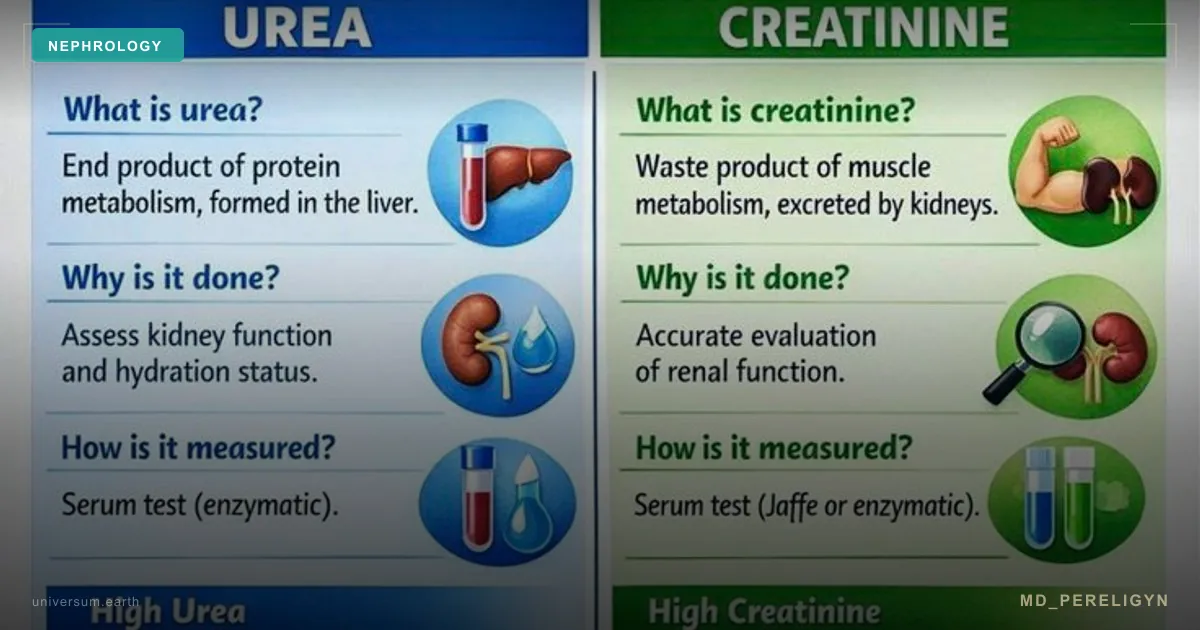
▸before starting — potassium, creatinine with eGFR, urine albumin-to-creatinine ratio; ▸at 4 weeks — potassium and eGFR; the uptitration decision follows from these; ▸at every dose change — repeat check; ▸if potassium rises — reduce the dose or pause, resuming after it normalises.
How it fits with everything else
Modern management of diabetic kidney disease rests on several pillars, and they are not interchangeable:
| Class | What it works through |
|---|---|
| ACE inhibitors and ARBs | Glomerular pressure, reduction of urinary protein |
| SGLT2 inhibitors | Intraglomerular haemodynamics, metabolic effects |
| Finerenone | Suppression of inflammation and fibrosis in kidney tissue |
| GLP-1 receptor agonists | Metabolic control, weight, cardiovascular protection |
Finerenone is added to that structure rather than displacing parts of it.
What matters in practice
▸The effect is not felt. The drug relieves no symptoms — it changes the trajectory of a disease visible only in laboratory results. Hence the familiar adherence problem. ▸Potassium is not a formality. It is the one genuinely demanding element of this therapy, and an ordinary blood test settles it. ▸It does not replace glucose and blood-pressure control. Without those, any nephroprotective drug works at half strength. ▸It is prescription-only, started by a clinician after assessing filtration, albuminuria and potassium.
Prescribing can be discussed at a consultation; the product can be ordered here.
References
1. Bakris GL, et al. Effect of finerenone on chronic kidney disease outcomes in type 2 diabetes (FIDELIO-DKD). N Engl J Med. 2020;383(23):2219–2229. PMID 33264825
2. Pitt B, et al. Cardiovascular events with finerenone in kidney disease and type 2 diabetes (FIGARO-DKD). N Engl J Med. 2021;385(24):2252–2263. PMID 34449181
3. Neuen BL, et al. Efficacy and safety of finerenone in patients with chronic kidney disease: an individual participant data meta-analysis. Lancet. 2026. PMID 42248158
4. KERENDIA (finerenone) US Prescribing Information, Bayer HealthCare Pharmaceuticals.
Key facts
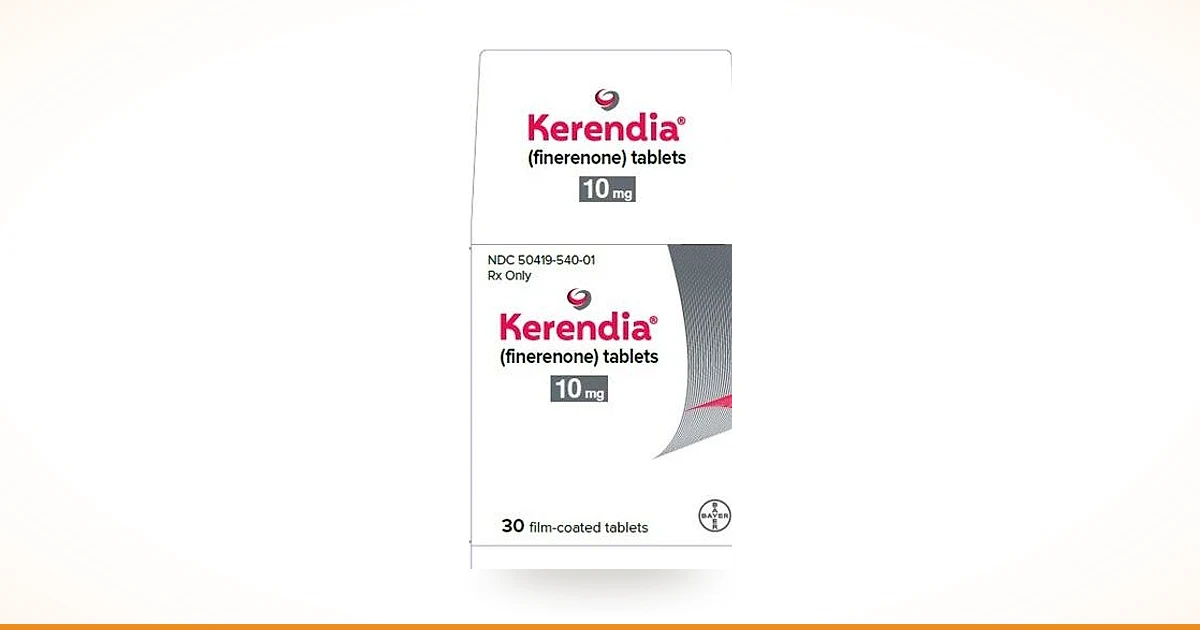
- Finerenone (brand name Kerendia, Bayer) is a non-steroidal mineralocorticoid receptor antagonist. It is neither a hormone nor a diuretic: it intercepts the aldosterone signal that drives inflammation and scarring in the kidney.
- The difference from spironolactone is fundamental. Spironolactone is steroidal and also binds sex-hormone receptors, hence gynaecomastia in men and menstrual disturbance in women. Finerenone is built differently and does not produce those effects.
- Indication: chronic kidney disease associated with type 2 diabetes. It works on top of standard therapy — an ACE inhibitor or ARB at the maximally tolerated dose — not instead of it.
- FIDELIO-DKD (NEJM, 2020): reduced risk of kidney disease progression — sustained decline in filtration, end-stage disease and renal death — versus placebo in 5,734 patients.
- FIGARO-DKD (NEJM, 2021): reduced cardiovascular events in 7,437 patients with diabetic kidney disease. The drug protects the heart as well as the kidney.
- The principal manageable risk is hyperkalaemia. Serum potassium is checked before initiation, four weeks after starting and at every dose change; treatment is paused if potassium runs high.
- Dosing depends on estimated GFR: with eGFR 25–60 mL/min/1.73 m² start at 10 mg daily, with eGFR 60 or above start at 20 mg; the target dose is 20 mg where potassium and tolerance allow.
- Do not start if potassium exceeds 5.0 mmol/L. Initiation is not recommended below an eGFR of 25 mL/min.
- Finerenone, SGLT2 inhibitors and renin-angiotensin blockers act through different mechanisms and complement each other in modern regimens rather than substituting for one another.
- This is not a general "kidney supplement": the indication is specifically diabetic kidney disease, and prescribing requires a confirmed diagnosis with assessment of albuminuria and filtration.