In brief
What kind of drug this is
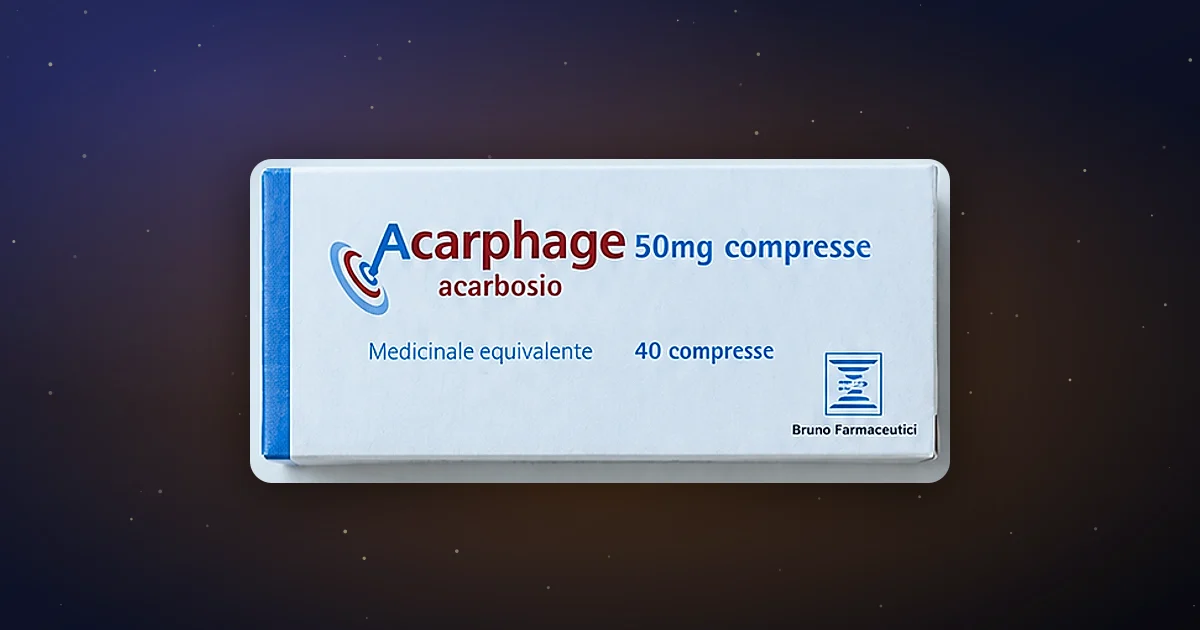
Acarbose is an alpha-glucosidase inhibitor, the best-studied drug of its class. The originator is Bayer's Glucobay, in Europe since the 1990s, sold in the USA as Precose. Acarphage is an Italian generic by Bruno Farmaceutici in 50 and 100 mg tablets; the label «medicinale equivalente» means an equivalent medicine with the same active substance.
Chemically it is a pseudotetrasaccharide — a molecule that looks like a fragment of starch but has one link that enzymes cannot cut. The whole mechanism is built on this resemblance.
How it works: a tablet that never reaches the blood
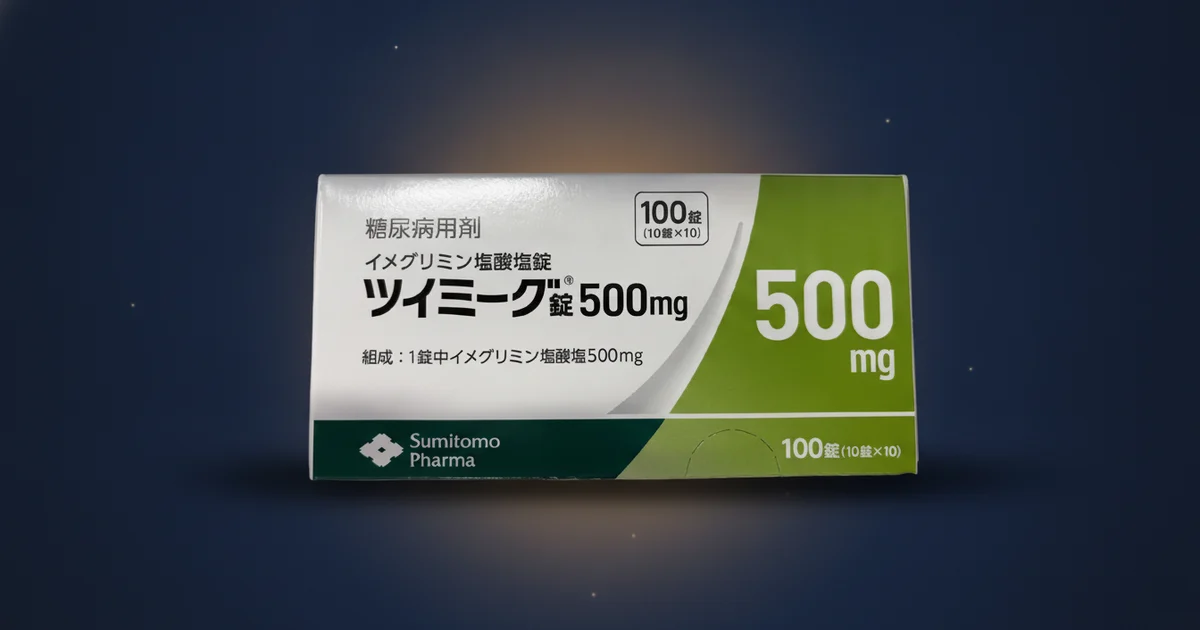
Almost all glucose-lowering drugs act through the blood: they make the pancreas release insulin, help tissues hear it, remove glucose with the urine or, like imeglimin, change how mitochondria work. Acarbose is built differently. Its target is the alpha-glucosidase enzymes on the brush border of the small intestine, which cut starch, maltose and sucrose into glucose molecules. Only glucose is absorbed into the blood; until a carbohydrate is cut, it stays in the gut lumen.
Two consequences follow, and they explain both the pluses and the minuses. First: the post-meal glucose peak becomes lower and later, and the need for insulin is smaller. Second: the carbohydrates that reach the colon become food for bacteria — with all the consequences in the form of gas, but also with a change in the microbiota, discussed below.
One more important property: acarbose does not act on glucose or lactose, because those are not its enzymes. If hypoglycaemia occurs on top of insulin or sulfonylureas, it is reversed only with pure glucose — sugar, honey and sweet tea will not work, because the drug will not let sucrose be broken down.
What is proven: three large trials
| Trial | Who took part | What was compared | Main result |
|---|---|---|---|
| STOP-NIDDM, 2002 | 1,429 people with impaired glucose tolerance, 3.3 years | Acarbose 100 mg × 3 vs placebo | Diabetes developed in 32 % vs 42 %; relative hazard 0.75 (95 % CI 0.63–0.90) |
| ACE, 2017 | 6,522 Chinese patients with coronary heart disease and prediabetes, 5 years | Acarbose 50 mg × 3 vs placebo | New diabetes 13 % vs 16 % (rate ratio 0.82); cardiovascular events the same (0.98) |
| MARCH, 2014 | 788 people with newly diagnosed type 2 diabetes, 48 weeks | Acarbose vs metformin | HbA1c −1.11 % vs −1.12 %; difference 0.01 % |
STOP-NIDDM is the main prevention trial. People with prediabetes (impaired glucose tolerance) were randomly assigned to acarbose or placebo and checked by glucose tolerance test for over three years. On acarbose, diabetes developed in 221 of 682, on placebo in 285 of 686; relative hazard 0.75 (Chiasson JL Lancet 2002. PMID 12086760[1]). In addition, reversion from prediabetes to normal was more frequent on acarbose. An important detail: 31 % of participants on acarbose stopped early versus 19 % on placebo, mostly because of gas and diarrhoea.
In a secondary analysis of STOP-NIDDM there were fewer cardiovascular events on acarbose — hazard ratio 0.51 — and new hypertension was 34 % less frequent (Chiasson JL JAMA 2003. PMID 12876091[2]). A meta-analysis of seven long-term trials in type 2 diabetes found fewer myocardial infarctions (hazard ratio 0.36) and fewer cardiovascular events of any kind (0.65) (Hanefeld M Eur Heart J 2004. PMID 14683737[3]). For years these data fed the hope that acarbose protects the heart.
ACE tested that hope directly and did not confirm it. 6,522 patients with coronary heart disease and prediabetes, 5 years of follow-up, 176 clinics: the composite cardiovascular endpoint occurred in 14 % on acarbose and 15 % on placebo, hazard ratio 0.98 — no difference. Diabetes, however, developed less often: 13 % vs 16 %, rate ratio 0.82 (Holman RR Lancet Diabetes Endocrinol 2017. PMID 28917545[4]). So diabetes prevention is confirmed twice, in different populations, and heart protection is not. What else, besides tablets, reverses prediabetes is covered in How to reverse prediabetes: a complete guide.
MARCH answers a different question: can acarbose be the first drug in diabetes, instead of metformin. In 788 people with newly diagnosed type 2 diabetes, over 48 weeks HbA1c fell by 1.11 % on acarbose and 1.12 % on metformin; hypoglycaemia was rare in both groups (Yang W Lancet Diabetes Endocrinol 2014. PMID 24622668[5]). One caveat: the trial is Chinese, and a diet with a large share of rice and noodles is the ideal target for a drug that slows starch digestion. On a European diet with less starch the effect may be more modest.
Weight: there is an effect, but a small one
A 2023 meta-analysis of randomised trials: versus placebo, acarbose gives −1.25 kg (95 % CI −1.79 to −0.75) and −0.64 kg/m² of body mass index, lowers HbA1c by 0.32 %, fasting insulin, triglycerides by 13.9 mg/dL and systolic blood pressure by 1.3 mmHg (Zamani M Front Nutr 2023. PMID 37599681[6]). A 2020 network meta-analysis with 11,877 participants: with the same HbA1c lowering, acarbose at 300 mg/day gives 1.23 kg more weight loss than DPP-4 inhibitors (Zhang F Front Endocrinol 2020. PMID 32582019[7]).
Microbiota: a side effect that turned out to be interesting
The carbohydrates acarbose did not let be digested reach the colon and become substrate for bacteria — in effect, the drug acts as a prebiotic. In 52 people with prediabetes in a double-blind crossover trial, acarbose increased the share of Lactobacillus, Faecalibacterium and Dialister, while Butyricicoccus and Ruminococcus decreased (Zhang X Diabetes Ther 2017. PMID 28130771[8]). In patients with newly diagnosed diabetes, acarbose, unlike glipizide, increased the share of Lactobacillus and Bifidobacterium, reduced Bacteroides and shifted the plasma bile acid profile towards primary acids; and those with a Bacteroides-dominated microbiota before treatment responded better (Gu Y Nat Commun 2017. PMID 29176714[9]).
What this means for the patient is still unclear: the microbiota changes are described, but it has not been shown that they are what improves glucose or weight. This is a research direction, not a reason to prescribe acarbose «for the microbiota».
Longevity: mice only
In the ITP programme of the US National Institute on Aging, acarbose in the feed increased the median lifespan of genetically heterogeneous mice by 22 % in males and 5 % in females, and maximum lifespan by 11 and 9 % (Harrison DE Aging Cell 2014. PMID 24245565[10]). This is one of the most reproducible results in the pharmacology of ageing in rodents — and at the same time the only level of evidence. There are no human lifespan studies of acarbose; mouse percentages cannot be transferred to people. On how to read such data, see Ten healthy diets compared by biological age.
Reactive hypoglycaemia and the state after bariatric surgery
Because acarbose flattens the post-meal glucose peak, it has long been used off-label in reactive hypoglycaemia — when 1 to 3 hours after a carbohydrate meal blood sugar drops below normal with tremor, sweating and weakness. In a double-blind study of 24 people, 100 mg of acarbose with a sucrose load reduced both the glucose peak and the subsequent dip (Gérard J Int J Clin Pharmacol Ther Toxicol 1984. PMID 6698657[11]).
After gastric bypass such dips can be especially deep. In 11 women with documented post-bypass hypoglycaemia, acarbose 50 mg raised the glucose nadir in a mixed-meal test from 3.4 to 3.9 mmol/L and shortened the time in hypoglycaemia (Øhrstrøm CC Diabetes Obes Metab 2019. PMID 31144430[12]). But in the first placebo-controlled trial, HypoBar I — 4 weeks, continuous glucose monitoring — neither acarbose nor canagliflozin reduced the share of time below 3.9 mmol/L; only secondary measures improved — glucose variability and the number of symptomatic episodes (Lobato CB Diabetes Obes Metab 2026. PMID 41810556[13]). So in post-surgical hypoglycaemia acarbose is a reasonable attempt, not a proven treatment.
What cannot yet be said
The honest boundary of the evidence looks like this. Proven: diabetes prevention in people with prediabetes (two large trials), efficacy in newly diagnosed diabetes no worse than metformin (one large trial in an Asian population), a small reduction in weight and triglycerides. Not proven: heart protection (ACE was negative), a microbiota benefit in clinical outcomes, lifespan extension in humans, efficacy in post-bariatric hypoglycaemia (the primary endpoint of HypoBar I was not met). Not studied: use in people with normal blood sugar «for prevention» or «for longevity».
Who should not take it and what to check first
Contraindications per the manufacturer's label: inflammatory bowel disease (Crohn's disease, ulcerative colitis), intestinal obstruction or predisposition to it, large hernias, chronic conditions with impaired digestion or absorption, severe renal impairment (creatinine clearance below 25 mL/min), liver cirrhosis, pregnancy, breastfeeding, age under 18. Any of these is a reason not to start.
How it is taken per the label
The tablet is taken with the first mouthful of a meal — swallowed whole or chewed: the drug must reach the intestine together with the carbohydrates. Treatment starts at 50 mg one to three times a day and the dose is increased gradually, in steps of several weeks, to the usual maintenance dose of 50–100 mg three times a day; the label maximum is 300 mg per day (in the USA, 150 mg for body weight up to 60 kg). Slow dose escalation is the main way to reduce gas and diarrhoea; the second is to cut sucrose in food, because undigested sucrose produces the most fermentation. The dose and schedule are the doctor's decision; this describes the label, it is not a recommendation.
Comparison with metformin and imeglimin
| Acarbose | Metformin | Imeglimin | |
|---|---|---|---|
| Where it acts | Small-intestinal lumen | Liver, muscle (via blood) | Mitochondria (via blood) |
| HbA1c lowering | −1.1 % (MARCH); −0.3 % in meta-analyses vs placebo | −1 to −1.5 % | −0.6 to −0.9 % |
| Weight | −1.2 kg | −1 to −2 kg | Neutral |
| Hypoglycaemia on its own | No | No | No |
| Main side effects | Gas, diarrhoea | Nausea, diarrhoea, B12 deficiency | Nausea, diarrhoea |
| Kidney limit | Clearance < 25 mL/min | eGFR < 30 mL/min | Data down to dialysis |
| Diabetes prevention | Proven (STOP-NIDDM, ACE) | Proven (DPP) | Not studied |
Imeglimin is covered in detail in Imeglimin: a new word in type 2 diabetes treatment. Acarbose's place in this trio is the patient whose main problem is precisely post-meal glucose, who does not want or cannot take metformin, and who is prepared to put up with the first weeks of gas for a drug that never enters the blood.
The bottom line
Acarbose is a rare case of a drug with a clear mechanism, a thirty-year history and two large trials that agree on one thing: in people with prediabetes it lowers the risk of diabetes by 18–25 %. In newly diagnosed diabetes it matched metformin, it does not add weight and on average slightly reduces it. The price is gas and diarrhoea in the first weeks and the discipline of taking it with every meal. What it does not do: it does not protect the heart according to the largest trial, does not extend human lifespan and does not replace obesity treatment.
Acarphage (acarbose 50 mg, 40 tablets) can be ordered in our shop; prescription, dose and lab monitoring are arranged at a consultation.
This material is for information only and does not replace a medical consultation. Acarbose is a prescription drug; the decision to prescribe it and the dose are made by a doctor on the basis of test results.
References
- Chiasson JL Lancet 2002. PMID 12086760
- Chiasson JL JAMA 2003. PMID 12876091
- Hanefeld M Eur Heart J 2004. PMID 14683737
- Holman RR Lancet Diabetes Endocrinol 2017. PMID 28917545
- Yang W Lancet Diabetes Endocrinol 2014. PMID 24622668
- Zamani M Front Nutr 2023. PMID 37599681
- Zhang F Front Endocrinol 2020. PMID 32582019
- Zhang X Diabetes Ther 2017. PMID 28130771
- Gu Y Nat Commun 2017. PMID 29176714
- Harrison DE Aging Cell 2014. PMID 24245565
- Gérard J Int J Clin Pharmacol Ther Toxicol 1984. PMID 6698657
- Øhrstrøm CC Diabetes Obes Metab 2019. PMID 31144430
- Lobato CB Diabetes Obes Metab 2026. PMID 41810556
Key facts
- Acarbose is an alpha-glucosidase inhibitor: it blocks the brush-border enzymes of the small intestine that cut starch and sucrose into glucose. It acts in the gut lumen; less than 2 % of the dose is absorbed into the blood.
- STOP-NIDDM (1,429 people with impaired glucose tolerance, 3.3 years): progression to type 2 diabetes 32 % on acarbose vs 42 % on placebo, relative hazard 0.75 (Chiasson JL Lancet 2002. PMID 12086760).
- ACE (6,522 Chinese patients with coronary heart disease and prediabetes, 5 years): 18 % fewer new cases of diabetes (rate ratio 0.82), but no fewer cardiovascular events than placebo (Holman RR Lancet Diabetes Endocrinol 2017. PMID 28917545).
- MARCH (788 people with newly diagnosed type 2 diabetes, 48 weeks): HbA1c reduction −1.11 % on acarbose vs −1.12 % on metformin, a 0.01 % difference (Yang W Lancet Diabetes Endocrinol 2014. PMID 24622668).
- Weight: a 2023 meta-analysis found −1.25 kg and −0.64 kg/m² vs placebo; a 2020 network meta-analysis found −1.23 kg vs DPP-4 inhibitors with the same HbA1c lowering. A side benefit, not a weight-loss drug.
- The most common side effects are bloating, gas and diarrhoea: carbohydrates not broken down in the small intestine reach the bacteria of the colon. In ACE they led to dose changes or discontinuation in 7 % vs 5 % on placebo; they usually fade with slow dose escalation.
- Hypoglycaemia on acarbose combined with insulin or sulfonylureas is treated only with pure glucose (dextrose): the drug will not let table sugar or sweet tea be broken down.
- Label contraindications: inflammatory bowel disease, intestinal obstruction or predisposition to it, hernias at risk of strangulation, malabsorption syndromes, severe renal impairment (creatinine clearance below 25 mL/min), cirrhosis, pregnancy and breastfeeding.
- Lifespan extension has been shown only in mice (median +22 % in males, Harrison DE Aging Cell 2014. PMID 24245565); there are no such data in humans.