Key points
Why the body needs B12
Vitamin B12 (cobalamin) is needed to make red blood cells, for nerve function and for metabolism. When it runs short, red blood cells become large and fewer — anemia develops; the nerves suffer too. Hence the typical complaints: weakness and fatigue, pallor, tingling and numbness in the hands and feet, unsteady gait, worsening memory, and sometimes an inflamed, smooth tongue.
With clear signs of deficiency, treatment is not delayed even if the test does not confirm it — to prevent nerve damage (Devalia V Br J Haematol 2014. PMID 24942828[6]).
Who is at risk
Which tests to take
There is no single “gold standard” for B12 deficiency, so the tests are assessed together with symptoms. Serum B12 is usually tested first; holotranscobalamin, the active form of B12, can also be the first test. If the result is borderline, the doctor may add methylmalonic acid; homocysteine also helps, but it is less specific (Devalia V Br J Haematol 2014. PMID 24942828[6]).
Along with B12, a complete blood count and folate are usually checked: folate deficiency causes a similar anemia. If fatigue and low energy bother you, it is worth looking into other causes too — see the article Stress axis: sleep, energy and which tests to discuss.
How B12 is replenished
What the studies showed
| What was studied | Who took part | Result |
|---|---|---|
| Deficiency rate after 60, 2009 | Large surveys in the US and UK | Deficiency in 6%, borderline level in almost 20% |
| Vegetarians, review of 18 studies, 2013 | Pregnant women, children, adolescents, older adults | Deficiency in 11–90% across groups |
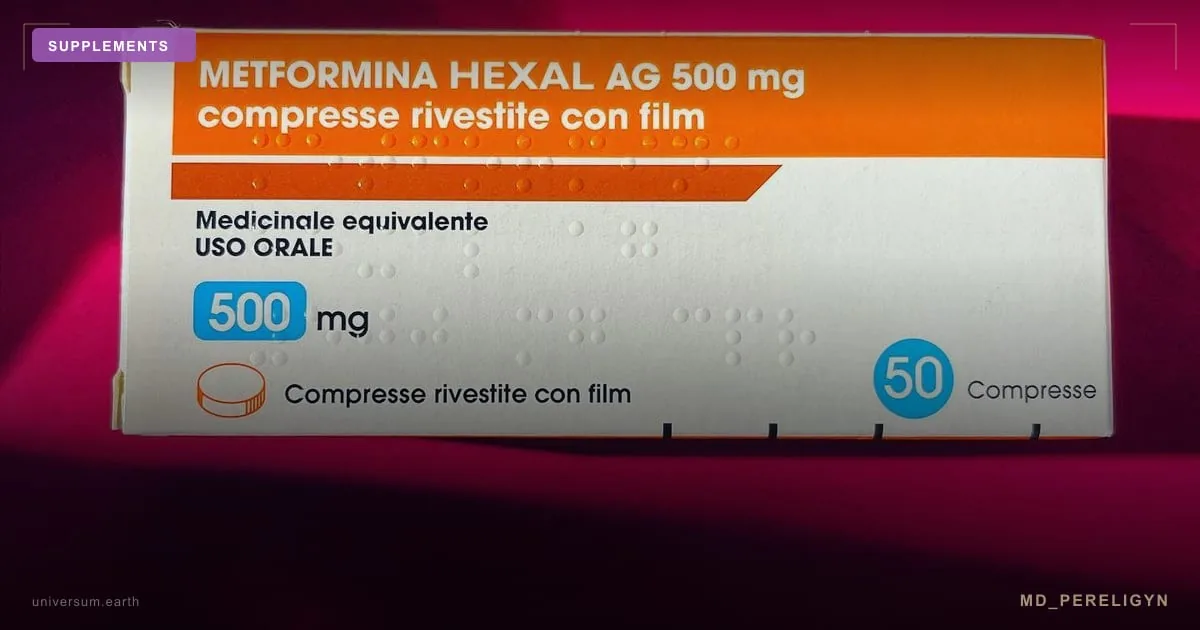
| Metformin, after 13 years, 2016 | 1,520 people with prediabetes | Low or borderline B12 in 20.3% vs 15.6% |
| Heartburn medicines for 2 years or more, 2013 | 25,956 people with deficiency vs 184,199 without | Proton pump inhibitors: odds ×1.65; H2 blockers: ×1.25 (association) |
| Tablets vs injections, 4 months, 1998 | 38 patients, 33 in the analysis | Improvement in blood and nerves did not differ; B12 level higher on tablets |
| Cochrane review, 2018 | 3 studies, 153 people | In 2 of 3, with 1,000 µg a day, B12 level as with injections; low-quality data |
Not everything is equally well proven: there are few studies of tablets versus injections, and none provided symptom data usable for the Cochrane review (Wang H Cochrane Database Syst Rev 2018. PMID 29543316[7]); the heartburn-medicine study shows an association and does not prove the cause (Lam JR JAMA 2013. PMID 24327038[4]).
Who should be more careful
- If tingling, numbness, unsteady gait or worsening memory appear, see a doctor without delay: nerves recover better when treated early.
- If you have been taking metformin or heartburn medicines for years, discuss B12 testing with your doctor.
- Vegetarians, vegans and pregnant women on a plant-based diet should discuss taking B12 in advance.
Bottom line
B12 deficiency is common: it can be suspected from risk group and symptoms and then checked with tests. Replenishing B12 is not hard: in small studies, high oral doses raised B12 levels no worse than injections, and with neurological symptoms treatment usually starts with injections. You can look into the causes of fatigue and choose a regimen at a consultation.
This material is for information only and does not replace a doctor’s consultation. The dose and form of B12 are chosen by a doctor based on test results.
References
- Allen LH Am J Clin Nutr 2009. PMID 19116323
- Pawlak R Nutr Rev 2013. PMID 23356638
- Aroda VR J Clin Endocrinol Metab 2016. PMID 26900641
- Lam JR JAMA 2013. PMID 24327038
- Kuzminski AM Blood 1998. PMID 9694707
- Devalia V Br J Haematol 2014. PMID 24942828
- Wang H Cochrane Database Syst Rev 2018. PMID 29543316
Key facts
- According to surveys in the US and UK, after age 60 about 6% of people have B12 deficiency (below 148 pmol/L, or 200 pg/mL), and almost 20% have a borderline level (Allen LH, Am J Clin Nutr 2009).
- Among vegetarians, deficiency was found in 11–90% of older adults and 62% of pregnant women; in vegans it was more common than in vegetarians (Pawlak R, Nutr Rev 2013).
- Each year of metformin use was associated with 13% higher odds of B12 deficiency (Aroda VR, J Clin Endocrinol Metab 2016).
- With a supply of proton pump inhibitors (heartburn medicines) for 2 years or more, the odds of B12 deficiency were 1.65 times higher (Lam JR, JAMA 2013).
- 2 mg of B12 a day by mouth for 4 months improved blood and nerve measures as well as injections did, and raised B12 levels higher (Kuzminski AM, Blood 1998).