The brain gives no pain signal when it is being lost. No organ tells you: "today you lost a million neurons." You simply notice one day that it has become harder to hold a thought, recall a name, finish a sentence without a pause — and you blame fatigue.
The problem is that a reserve spent unnoticed for years does not rebuild at the pace it was spent. While you focus on what is visible — weight, blood pressure, glucose — the most heavily loaded organ works in the shadows, and the first person to notice the change is often not you, but the people around you.
🌀
Why you find out about it last
This is not a metaphor — it is a documented clinical pattern. Diagnostic criteria for subjective cognitive decline (SCD) explicitly include informant confirmation, precisely because the person themselves senses a shift before objective in-office testing catches it. The gap between subjective sense and objective measurement is not an anxious patient's imagination — it is an early phase of the process that outruns lab/test detection.
In a cohort of 579,710 people aged 66 in South Korea, subjective cognitive complaints were associated with a 38% higher risk of subsequent dementia (adjusted HR 1.38, 95% CI 1.34–1.41) compared to those without complaints (Lee YC, Alzheimer's Research & Therapy 2020, PMID 32375880[1]). A complaint is not a diagnosis. It is a statistically significant signal that deserves attention rather than "it's just age."
🌀
What fails first — not memory, but the ability to steer thought
The standard expectation is that cognitive aging begins with forgetfulness. The data say otherwise: it is often not the storage of memories that fails first, but the dispatcher that manages them — executive function.
In a study of preclinical Alzheimer's pathology in cognitively healthy people, only one test independently predicted the presence of pathology — Stroop interference, a measure of the ability to suppress an automatic but incorrect response (response inhibition): OR 0.13, 95% CI 0.04–0.42 (Harrington MG, PLoS One 2013, PMID 24260210[2]). Memory in that study was still indistinguishable from normal — the executive failure preceded it.
What this looks like outside the lab, in an ordinary day:
▸Harder to filter — you say or do things you would previously have filtered out automatically, without noticing the pause it used to take to "weigh" a response. ▸Harder to switch — holding two tasks in mind at once (conversation + cooking, a call + driving) takes noticeably more effort than a year ago. ▸Slower to "land" — not that you don't understand, but processing the same information takes a few extra seconds. Processing speed, independent of executive function, is one of the domains that declines most sharply with age. ▸Harder to finish a thought without a pause — not losing a word entirely, but a second's hesitation searching for it that previously wasn't needed.
No single one of these signs is a diagnosis on its own. Their accumulation and progression is a reason not to wait for "real" forgetfulness to appear.
🌀
This is not a story about the age on your passport
Cognitive aging is usually tied to calendar age, but the measurable "brain age" reacts to lifestyle faster and earlier than most people assume.
In a study of 134 healthy volunteers (mean age 25.3, range 19–39), a single night of total sleep deprivation increased MRI-predicted "brain age" by an average of 1 to 2 years compared to baseline. The effect was reversible: after one night of recovery sleep, brain age returned to baseline (Chu C, The Journal of Neuroscience 2023, PMID 36804738[3]). This does not mean irreversible aging from one sleepless night — it means the brain-aging biomarker is plastic and acutely responsive to lifestyle in very young people.
An even more striking example is insulin resistance, usually discussed in the context of patients aged 40–50. In a study of 79 cognitively healthy participants without a diabetes diagnosis (younger group mean 27.8, older group mean 75.5), higher insulin resistance was associated with worse working memory and reduced cerebral glucose metabolism in prefrontal and temporal regions — and this association was specifically pronounced in the younger group, not observed in the older participants of the same study (Deery HA, NPJ Metabolic Health and Disease 2024, PMID 40604159[4]).
The practical takeaway: metabolic health and sleep quality are not "prevention for later" — they are factors that measurably affect cognitive function already at 25–30, often earlier than in people twice that age.
🌀
What is proven to work — a breakdown by substance
The principle here is simple: mechanism plus a controlled trial, without "ancient wisdom says so" and without presenting a preliminary signal as a proven protocol.
| Substance | Dose | Result |
|---|---|---|
| Lithium | ~0.17 mEq/L | memory 0.73 vs 1.42 pts/yr (p=.05) |
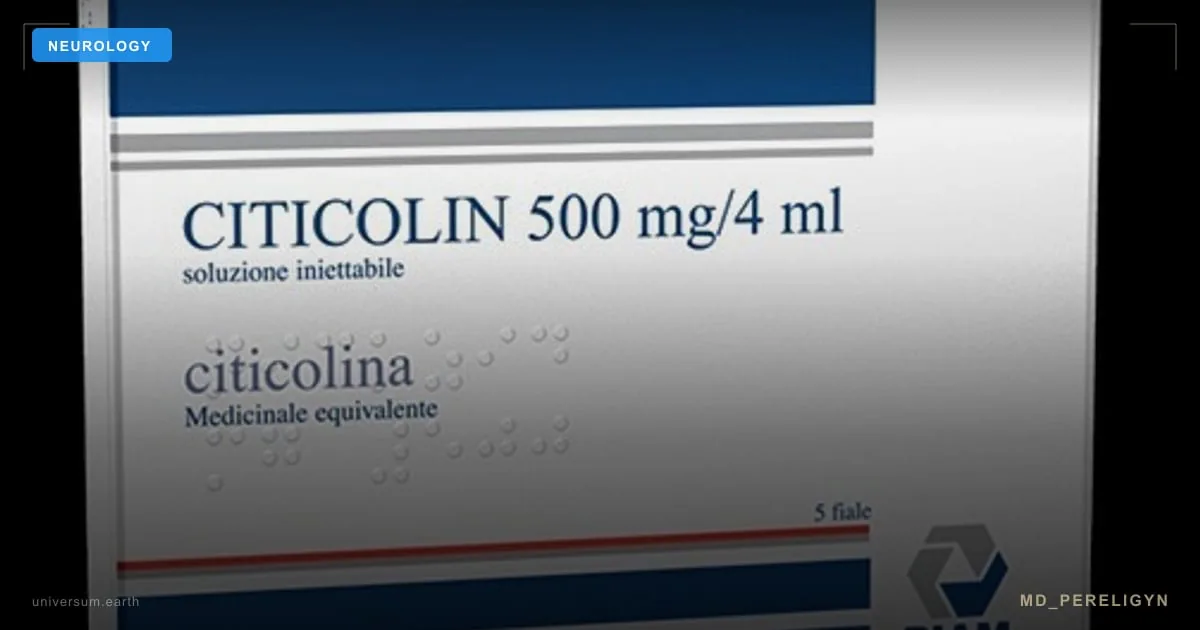
| Citicoline | 500 mg/day | episodic memory ↑ (P=0.0025) |
| Homocysteine+B12/folate | 0.8/0.5/20 mg | atrophy −30–53% |
| Omega-3 | — | no effect (Cochrane) |
🌀
What is NOT proven — and why it matters to say so plainly
Omega-3 (DHA/EPA) is one of the most heavily marketed "brain foods." A Cochrane systematic review of 3 RCTs with 4,080 participants found no difference in MMSE or other cognitive tests between omega-3 and placebo over 24–40 months in cognitively healthy older adults (Sydenham E, Cochrane Database of Systematic Reviews 2012, PMID 22696350[8]). This does not mean omega-3 is useless in general — there is separate evidence of benefit once decline has already begun. But specifically as prevention in healthy people, the claimed effect is not supported by controlled trials. Saying otherwise is not optimism — it is inaccuracy.
🌀
A monitoring protocol
▸Homocysteine + B12 + folate — the only marker above where a detected deficiency has a direct, measurable (MRI-confirmed atrophy) intervention with a 30–53% effect. ▸TSH and free T4 — hypothyroidism clinically mimics cognitive decline and is fully reversible with correction; rule out first. ▸Neuropsychological testing with an emphasis on executive function (not just MMSE) — if the complaint is persistent, standard screening may still be normal early on precisely because executive failure precedes memory loss. ▸An informant — ask someone close to you whether they notice changes you have not registered yourself. This is part of the formal diagnostic criteria, not a formality.
Deliberate attention to your own thinking is not anxiety — it is the one tool available to everyone that catches the signal before any lab test does. To review your specific picture — book a consultation.
References
Key facts
- Subjective cognitive complaints carried a 38% higher dementia risk (HR 1.38) in a cohort of 579,710 people (PMID 32375880).
- Executive function fails before memory: Stroop interference alone predicted preclinical Alzheimer’s pathology (PMID 24260210).
- One night of total sleep deprivation raised MRI “brain age” by 1–2 years; reversible after recovery sleep (PMID 36804738).
- Citicoline 500 mg/day for 12 weeks improved episodic memory in healthy adults 50–85 vs placebo (P=0.0025, PMID 33978188).
- VITACOG: folate+B12+B6 over 2 years cut brain atrophy by 30%, and by 53% with high homocysteine (PMID 20838622).