Migraine: The Third Leading Cause of Disability Worldwide
Migraine ranks third among causes of disability worldwide according to the Global Burden of Disease Study (GBD, Lancet, 2018). It affects approximately 1 billion people: 18% of women and 6% of men. Despite its prevalence, migraine remains one of the most underdiagnosed and inadequately treated neurological conditions.
Migraine vs Cluster Headache vs Tension-Type Headache
Aura: Neurophysiology and Clinical Significance
Aura is transient focal neurological symptoms preceding or accompanying migraine. It results from cortical spreading depression (CSD) — a wave of neuronal excitation followed by depression propagating across the cortex at 3-5 mm/min.
Most common aura types: - Visual (90%): scintillating scotoma, zigzag lines, tunnel vision - Sensory (30%): paresthesias, numbness (typically hand to face) - Speech (10%): aphasia, dysarthria
Migraine with aura is associated with increased ischemic stroke risk (RR 2.16, meta-analysis Schurks et al., BMJ, 2009), especially in women taking COCs who smoke.
The CGRP Pathway: A Revolution in Understanding Migraine
Calcitonin gene-related peptide (CGRP) is a neuropeptide central to migraine pathophysiology. When the trigeminovascular system is activated, trigeminal sensory neurons release CGRP, causing meningeal vasodilation, neurogenic inflammation (mast cell degranulation, pro-inflammatory cytokine release), and peripheral and central sensitization.
Serum CGRP levels rise during migraine attacks and correlate with pain intensity (Goadsby et al., NEJM, 2017). This discovery spawned an entirely new drug class — anti-CGRP therapy.
Triptans: The Gold Standard for Acute Treatment
Triptans (sumatriptan, zolmitriptan, rizatriptan, eletriptan) are 5-HT1B/1D receptor agonists. They constrict meningeal vessels, inhibit CGRP release, and block pain transmission in the trigeminal nucleus. Meta-analysis by Ferrari et al. (Lancet, 2001): eletriptan and rizatriptan showed the highest efficacy.
Critically, taking a triptan within the first 30-60 minutes of an attack increases efficacy from 30% to 70%. Later use — after central sensitization (allodynia) develops — is far less effective.
Evidence-Based Migraine Prevention Protocol
Magnesium (L-Threonate)
Magnesium deficiency is found in 30-50% of migraine patients. Magnesium modulates NMDA receptors, serotonin receptors, and stabilizes CSD. RCT by Peikert et al. (Cephalalgia, 1996): 600 mg magnesium daily reduced attack frequency by 41.6%. L-threonate form preferred for superior blood-brain barrier penetration. Dosage: 144 mg elemental magnesium (2,000 mg L-threonate) daily.
Coenzyme Q10 (Ubiquinol)
CoQ10 improves mitochondrial function. Mitochondrial energy deficit is one mechanism predisposing to CSD. RCT by Sandor et al. (Neurology, 2005): CoQ10 300 mg/day reduced attack frequency by 47.6% over 3 months. Recommendation: 200-400 mg/day ubiquinol.
Riboflavin (Vitamin B2)
Riboflavin is a cofactor in the mitochondrial electron transport chain. RCT by Schoenen et al. (Neurology, 1998): 400 mg/day reduced migraine frequency by 50% in 59% of patients. Minimum evaluation period: 3 months.
Botulinum Toxin (Botox)
OnabotulinumtoxinA is approved for chronic migraine prevention (15 or more headache days/month, of which 8+ are migrainous). PREEMPT protocol: 155-195 units across 31-39 injection sites every 12 weeks. Dodick et al. (Headache, 2010): reduction of 8-9 headache days per month.
Anti-CGRP Monoclonal Antibodies
Erenumab (Aimovig), fremanezumab (Ajovy), galcanezumab (Emgality) — monthly subcutaneous injections. Reduce migraine frequency by 50%+ in 50-60% of patients (Goadsby et al., NEJM, 2017). Well tolerated with minimal side effects. Indicated after failure of 2+ conventional preventive medications.
Non-Pharmacological Prevention Strategies
Frequently Asked Questions
How do you distinguish migraine from a dangerous headache? Red flags: sudden severe onset ("thunderclap"), new onset after age 50, progressive worsening, neurological deficits (weakness, diplopia, seizures), fever, neck stiffness. Any of these require immediate neuroimaging (MRI/CT).
Can triptans be taken daily? No. Using triptans more than 10 days/month leads to medication-overuse headache. Maximum: 2-3 days per week.
How long before prevention takes effect? Minimum 2-3 months of consistent use (magnesium, CoQ10, riboflavin). Anti-CGRP antibodies may work from the first month. Botox typically after 2-3 sessions.
Is migraine hereditary? Yes. Genetic predisposition is well established. First-degree relatives have 2-4 fold increased risk. Migraine with aura has a stronger genetic component.
Is magnesium safe during pregnancy? Magnesium citrate and glycinate are safe during pregnancy and are among the few permitted preventive options for pregnant migraineurs. Data on L-threonate in pregnancy is insufficient.
This article is for educational purposes only and does not constitute medical advice. Always consult a qualified healthcare professional before starting any treatment.
🌀
ICHD-3 Diagnostic Criteria: Codifying the Clinical Picture
The International Classification of Headache Disorders, 3rd edition (ICHD-3) is the reference standard used by the International Headache Society and adopted by every guideline-issuing body, including the American Headache Society and the European Headache Federation. Diagnosis is purely clinical; no biomarker or imaging finding is required or sufficient.
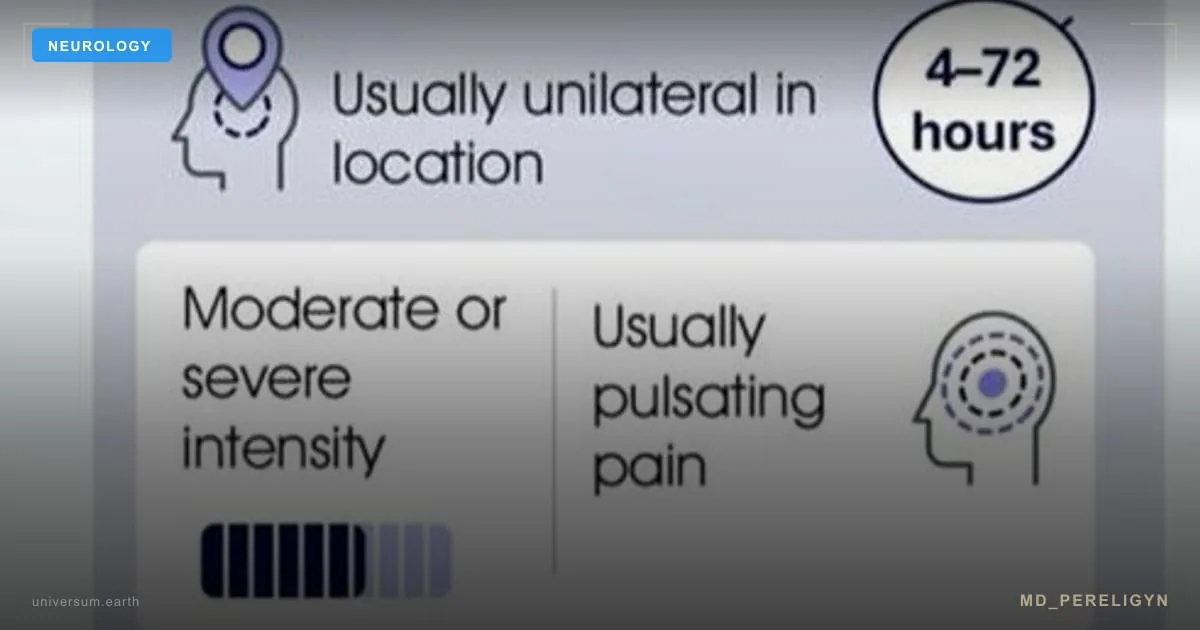
Migraine without aura (ICHD-3 code 1.1) requires: - A. At least 5 attacks fulfilling criteria B–D. - B. Headache lasting 4–72 hours (untreated or unsuccessfully treated). - C. At least 2 of 4 pain characteristics: unilateral location, pulsating quality, moderate-to-severe intensity, aggravation by or causing avoidance of routine physical activity. - D. During headache at least 1 of: nausea and/or vomiting, photophobia and phonophobia. - E. Not better accounted for by another ICHD-3 diagnosis.
Migraine with aura (ICHD-3 code 1.2) requires: - A. At least 2 attacks fulfilling B and C. - B. One or more fully reversible aura symptoms: visual, sensory, speech/language, motor, brainstem, or retinal. - C. At least 3 of 6: at least one aura symptom spreads gradually over ≥5 minutes; two or more symptoms occur in succession; each individual aura symptom lasts 5–60 minutes; at least one symptom is unilateral; at least one symptom is positive (e.g., scintillations, paresthesias); aura is accompanied or followed within 60 minutes by headache.
Chronic migraine (ICHD-3 code 1.3) is defined as headache on ≥15 days per month for >3 months, of which ≥8 days meet criteria for migraine or respond to migraine-specific acute treatment. Medication-overuse headache must be explicitly considered before assigning the diagnosis [PMID: 29368949[1]].
Probable migraine (subtype 1.5) applies when all but one criterion is met and the alternative diagnosis is unlikely. Vestibular migraine has separate criteria (Appendix A1.6.6) requiring at least 5 episodes of moderate-to-severe vestibular symptoms lasting 5 minutes to 72 hours, with at least half of episodes associated with migrainous features.
Neuroimaging (MRI preferred over CT) is indicated only when red flags are present (SNNOOP10 mnemonic: systemic symptoms, neurological deficit, new onset after age 50, abrupt onset, pattern change, papilledema, postural component, precipitated by Valsalva, pregnancy/postpartum, painful eye, post-traumatic, pathology of immune system, painkiller overuse). Routine imaging in a patient with stable migraine and a normal neurological examination has a yield of incidental findings <2% and clinically actionable findings <0.2%.
🌀
Menstrual Migraine: Hormonal Pathophysiology and Mini-Prevention
Approximately 50–60% of women with migraine without aura report menstrual association, and 7–14% meet ICHD-3 criteria for pure menstrual migraine (attacks exclusively on days −2 to +3 of menstruation, in at least two of three consecutive cycles). The trigger is the perimenstrual estradiol withdrawal: a fall of ≥15 µg/L in serum estradiol over 48 hours destabilizes the trigeminovascular system and lowers CSD threshold [PMID: 28233356[2]].
Menstrual migraine attacks are longer (median 2 days versus 1 day), more refractory to acute treatment, and more likely to recur within 24 hours after a triptan dose than non-menstrual attacks. Acute treatment is identical in principle to non-menstrual attacks (oral triptan within 30–60 minutes of onset), but recurrence rates of 40–60% justify a planned second dose or a longer half-life agent.
Mini-prevention (short-term perimenstrual prophylaxis) is the strategy with the best RCT evidence for predictable menstrual migraine: - Frovatriptan 2.5 mg twice daily on day −2 through day +3 (six days). Two placebo-controlled RCTs showed ~50% reduction in menstrual migraine incidence [PMID: 27062863[3]]. - Naratriptan 1 mg twice daily for 5–6 perimenstrual days — comparable efficacy but more recurrence than frovatriptan. - Zolmitriptan 2.5 mg two or three times daily for 7 perimenstrual days — also Level A evidence. - Naproxen 550 mg twice daily for 6–7 perimenstrual days — Level B, useful when triptans are contraindicated.
Continuous (non-cyclic) combined hormonal contraception with low-dose ethinyl estradiol (20 µg) can flatten the estradiol drop and is preferred in selected patients without aura. Migraine with aura remains a relative contraindication to combined oral contraceptives because of the additive ischemic stroke risk; progestin-only methods are preferred.
Anti-CGRP monoclonal antibodies (erenumab, fremanezumab, galcanezumab) reduce menstrual migraine days by 50–60% in post hoc analyses of phase 3 trials and represent a valid option when mini-prevention fails or when migraine is not purely menstrual.
🌀
Status Migrainosus: Stepped Rescue for the Attack That Will Not Break
Status migrainosus (ICHD-3 code 1.4.1) is a debilitating migraine attack lasting more than 72 hours despite usual treatment. It affects an estimated 5–15% of migraineurs at least once in their lifetime and is the most common migraine-related cause of emergency department presentation.
Outpatient rescue, when the patient still tolerates oral intake, follows a stepped sequence:
1. A second triptan dose taken at least 2 hours after the first, combined with a long-acting NSAID (naproxen 500 mg) — the triptan-NSAID combination outperforms either agent alone for sustained pain freedom [PMID: 27062863[3]]. 2. A dopamine antagonist with an antihistamine: metoclopramide 10 mg orally or prochlorperazine 10 mg, plus diphenhydramine 25–50 mg to prevent akathisia and dystonia. Metoclopramide alone has Level B evidence for acute migraine; combined with diphenhydramine it approaches triptan efficacy. 3. Dexamethasone 4–10 mg as a single dose to reduce 24–72-hour recurrence. A meta-analysis of seven RCTs showed a 26% absolute risk reduction in recurrence when parenteral dexamethasone was added to standard therapy [PMID: 18933898[4] — verify before citing].
Emergency department protocol when oral therapy has failed: - Intravenous fluids (1 L normal saline) for volume repletion in vomiting patients. - Intravenous metoclopramide 10–20 mg or prochlorperazine 10 mg, with diphenhydramine 25 mg. - Intravenous ketorolac 30 mg or intramuscular ketorolac 60 mg (avoid in renal impairment, peptic ulcer, third-trimester pregnancy). - Intravenous magnesium sulfate 1–2 g over 15 minutes — Level B for migraine with aura specifically. - Intravenous valproate 500–1000 mg as a third-line agent. - Dexamethasone 10 mg IV before discharge to reduce 72-hour recurrence.
Opioids and butalbital-containing combinations should be avoided. They are associated with transition to chronic migraine, medication-overuse headache, and dependency [PMID: 32132714[5]]. Sphenopalatine ganglion blockade and occipital nerve blocks are second-line procedural options with Level B–C evidence. Hospital admission for continuous intravenous dihydroergotamine (the Raskin protocol: 0.5–1 mg IV every 8 hours for up to 3 days, preceded by metoclopramide) remains the rescue of last resort and requires monitoring for chest tightness, hypertension, and coronary spasm.
🌀
Non-CGRP Preventive Pharmacotherapy: Level A Oral Agents Before Monoclonals
Anti-CGRP monoclonal antibodies are reserved by most reimbursement frameworks (NICE, German GBA, Italian AIFA) for patients who have failed at least two prior preventives at adequate dose and duration. The Level A oral preventives that should be trialed first include:
An adequate trial is defined as the target dose maintained for at least 8 weeks. The Quality Standards Subcommittee of the American Academy of Neurology and the American Headache Society endorse this hierarchy [PMID: 30152274[7]]. Anti-CGRP monoclonals are then justified when two oral preventives at target dose for ≥8 weeks each have failed or been not tolerated.
🌀
Comorbidities That Change the Preventive Choice
Migraine clusters with specific somatic and psychiatric conditions, and the comorbidity profile should drive preventive selection rather than be treated as an afterthought.
Restless legs syndrome and bruxism also cluster with migraine and modestly influence preventive choice (dopaminergic agents, dental appliances).
A simple rule operationalizes this: select the preventive that treats the most disabling coexisting condition. Hypertension plus migraine — candesartan or propranolol. Insomnia plus migraine — amitriptyline. Obesity plus migraine — topiramate (not flunarizine). Depression plus migraine — venlafaxine or amitriptyline (not beta-blocker, not topiramate). This co-prescription logic reduces polypharmacy, improves adherence, and frequently makes anti-CGRP escalation unnecessary.
References
- PMID 29368949
- PMID 28233356
- A second triptan dose taken at least 2 hours after the first, combined with a long-acting NSAID (naproxen 500 mg) — the triptan-NSAID combination outperforms either agent alone for sustained pain freedom []. PMID 27062863
- Dexamethasone 4–10 mg as a single dose to reduce 24–72-hour recurrence. A meta-analysis of seven RCTs showed a 26% absolute risk reduction in recurrence when parenteral dexamethasone was added to standard therapy [ — verify before citing]. PMID 18933898
- PMID 32132714
- PMID 35879898
- PMID 30152274
Key facts
- Migraine is a neurovascular disease, the 3rd leading cause of disability worldwide; affects 18% of women, 6% of men.
- A triptan works best within the first 30-60 minutes of an attack, before allodynia; max 2-3 days per week.
- Prevention: magnesium L-threonate 144 mg elemental (2,000 mg), CoQ10 200-400 mg, riboflavin 400 mg/day.
- Using triptans more than 10 days/month causes medication-overuse headache.
- Migraine with aura raises ischemic stroke risk (RR 2.16), especially in women on COCs who smoke.