Introduction: The Science of Cognitive Enhancement
Cognitive enhancement — improving memory, attention, and processing speed — is no longer science fiction. A systematic review in Neuroscience & Biobehavioral Reviews (2023) identified over 120 substances with claimed nootropic properties. However, only about 20 have at least one randomized controlled trial (RCT) in healthy volunteers.
The key factor in neuroplasticity is BDNF (brain-derived neurotrophic factor). This neurotrophin is essential for new synapse formation, long-term potentiation, and hippocampal neurogenesis. Reduced BDNF levels are associated with cognitive decline, depression, and neurodegenerative diseases.
Citicoline (CDP-Choline): The Gold Standard of Cholinergic Support
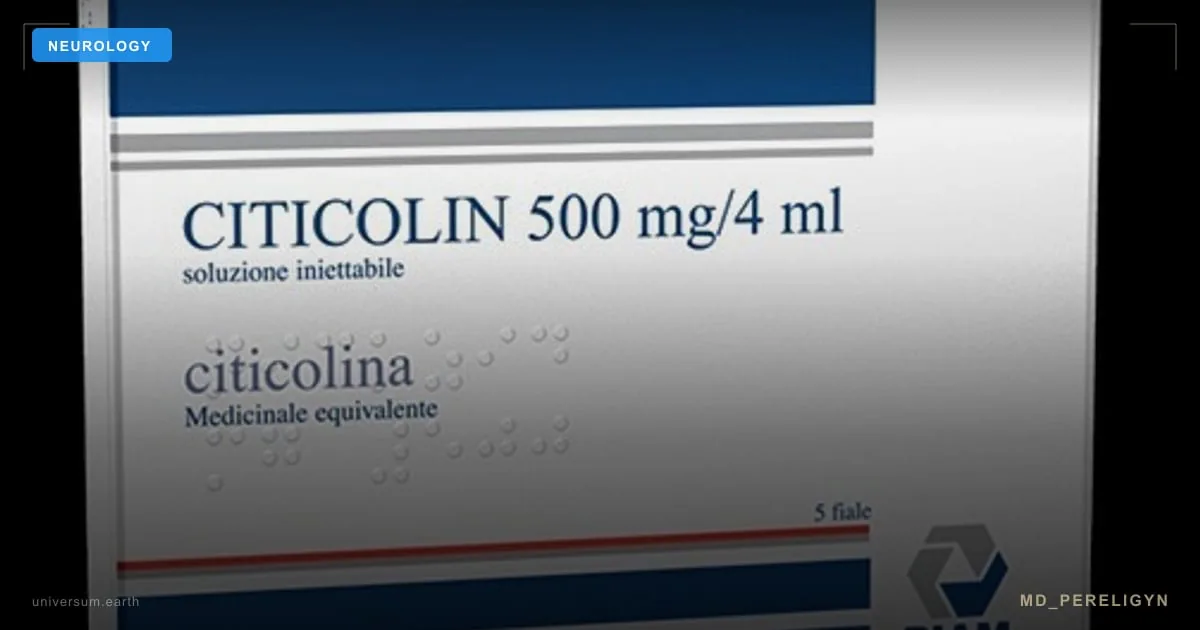
Citicoline (cytidine-5-diphosphocholine) is an endogenous nucleotide involved in phosphatidylcholine synthesis — the primary component of neuronal cell membranes. A meta-analysis of 14 RCTs in the Cochrane Database of Systematic Reviews (2020) confirmed that citicoline significantly improves memory and attention in elderly patients with cognitive impairment.
Mechanisms include increased acetylcholine synthesis, stimulation of dopaminergic transmission, and upregulation of muscarinic receptor density. A study in the Journal of Nutrition (2021) demonstrated that 500 mg of citicoline daily for 12 weeks improved episodic memory scores by 14% compared to placebo in healthy adults.
Lion's Mane (Hericium erinaceus): Neurogenesis Through Mushrooms
Hericium erinaceus contains unique diterpenoids — hericenones (in the fruiting body) and erinacines (in the mycelium) — that stimulate NGF (nerve growth factor) synthesis. Mori et al. (2009, Phytotherapy Research) showed that 250 mg of Lion's Mane extract three times daily for 16 weeks significantly improved cognitive function in elderly patients with mild cognitive impairment (p < 0.05).
Erinacine A crosses the blood-brain barrier and induces NGF expression in the hippocampus. Research in the International Journal of Molecular Sciences (2022) confirmed that Hericium erinaceus extract increases BDNF levels by 25-30% in vivo.
Racetams: Piracetam and Its Derivatives
Piracetam — the first synthetic nootropic, developed by Corneliu Giurgea in 1964. A meta-analysis of 19 double-blind RCTs in Psychopharmacology (2002) demonstrated statistically significant cognitive improvement in elderly patients (effect size d = 0.30, p < 0.01). The mechanism involves AMPA glutamate receptor modulation, enhanced membrane fluidity, and improved interhemispheric communication via the corpus callosum.
Aniracetam (700-1500 mg/day) is a more lipophilic derivative modulating AMPA and metabotropic glutamate receptors. Oxiracetam (1200-2400 mg/day) primarily affects cholinergic transmission. Phenylpiracetam (100-200 mg/day) has additional psychostimulant properties.
Modafinil: Mechanisms and Evidence
Modafinil is a prescription medication originally developed for narcolepsy. A systematic review in European Neuropsychopharmacology (2015) analyzed 24 studies and concluded that modafinil significantly improves attention, executive function, and learning in healthy volunteers. Key mechanisms: dopamine transporter (DAT) inhibition, elevated histamine and orexin levels.
Full review of the drug — indications by country, efficacy, comparison with other wake-promoting agents, interactions and safety: Modafinil: mechanism, indications and comparison with other wake-promoting agents.
5-HTP and the Serotonergic Pathway
5-hydroxytryptophan (5-HTP) is a direct precursor to serotonin. A meta-analysis in the Journal of Clinical Psychopharmacology (2020) showed that 150-300 mg/day of 5-HTP significantly reduces anxiety and improves mood.
Methylene Blue: From Dye to Neuroprotector
Methylene blue (methylthioninium chloride) is the world's oldest synthetic medication (1876). Modern research reveals unique properties: enhanced mitochondrial respiration (complex IV), inhibition of tau protein and beta-amyloid aggregation. A study in Redox Biology (2019) showed improved working memory in healthy volunteers at 0.5-1 mg/kg.
Cognitive Enhancement Protocol
Frequently Asked Questions
Can nootropics be taken every day? The basic stack (citicoline, Lion's Mane, omega-3) is safe for daily use. Racetams and modafinil are best taken in cycles with breaks.
When should I expect results? Citicoline and Lion's Mane: 4-8 weeks. Modafinil: same day. Racetams: 1-2 weeks of regular use.
Is there a risk of dependence? Citicoline, Lion's Mane, and racetams do not cause dependence. Modafinil has minimal abuse potential but requires a prescription.
How can I test whether nootropics are working? Use cognitive tests (Cambridge Brain Sciences, n-back task) before starting and after 8 weeks. Keep a subjective state diary.
This article is for educational purposes only and does not constitute medical advice. Always consult a qualified healthcare professional before starting any supplement or medication.
🌀
🌀
🌀
🌀
Key facts
- Of 120+ claimed nootropics, only about 20 have at least one RCT in healthy volunteers.
- BDNF is the key neuroplasticity factor — needed for new synapses and hippocampal neurogenesis.
- Citicoline 250–500 mg in the morning, 8–12 week course, supports memory and attention.
- Lion's Mane 500–1000 mg twice daily stimulates NGF; the effect appears at 8–16 weeks.
- Racetams require choline (alpha-GPC/citicoline); modafinil is prescription-only.