In brief
There are small thyroid cancers that do not need to be operated on immediately. Instead of surgery, the physician may offer active surveillance — regular monitoring by ultrasound. This is not a refusal of treatment but a proven strategy with more than 30 years of history. If the tumour begins to grow, surgery is performed then, and the outcome is the same as if it had been operated on right away. And the majority of patients will never need surgery at all.
This is the web version of the breakdown for a post on the channel @md_pereligyn_thyroid. Here you will find an expanded evidence base and practical details.
Where the problem comes from: why there is "more" cancer
Thyroid ultrasound has become a routine examination — and physicians began finding tiny tumours that previously would have gone unnoticed and that would never have made themselves known throughout a lifetime. According to WHO/IARC, in 2022 about 821,000 new cases of thyroid cancer were diagnosed worldwide — the seventh most common of all cancers.
Incidence has risen many times over. In South Korea, for example, it climbed in women from fewer than 10 to roughly 100 cases per 100,000 population by a peak around 2012. But here is what is fundamentally important: mortality did not change and remained very low — about 47,000 deaths worldwide in 2022, only 0.5% of all cancer mortality.
This gap between rising detection and stable mortality means one simple thing: many of these tumours would never have threatened life. A population-based analysis across 63 countries estimated that more than 1.7 million people may have been overdiagnosed with thyroid cancer over the 2013–2017 period PMID: 42109855.
What a microcarcinoma is
We are talking about the smallest papillary cancers — microcarcinomas up to 1 centimetre in size (PTMC, papillary thyroid microcarcinoma). They behave surprisingly calmly: they grow extremely slowly, stay the same size for years, and sometimes even shrink on their own. Their cancer-specific mortality is close to zero.
Conventional surgery — removal of a lobe or of the entire thyroid gland — can lead to temporary or permanent hypothyroidism (and therefore lifelong hormone replacement therapy), as well as to surgical complications: injury to the recurrent laryngeal nerve, impaired function of the parathyroid glands, postoperative bleeding. When a tumour is inherently indolent, the benefit of such surgery becomes far from obvious.
Active surveillance is not "doing nothing"
Active surveillance (AS) is not passive waiting and not a refusal of care. It is strict, disciplined monitoring with predefined rules:
- Regular neck ultrasound — every 6 months in the first 1–2 years, then once a year if everything is stable. - Clear criteria for switching to surgery — it is known in advance under what signs surveillance is stopped. - Surgery held in reserve — it is performed only if the tumour has genuinely started to grow or new alarming signs have appeared.
This approach was first applied at Kuma Hospital in Japan back in 1993. Since then it has been adopted by guidelines in Japan (2010), by the American Thyroid Association — ATA (2015), and now by many other countries. Under the 2025 ATA guidelines, active surveillance is appropriate for primary, intrathyroidal, low-risk papillary cancer, provided there is strict monitoring and an individualized decision.
What more than 30 years of observation have shown
Long-term data from Kuma Hospital showed that over 10 and 20 years of observation the tumour enlarged (by ≥3 mm) in only 4.7% and 6.6% of patients respectively; lymph node metastases appeared in 1.0% and 1.6%; and there was not a single death from thyroid cancer. A meta-analysis pooling six cohorts of about 2,400 patients with low-risk PTMC confirmed: by 5 years the tumour grows in 5.3% and lymph node metastases occur in 1.6% PMID: 42109855.
| Follow-up | Tumour growth | Node metastases |
|---|---|---|
| 5 years | 5.3% | 1.6% |
| 10 years | 4.7% | 1.0% |
| 20 years | 6.6% | 1.6% |
And what if the tumour does start to grow? This is patients' main concern: "will time be lost?" The studies answer clearly: when the time for surgery comes, its outcome does not differ from surgery that would have been done immediately — in overall survival, recurrence rate, and even the extent of the procedure. A systematic review of 14 studies found no significant differences in mortality or recurrence risk between active surveillance and immediate surgery. Delay does not worsen the prognosis.
Who is a candidate, and who is not
An interesting nuance: the older the patient, the safer surveillance is — in the elderly the tumour progresses significantly less often. The Memorial Sloan Kettering Center classifies patients ≥60 years as "ideal" candidates, 18–59 years as "appropriate", and under 18 as "inappropriate".
How surveillance is actually carried out
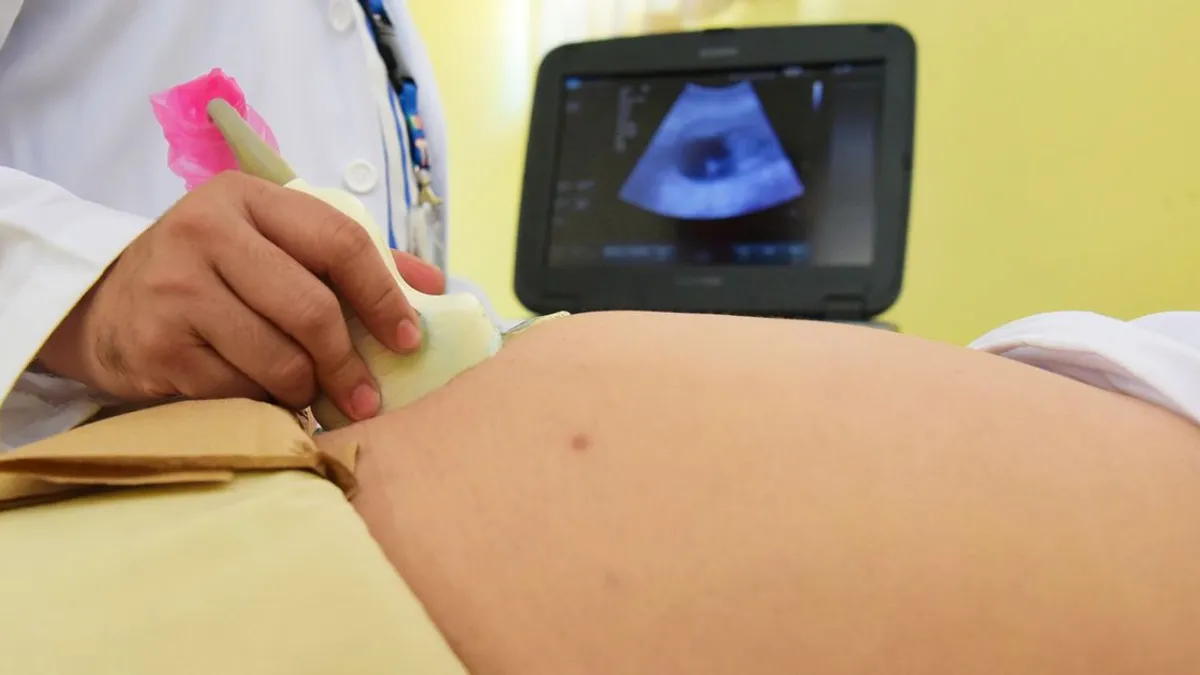
- What is monitored: neck ultrasound — the main and sufficient method. - How often: every 6 months for the first 1–2 years, then annually. - When to operate: with tumour growth (the ATA 2025 threshold is an increase in diameter of ≥3 mm), the appearance of metastases, or signs of extension. In some guidelines (Korea, Japan) the threshold is raised to 12–13 mm. - Protection against error: growth is confirmed on two consecutive ultrasounds — so as not to confuse true progression with measurement error.
Surgery has its own price
Why wait at all? Because thyroid surgery is not a harmless procedure. With removal of the entire gland — daily hormone intake for the rest of life. There is a risk of injury to the recurrent laryngeal nerve (hoarseness, voice change), of disrupted calcium metabolism due to the parathyroid glands, as well as of bleeding, a neck scar, and anaesthesia risks. When a tumour is not dangerous, these risks outweigh any possible benefit of haste.
Special situations
Anxiety is the main adversary
The hardest part of active surveillance is not medicine but psychology. Living with the word "cancer" in your medical record is difficult, and it is precisely anxiety that is the main reason patients choose surgery even when it is not needed. A survey of 448 physicians showed that 76% consider active surveillance an appropriate strategy, but only 44% actually apply it — they are held back by patient reluctance (80%), fears of losing patients to follow-up (78%), fear of increasing anxiety (58%), and medicolegal risks (51%).
At the same time, quality of life with surveillance is on average no worse than after surgery, and often better — without a scar, without a lifelong hormone, and without complications. And understanding what is happening and why it is safe noticeably reduces anxiety.
An alternative: thermal ablation
For those who are not ready to watch for years but also do not want full surgery, there is an intermediate option — minimally invasive ultrasound-guided thermal ablation (radiofrequency, laser, or microwave). A meta-analysis of 715 patients from 11 studies showed complete disappearance of the nodule in about 57.6% of cases, with a very low rate of recurrence (0.4%) and of complications (3.2%). Unlike surgery, thermal ablation does not require a lifelong hormone and causes complications less often, but it is a relatively new method with limited long-term data.
The bottom line
This article is educational in nature and does not replace an in-person consultation. The strategy in your specific case can only be determined by a physician after examination and assessment of investigations.
🌀
Sources and evidence base
The material was prepared using PubMed data. It is based on the review: "Active surveillance for low-risk papillary thyroid carcinoma: Integrating guidelines, emerging evidence, and directions", published in the journal iScience in 2026 PMID: 42109855. The review synthesizes international guidelines (ATA 2025, Japanese and Korean guidelines) and long-term cohort data from Kuma Hospital (Japan), where surveillance of patients with low-risk papillary cancer has been carried out since 1993, with a maximum follow-up reaching 30 years.
Key facts
- In 2022, ~821,000 new thyroid cancer cases were diagnosed worldwide — the 7th most common of all cancers (WHO/IARC).
- Detection rose many times over, but mortality stayed low: ~47,000 deaths worldwide in 2022, only 0.5% of cancer deaths.
- Microcarcinomas up to 1 cm grow extremely slowly, sometimes shrink on their own; cancer-specific mortality is near zero.
- Over 20 years of Kuma surveillance the tumour grew in 6.6%, lymph node metastases in 1.6%, with zero cancer deaths.
- ATA 2025 threshold to move to surgery: diameter growth ≥3 mm, confirmed on two consecutive ultrasounds.