Amlodipine, levothyroxine, clopidogrel, aspirin, paracetamol and ibuprofen
Six pills, six jobs
Each substance has its own address: pressure, hormone, vessels, pain and fever.
- each has its own job
- four are set by a doctor
- two are sold without a prescription
Amlodipine: lowers blood pressure
Relaxes the walls of blood vessels, like a hose that is no longer pinched.
- high blood pressure
- angina
- angina got worse: tell the doctor
Levothyroxine: brings the hormone back
Replaces the thyroid hormone when there is not enough. Not meant for weight loss.
- once a day on an empty stomach
- replaces the missing hormone
- not for weight loss
Clopidogrel: protects vessels
Stops platelets sticking together, like adhesive tape that stops sticking.
- after a heart attack or stroke
- weaker in some people: a test shows it
- do not stop on your own
Low-dose aspirin: for those who already had disease
Helps people who have already had a heart attack or stroke. Stops platelets sticking together.
- after a heart attack or stroke
- raises the risk of bleeding
- a doctor decides
Important. Important: in healthy people without heart disease, aspirin "for prevention" is taken only on a doctor's decision.
Paracetamol: pain and fever
Dulls pain and lowers temperature. The main risk concerns the liver.
- sold without a prescription
- never above the limit on the pack
- do not stack it with other products containing it
Ibuprofen: pain and inflammation
Dulls pain, swelling and heat. Protect the stomach and heart: lowest dose, shortest time.
- over-the-counter forms
- lowest dose, short course
- risk to stomach and heart
With and without a prescription
Amlodipine, levothyroxine, clopidogrel and aspirin for the vessels are set by a doctor. Paracetamol and ibuprofen can be bought without a prescription, as the label directs.
- the doctor sets the dose
- the limit on the pack
- pain over 10 days or fever over 3 days: see a doctor
When to see a doctor
Before the first pill and for warning signs.
- pregnancy, liver, kidney, heart
- ulcer and a tendency to bleed
- before aspirin "for prevention"
Important. Important: black stools, vomiting blood, chest pain, weakness on one side of the body or slurred speech need urgent help.
Main points
| Substance | What for | How it works | What studies showed |
|---|---|---|---|
| Amlodipine (prescription) | high blood pressure, angina | relaxes the walls of blood vessels | 19,257 people with hypertension; amlodipine-based versus atenolol-based regimen: stroke in 327 versus 422 (hazard ratio 0.77; 95% confidence interval (CI) 0.66-0.89) (Dahlöf B Lancet 2005. PMID 16154016[1]) |
| Levothyroxine (prescription) | hypothyroidism, a shortage of thyroid hormones | replaces the missing thyroxine | 737 people aged 65 and over with subclinical hypothyroidism; TSH (thyroid-stimulating hormone) 3.63 mIU/L (µIU/mL) versus 5.48 mIU/L (µIU/mL) on placebo; no significant difference in symptoms (Stott DJ N Engl J Med 2017. PMID 28402245[2]) |
| Clopidogrel (prescription) | after a heart attack or stroke, peripheral artery disease | stops platelets sticking together | 19,185 people, versus aspirin; stroke, heart attack or vascular death 5.32% versus 5.83% a year (CAPRIE Steering Committee Lancet 1996. PMID 8918275[3]) |
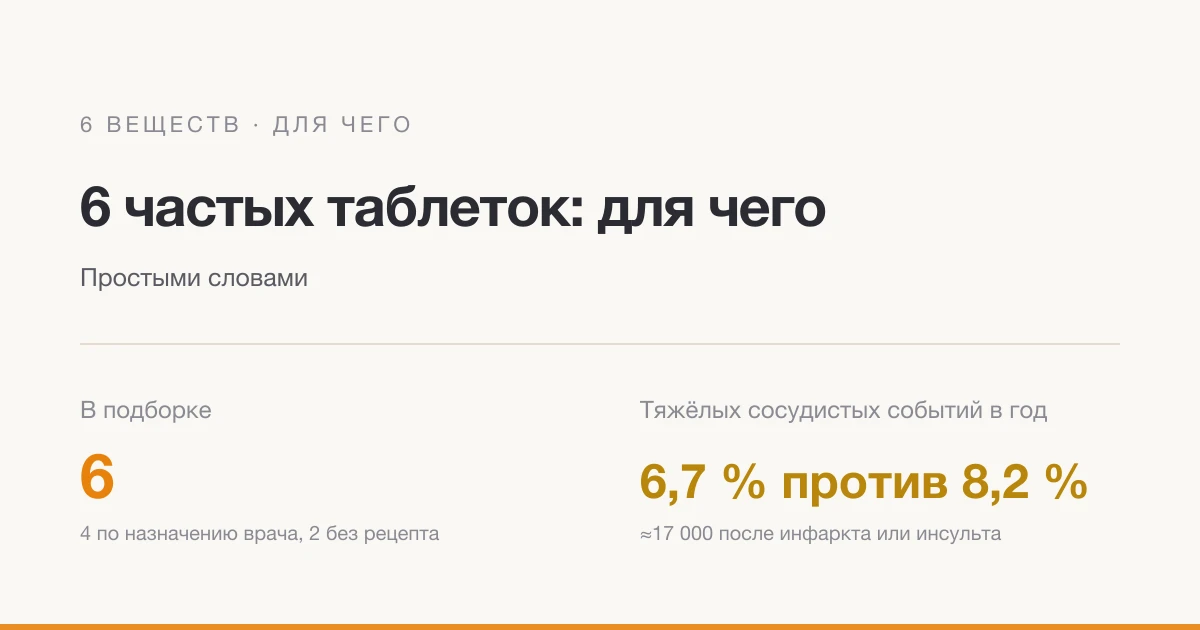
| Low-dose aspirin (on a doctor's decision) | lower the risk in people who have already had a heart attack or stroke | stops platelets sticking together | 16 trials, about 17,000 people with vascular disease; serious vascular events 6.7% versus 8.2% a year without aspirin (Baigent C Lancet 2009. PMID 19482214[4]) |
| Paracetamol (over the counter) | mild pain, fever | dulls pain and lowers temperature | after surgery, 51 trials, 5,762 people: pain relief in about half versus about 20% on placebo (Toms L Cochrane Database Syst Rev 2008. PMID 18843665[5]) |
| Ibuprofen (over-the-counter forms) | mild to moderate pain, arthritis, painful periods | blocks prostaglandins, which increase pain and inflammation | tension-type headache: pain-free at 2 hours more often than on placebo (4 trials, one extra pain-free person in 14) (Derry S Cochrane Database Syst Rev 2015. PMID 26230487[6]) |
Amlodipine
Levothyroxine
Clopidogrel
Low-dose aspirin
Paracetamol
Ibuprofen
Who should see a doctor first
Before the first pill: in pregnancy and breastfeeding, liver, kidney or heart disease, stomach ulcer, asthma, a tendency to bleed, when taking other medicines (especially warfarin), and always before aspirin "for prevention". Seek urgent care for black stools or vomiting blood, chest pain, weakness on one side of the body or slurred speech, swelling of the face or throat.
Bottom line
References
- Dahlöf B Lancet 2005. PMID 16154016
- Stott DJ N Engl J Med 2017. PMID 28402245
- CAPRIE Steering Committee Lancet 1996. PMID 8918275
- Baigent C Lancet 2009. PMID 19482214
- Toms L Cochrane Database Syst Rev 2008. PMID 18843665
- Derry S Cochrane Database Syst Rev 2015. PMID 26230487
- McNeil JJ N Engl J Med 2018. PMID 30221597
Key facts
- Amlodipine: in a trial of 19,257 people with hypertension, an amlodipine-based regimen versus an atenolol-based one gave fewer strokes (327 versus 422; hazard ratio 0.77), while the main goal (non-fatal heart attack and death from heart disease) showed no significant difference (Dahlöf B Lancet 2005. PMID 16154016).
- Levothyroxine in 737 people aged 65 and over with subclinical hypothyroidism lowered TSH (thyroid-stimulating hormone; 3.63 mIU/L (µIU/mL) versus 5.48 mIU/L (µIU/mL) on placebo); over one year no significant difference in symptoms or tiredness was found (Stott DJ N Engl J Med 2017. PMID 28402245).
- Clopidogrel versus aspirin in 19,185 people with a recent ischaemic stroke, heart attack or peripheral artery disease: stroke, heart attack or vascular death 5.32% versus 5.83% a year, a relative risk reduction of 8.7% (CAPRIE Steering Committee Lancet 1996. PMID 8918275).
- Low-dose aspirin in people who already have vascular disease (16 trials, about 17,000 people): serious vascular events 6.7% versus 8.2% a year without aspirin; in healthy people (about 95,000) the gap was smaller, 0.51% versus 0.57% a year, with more major bleeds (Baigent C Lancet 2009. PMID 19482214).
- Paracetamol after surgery (51 trials, 5,762 people): at least 50% pain relief over 4-6 hours in about half of those treated versus about 20% on placebo (Toms L Cochrane Database Syst Rev 2008. PMID 18843665).
- Ibuprofen for tension-type headache: pain-free at 2 hours more often than on placebo (4 trials, one extra pain-free person in 14); no significant difference from placebo in adverse events (Derry S Cochrane Database Syst Rev 2015. PMID 26230487).