The Testosterone Crisis: More Than Just Aging
Testosterone is the primary male androgen governing muscle mass, bone density, cognitive function, mood, and metabolic health. The Massachusetts Male Aging Study documented a decline of 1.6% per year in total testosterone after age 40. More concerning, Travison et al. (JCEM, 2007) identified a population-level decline: men in the 2000s had 15-20% lower testosterone than same-age men in the 1980s, independent of aging.
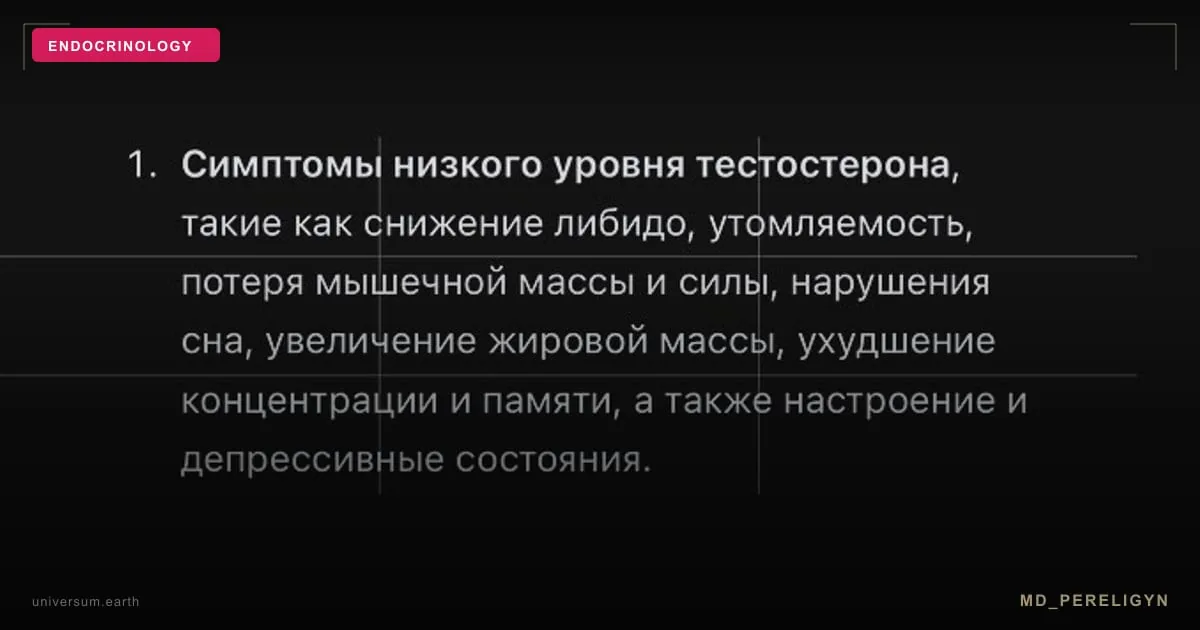
Hypogonadism affects 20-40% of men over 45 (Mulligan et al., International Journal of Clinical Practice, 2006). Symptoms are nonspecific — fatigue, decreased libido, depression, visceral obesity, brain fog — and frequently misattributed to normal aging or stress.
Total vs Free Testosterone: Why One Lab Is Not Enough
Approximately 98% of circulating testosterone is protein-bound: 60-70% to sex hormone-binding globulin (SHBG) and 25-35% to albumin. Only 1-3% circulates freely. Biological effects depend primarily on free and bioavailable (albumin-bound + free) testosterone.
SHBG increases with age, hyperthyroidism, liver disease, and certain medications. A man with total testosterone of 450 ng/dL but elevated SHBG may have clinically low free testosterone and significant symptoms.
Primary vs Secondary Hypogonadism
Primary hypogonadism — testicular failure: elevated LH/FSH with low testosterone. Causes include Klinefelter syndrome, orchitis, trauma, varicocele, cryptorchidism, and chemotherapy.
Secondary (central) hypogonadism — hypothalamic or pituitary dysfunction: low or normal LH/FSH with low testosterone. Causes include obesity, chronic stress, obstructive sleep apnea, opioids, pituitary adenoma, and hyperprolactinemia.
In obese men with insulin resistance, functional secondary hypogonadism is common. Corona et al. (Endocrine Reviews, 2020) demonstrated that 10-15% weight loss can normalize testosterone without TRT.
TRT Formulations: Injections, Gels, and Pellets
Intramuscular Injections (Testosterone Cypionate/Enanthate)
The most studied and cost-effective option. Standard dosing: 100-200 mg every 1-2 weeks. Drawback: peak-trough fluctuations ("roller coaster" effect). Subcutaneous micro-injections every 3-4 days (50-80 mg) provide more stable levels and are increasingly preferred.
Transdermal Gels (AndroGel, Testogel)
Daily application to shoulders, abdomen, or inner thighs. Provide stable 24-hour levels. Concerns: skin-to-skin transfer risk to partners and children; absorption variability up to 30% between patients.
Subcutaneous Pellets (Testopel)
Implanted every 3-6 months under buttock skin. Most stable hormone delivery without daily procedures. Handelsman et al. (Clinical Endocrinology, 2017) reported 85-90% patient satisfaction. Drawback: invasive insertion, inability to rapidly discontinue if side effects arise.
DHEA (Dehydroepiandrosterone)
An adrenal prohormone converted to testosterone and estrogens. Dosage: 25-50 mg/day. A meta-analysis in JCEM (2005) showed modest free testosterone increases in men over 60. Not a substitute for TRT in frank hypogonadism, but useful for borderline cases.
Safety Monitoring on TRT
Per Endocrine Society guidelines (Bhasin et al., JCEM, 2018):
| Marker | Target / stop |
|---|---|
| Testosterone | 450–700 ng/dL |
| Hematocrit | stop if >54% |
| PSA | stop if rise >1.4 ng/mL/yr |
| Estradiol | 20–40 pg/mL |
Natural Testosterone Optimization
Before initiating TRT, modifiable factors must be addressed:
Frequently Asked Questions
Does TRT cause prostate cancer? A meta-analysis in Medicine (Boyle et al., 2016) and Morgentaler (JAMA, 2023) found no increased prostate cancer risk in men without pre-existing malignancy. TRT is contraindicated in untreated prostate cancer.
Does TRT affect fertility? Yes. Exogenous testosterone suppresses FSH/LH, causing azoospermia in 40-60% of men. If fatherhood is planned, clomiphene or hCG are alternatives.
At what age should testosterone be checked? With symptoms — at any age. Screening is recommended from age 40 in men with obesity, type 2 diabetes, chronic fatigue, or decreased libido.
Can low testosterone be managed without TRT? At levels of 250-350 ng/dL, a 3-6 month trial of lifestyle optimization (sleep, zinc, D3, exercise) is reasonable. Below 250 ng/dL with pronounced symptoms, TRT is typically necessary.
This article is for educational purposes only and does not constitute medical advice. Always consult a qualified healthcare professional before starting any treatment.
🌀
Erythrocytosis on TRT: Mechanism, Monitoring, and Management
Erythrocytosis is the most common dose-limiting adverse effect, occurring in 11–25% of treated men depending on formulation, with the highest rates in intramuscular regimens producing supraphysiologic peaks. Testosterone stimulates erythropoiesis through three mechanisms: direct suppression of hepcidin (increasing iron availability), stimulation of erythropoietin production by the renal interstitium, and a downward reset of the EPO-hemoglobin set point. The result is a dose-dependent rise in hemoglobin and hematocrit, typically peaking at 3–9 months.
The Endocrine Society 2018 clinical practice guideline recommends discontinuation or dose reduction when hematocrit exceeds 54%. The 54% threshold derives from observational data linking polycythemia vera to thrombotic events; the absolute thrombotic risk in TRT-induced erythrocytosis at 52–54% is less well characterized but the cautionary threshold is retained.
Practical management algorithm: at hematocrit 52–54%, reduce dose by 25–50%, extend injection interval, or switch from intramuscular to transdermal preparation (gels produce hematocrit elevations 2–3 percentage points lower on average). At hematocrit above 54%, hold therapy until hematocrit returns below 50%, then resume at reduced dose. Therapeutic phlebotomy of 450–500 mL removes approximately 200 mg of iron and lowers hematocrit by 3 percentage points; it is appropriate as a bridge but should not be used to permit ongoing supraphysiologic dosing. Coordinate with a blood bank for autologous donation when possible.
Risk modifiers include smoking, obstructive sleep apnea, chronic obstructive pulmonary disease, and high altitude residence, each of which independently raises baseline hematocrit. Obstructive sleep apnea screening (STOP-BANG, polysomnography if indicated) is warranted before initiation in men with elevated BMI or daytime somnolence, as untreated OSA both predisposes to erythrocytosis and is itself worsened by testosterone in a subset of patients. Hydration status should be confirmed before any borderline hematocrit reading is acted upon, and ferritin should be checked annually in men receiving repeated phlebotomy to avoid iatrogenic iron deficiency, which can paradoxically worsen fatigue and obscure the symptomatic benefit of therapy.
🌀
Estradiol Management and the Aromatase Inhibitor Question
Approximately 0.2–0.3% of circulating testosterone is converted to estradiol by aromatase, principally in adipose tissue, brain, and bone. Estradiol mediates several physiologic effects historically attributed to testosterone, including bone mineral density maintenance, suppression of visceral adiposity, lipid profile, and libido. Factorial-design studies have demonstrated that estradiol independently regulates fat accumulation and sexual function in men, and that suppression of estradiol below approximately 20 pg/mL produces metabolic and sexual adverse effects independent of testosterone level.
Empiric aromatase inhibitor (AI) co-prescription with TRT is therefore not recommended. The reflex use of anastrozole 0.5–1 mg twice weekly that proliferated in commercial men's health clinics has no supporting RCT evidence in eugonadal-range estradiol and carries documented risks: reduced bone mineral density, dyslipidemia, arthralgia, and possible cognitive effects.
Indications for anastrozole 0.25–0.5 mg twice weekly are narrow: (1) symptomatic gynecomastia or persistent breast tenderness with estradiol above 50–60 pg/mL on sensitive LC-MS/MS assay; (2) refractory water retention with confirmed elevated estradiol; (3) obese men with baseline aromatase excess in whom weight loss is not feasible. The target is estradiol 20–35 pg/mL, not suppression below 20 pg/mL. Standard immunoassays for estradiol are unreliable in men at low concentrations; LC-MS/MS is preferred.
If gynecomastia is established and tender (typically within the first 6 months of therapy), tamoxifen 10–20 mg daily for 3–6 months is more effective than anastrozole at reversing glandular tissue, with stronger evidence in the breast cancer prevention literature applied off-label here. Once fibrosis develops beyond 12 months, pharmacologic reversal is unlikely and surgical referral is appropriate.
Monitoring on AI therapy should include estradiol at 6 weeks after dose changes, bone densitometry at baseline and every 2 years, and lipid panel annually. AI dosing should be titrated by symptoms and LC-MS/MS estradiol, not empiric schedules. Patients should be counseled that estradiol within 20–35 pg/mL is physiologic and beneficial; the goal is not zero. A useful clinical pearl: men who report worsening joint pain, depressed mood, or low libido after starting an AI are typically over-suppressed, and the AI should be stopped or halved before adjusting testosterone.
🌀
Pre-TRT Screening and Contraindications
Before initiating therapy, the following baseline panel should be documented: two morning total testosterone measurements (08:00–10:00, fasting, separated by 1–4 weeks), free testosterone by equilibrium dialysis or calculated from total testosterone, SHBG, and albumin, LH, FSH, prolactin (to exclude pituitary adenoma if LH/FSH are inappropriately normal or low), estradiol by LC-MS/MS, PSA in men over 40, complete blood count with hematocrit, comprehensive metabolic panel, lipid panel, HbA1c, ferritin and iron studies, vitamin D, and TSH.
Absolute contraindications: untreated prostate cancer or breast cancer, hematocrit above 54% at baseline, severe untreated obstructive sleep apnea, severe lower urinary tract symptoms (IPSS above 19), uncontrolled congestive heart failure (NYHA class IV), recent (within 6 months) myocardial infarction, stroke, or unstable angina, active venous thromboembolism, and male-factor infertility with active conception plans (use hCG or clomiphene instead).
Relative contraindications requiring shared decision-making: PSA above 4 ng/mL or rising velocity above 0.75 ng/mL/year without urologic clearance, prior thrombophilia or unprovoked VTE, IPSS 12–19, BPH requiring catheterization, polycythemia vera or other myeloproliferative disorder, history of atrial fibrillation, and age above 80 in the absence of clear symptomatic indication. A digital rectal exam and PSA should be performed at baseline in men over 40, with urology referral for any abnormality before initiation.
Functional secondary hypogonadism in obese men deserves separate emphasis: weight loss of 10–15% restores testosterone in the majority and should precede TRT consideration unless symptoms are severe or testosterone is below 200 ng/dL [PMID: 28359097[1]]. Glucagon-like peptide-1 receptor agonists, bariatric surgery, and structured lifestyle interventions all produce measurable testosterone recovery proportional to weight lost.
A pragmatic pre-initiation checklist: confirm two morning testosterone values below age-adjusted thresholds, document at least three classic symptoms (low libido, erectile dysfunction, decreased morning erections, reduced muscle mass, fatigue, depressed mood), exclude reversible causes (medications, opioids, glucocorticoids, hyperprolactinemia, hemochromatosis, hypothyroidism), discuss fertility plans and offer sperm banking if relevant, optimize OSA and obesity, and obtain written informed consent that explicitly addresses cardiovascular risk, erythrocytosis, infertility, and the long-term commitment of therapy. The decision to start TRT is reversible only with a recovery interval; this should be made clear at the first visit, not after suppression has occurred.
References
Key facts
- Total testosterone falls ~1.6% per year after age 40 (Massachusetts Male Aging Study).
- Hypogonadism affects 20–40% of men over 45; symptoms are nonspecific.
- ~98% of testosterone is protein-bound (SHBG 60–70%, albumin 25–35%); only 1–3% is free.
- Monitoring every 3–6 months: target 450–700 ng/dL, hematocrit stop if >54%, PSA stop if rise >1.4 ng/mL.
- In obesity, 10–15% weight loss can normalize testosterone without TRT.