Levetiracetam, rifaximin, allopurinol, mesalamine, ketoprofen and latanoprost
Six medicines, six jobs
Each substance has its own address: brain, gut, uric acid, colon, joints, eye.
- each has its own job
- a doctor prescribes all six
- each has its own risks
Levetiracetam: fewer epilepsy seizures
Acts like a voltage stabilizer: discharges between nerve cells become less frequent.
- epilepsy seizures
- stopped gradually
- irritability and sleepiness possible
Rifaximin: works in the gut
An antibiotic that is barely absorbed and stays in the gut, like a janitor inside the building.
- travelers' diarrhea
- preventing return of hepatic encephalopathy
- irritable bowel syndrome with diarrhea
Allopurinol: less uric acid
Slows the "workshop" that makes uric acid, so fewer crystals form in the joints.
- gout
- a certain kind of kidney stones
- stop at the first rash
Mesalamine: for an inflamed colon
A tablet with a special coating reaches the colon and acts on its wall, like a plaster from the inside.
- moderately active ulcerative colitis
- swallow whole, on an empty stomach
- kidneys are monitored
Ketoprofen: eases joint pain
A non-steroidal anti-inflammatory drug: it turns down the alarm signal in the joint.
- rheumatoid arthritis and osteoarthritis
- not for acute pain
- risk to heart, vessels and stomach
Latanoprost: lower eye pressure
Helps eye fluid drain better, and the pressure falls.
- glaucoma
- iris may darken
- remove lenses before the drops
Do not stop on your own
Levetiracetam is withdrawn gradually, and the others are started and finished by a doctor.
- the plan is up to the doctor
- do not pick your own doses
- when in doubt, ask
When to see a doctor
Best discussed before starting and straight away if warning signs appear.
- rash
- severe diarrhea
- eye pain and redness
Important. Important: a rash on allopurinol or levetiracetam, black stools on ketoprofen, thoughts of self-harm, and eye pain with reduced vision need a doctor's attention.
Key points
| Substance | What it is for | How it works | What studies showed |
|---|---|---|---|
| Levetiracetam | epilepsy: seizures starting in one area of the brain; as an add-on, certain other seizure types (from age 6 and 12) | affects signaling between nerve cells, so seizures become less frequent | add-on in drug-resistant focal epilepsy; 14 trials, 2,455 people; risk ratio of response (at least 50% fewer seizures) 2.37 versus placebo (Mbizvo GK Cochrane Database Syst Rev 2020. PMID 35658745[1]) |
| Rifaximin | travelers' diarrhea; preventing return of hepatic encephalopathy; irritable bowel syndrome with diarrhea | antibiotic, barely absorbed, works inside the gut | hepatic encephalopathy: 299 people; return within 6 months 22.1% versus 45.9% on placebo (Bass NM N Engl J Med 2010. PMID 20335583[2]); irritable bowel syndrome: 1,258 people; relief 40.7% versus 31.7% on placebo (Pimentel M N Engl J Med 2011. PMID 21208106[3]) |
| Allopurinol | gout; high uric acid during cancer treatment; recurrent calcium oxalate stones | slows the production of uric acid | gout: 1 trial, 57 people, 26 and 25 analysed; at 30 days uric acid 0.36 mmol/L (6 mg/dL) or lower in 25 of 26 versus 0 of 25 on placebo (Seth R Cochrane Database Syst Rev 2014. PMID 25314636[4]) |
| Mesalamine | moderately active ulcerative colitis in adults | acts on the inflamed wall of the colon | 772 people, 6 weeks; overall improvement 70% on the higher dosage versus 66% on the usual one; remission 43% on the higher versus 35% on the usual dosage; no placebo arm (Sandborn WJ Gastroenterology 2009. PMID 19766640[5]) |
| Ketoprofen | symptoms of rheumatoid arthritis and osteoarthritis | non-steroidal anti-inflammatory drug, reduces production of inflammation substances | hip osteoarthritis: 113 people, 4 weeks; relief of pain and stiffness comparable to indomethacin in the authors' assessment (Marcolongo R Minerva Med 1997. PMID 9397080[6]) |
| Latanoprost | raised eye pressure in open-angle glaucoma and ocular hypertension | helps eye fluid drain better | network meta-analysis of 114 trials, 20,275 people; primary open-angle glaucoma or ocular hypertension; at 3 months pressure on average 4.85 mmHg lower than on placebo or no treatment (Li T Ophthalmology 2016. PMID 26526633[7]) |
Levetiracetam
Rifaximin
Allopurinol
Mesalamine
Ketoprofen
Latanoprost
Who should see a doctor first
See a doctor before starting: in pregnancy and breastfeeding; kidney or liver disease; stomach ulcer, bleeding, heart and vascular disease (before ketoprofen); aspirin allergy; depression or anxiety (before levetiracetam); when taking other medicines. After starting, contact a doctor for a skin rash on allopurinol or levetiracetam; severe diarrhea after a rifaximin course; black stools or abdominal pain on ketoprofen; thoughts of self-harm; a red, painful eye or reduced vision on latanoprost.
Summary
The six substances work differently: levetiracetam calms discharges in the brain, rifaximin works in the gut, allopurinol lowers uric acid, mesalamine treats colon inflammation, ketoprofen eases joint pain, and latanoprost lowers eye pressure. A doctor prescribes all of them: choosing the substance, setting the dose and duration, and deciding how to stop safely.
References
- Mbizvo GK Cochrane Database Syst Rev 2020. PMID 35658745
- Bass NM N Engl J Med 2010. PMID 20335583
- Pimentel M N Engl J Med 2011. PMID 21208106
- Seth R Cochrane Database Syst Rev 2014. PMID 25314636
- Sandborn WJ Gastroenterology 2009. PMID 19766640
- Marcolongo R Minerva Med 1997. PMID 9397080
- Li T Ophthalmology 2016. PMID 26526633
Key facts
- Levetiracetam as an add-on in focal epilepsy that other drugs do not control: risk ratio of response (at least 50% fewer seizures) 2.37 versus placebo (14 trials, 2,455 people) (Mbizvo GK Cochrane Database Syst Rev 2020. PMID 35658745).
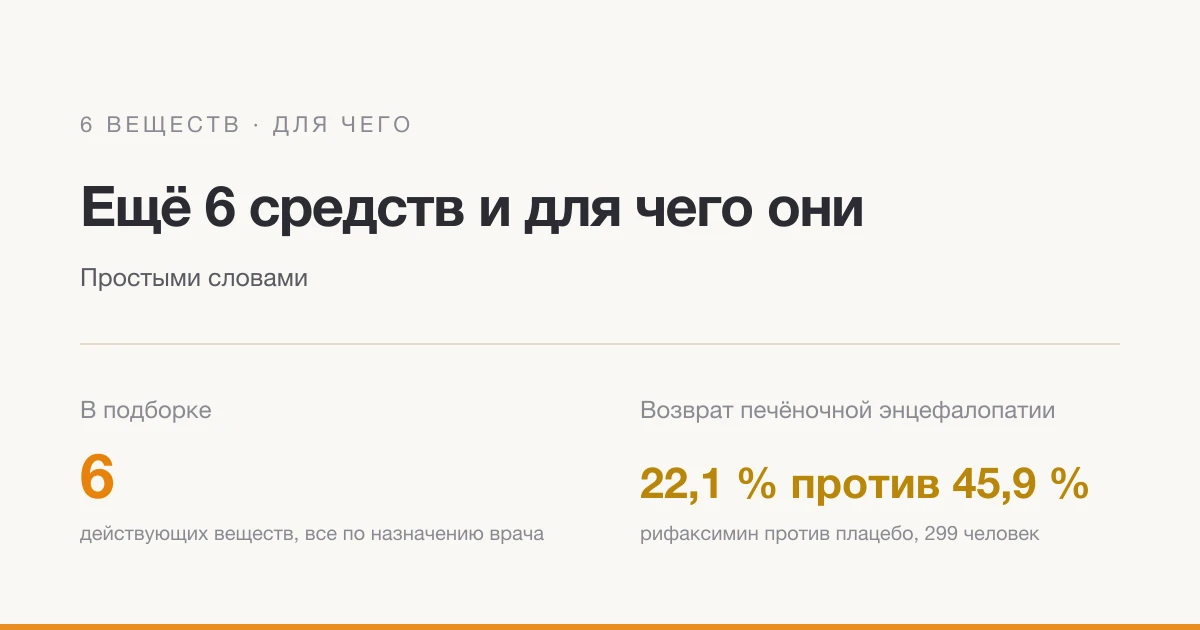
- Rifaximin in hepatic encephalopathy: return of the disease within 6 months in 22.1% versus 45.9% on placebo (299 people; over 90% also took lactulose) (Bass NM N Engl J Med 2010. PMID 20335583).
- Rifaximin in irritable bowel syndrome without constipation: adequate symptom relief in 40.7% versus 31.7% on placebo (two trials combined, 1,258 people) (Pimentel M N Engl J Med 2011. PMID 21208106).
- Allopurinol in gout: target uric acid level of 0.36 mmol/L (6 mg/dL) or lower at 30 days in 25 of 26 people versus 0 of 25 on placebo (57 people in the trial, 26 and 25 analysed); no significant reduction in gout attacks over that period (1 trial) (Seth R Cochrane Database Syst Rev 2014. PMID 25314636).
- Mesalamine in moderately active ulcerative colitis: overall improvement at 6 weeks in 70% on the higher dosage and 66% on the usual one, remission 43% on the higher versus 35% on the usual dosage; no placebo arm (772 people) (Sandborn WJ Gastroenterology 2009. PMID 19766640).
- Extended-release ketoprofen in hip osteoarthritis: relief of pain and stiffness comparable to indomethacin, in the authors' assessment (113 people, 4 weeks) (Marcolongo R Minerva Med 1997. PMID 9397080).
- Latanoprost lowered eye pressure by an average of 4.85 mmHg in people with primary open-angle glaucoma or ocular hypertension, at 3 months, versus placebo or no treatment (network meta-analysis of 114 trials, 20,275 people) (Li T Ophthalmology 2016. PMID 26526633).