Introduction: why a book about trauma matters to an endocrinologist
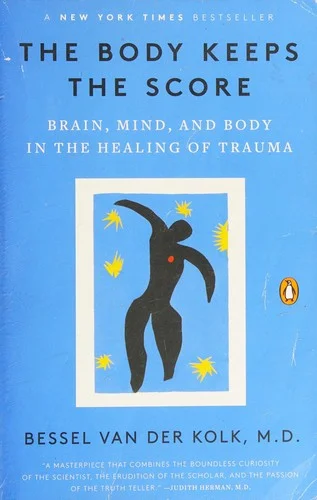
Bessel van der Kolk is a psychiatrist, professor at Boston University, and founder of the Trauma Center in Brookline (Massachusetts) — one of the key trauma and PTSD researchers of the last 40 years. His book "The Body Keeps the Score: Brain, Mind, and Body in the Healing of Trauma" (Viking, 2014) is a #1 New York Times bestseller that brought psychological trauma out of narrow psychiatry into mainstream medical consciousness.
I review this book not as psychiatric literature — that is the work of clinicians in that specialty. I review it as a book about the endocrinology of trauma: the neuroendocrine, immune, metabolic and cardiovascular consequences of chronic trauma, and how they appear in an endocrinologist's clinic. Many patients with "functional" disturbances or metabolic disease unresponsive to standard treatment carry unresolved trauma in their history — and that is biologically relevant information, not optional.
🌀
#first_trauma_is_stored_in_the_body
The central idea: traumatic experiences are encoded not as declarative memory (what happened, when, where) but as automatic somatic patterns — muscular tension, breathing patterns, autonomic reactivity, sensory triggers.
The neurobiological basis: in an acute traumatic situation the amygdala (the threat centre) is activated, while the hippocampus (declarative memory) and the medial prefrontal cortex (rational regulation) are suppressed. Perceptual data (smell, sound, tactile sensation, images) are stored at the amygdalar and sensory-cortical level — but not integrated into narrative memory. The result is fragmented sensory "pockets" of trauma without a coherent story.
This dissociation between body and narrative is the basis of PTSD symptoms. A trigger (a sound, smell, bodily sensation) activates an amygdalar pattern → instantaneous physiological reaction (tachycardia, muscle tension, hyperventilation, panic) → the person does not understand "where" the reaction comes from, because the declarative link is missing.
A clinical illustration from van der Kolk: patients with PTSD after a car crash may not remember the details of the event, but react with panic to the smell of burning rubber, the sound of brakes or a bright flash of light. These triggers are not random — they are the sensory elements encoded at the amygdalar level.
🌀
#second_neuroendocrine_traces_of_trauma
The second thesis is biological. Chronic trauma (particularly childhood — Adverse Childhood Experiences, ACE) produces measurable long-term changes in neuroendocrine regulation.
The ACE study (Felitti VJ et al., Am J Prev Med 1998, PMID 9635069[1]) is one of the largest and most cited epidemiological studies in medicine. In 17,000 adult patients at Kaiser Permanente in San Diego the prevalence of 10 categories of traumatic childhood experience was assessed (physical, emotional, sexual abuse; neglect; parental alcoholism, drug use, incarceration, mental illness; parental divorce; domestic violence). Each category = 1 ACE point (maximum 10).
Results: at ACE ≥ 4 relative to ACE 0 the risk is elevated for: - Cardiovascular disease — 2.2-fold - Chronic obstructive pulmonary disease — 3.9-fold - Type 2 diabetes — 1.6-fold - Autoimmune disease — 2-fold - Depression — 4.6-fold - Substance use — 7-fold - Suicide — 12-fold - A reduction in life expectancy of approximately 20 years
| Outcome at ACE ≥4 (vs 0) | Risk |
|---|---|
| Cardiovascular disease | ×2.2 |
| COPD | ×3.9 |
| Type 2 diabetes | ×1.6 |
| Depression | ×4.6 |
| Suicide | ×12 |
Biological mechanisms: - HPA-axis dysregulation: chronic hypercortisolism in the acute phase, then a subsequent hypocortisol blockade of the axis with a paradoxically flattened curve; impaired reactivity; reduced DHEA as a protective hormone - Hippocampus: glucocorticoid neurotoxicity → atrophy (visible on MRI in chronic PTSD); impaired declarative memory, learning and affect regulation - Amygdala: hyperreactivity; elevated baseline tone → chronic anxiety, insomnia, hypervigilance - Inflammation: chronically elevated pro-inflammatory cytokines (IL-6, TNF-α, CRP); association with metabolic syndrome, autoimmune disease and depression (sickness behaviour) - Allostatic load: cumulative "wear and tear" of regulatory systems (Bruce McEwen) → accelerated biological ageing
🌀
#third_bottom_up_therapy
The third thesis is clinical. van der Kolk argues that talk therapy (top-down — rational processing through dialogue) has limited efficacy in severe trauma, because traumatic memory is stored mainly in subcortical structures (amygdala, brainstem, basal ganglia) that are weakly accessible through rational dialogue.
The alternative is bottom-up therapy: approaches that begin with the body and sensory experience and through them reach regulation at higher levels:
- EMDR (Eye Movement Desensitization and Reprocessing) — bilateral stimulation (visual, tactile, auditory) during reprocessing of traumatic memories. RCTs show efficacy comparable to CBT for PTSD with a potentially faster response (Bisson JI et al., Cochrane Database Syst Rev 2013, PMID 24338345[2]) - Yoga — data from van der Kolk's own study (Trauma-Sensitive Yoga; van der Kolk B et al., J Clin Psychiatry 2014) showed a significant reduction in PTSD symptoms in women with severe chronic trauma - Somatic Experiencing (Peter Levine), Sensorimotor Psychotherapy (Pat Ogden) — somatic approaches working with autonomic self-regulation - Neurofeedback — real-time biofeedback for regulation of brain activity (moderate effects in PTSD) - Theatre, group dance, music — socially regulated rhythms for integration
🌀
#critique
The book is foundational but not free of caveats:
- The categorical claim that talk therapy does not work for trauma is an overstatement. CBT for PTSD (particularly Prolonged Exposure, Cognitive Processing Therapy) has a robust evidence base. Bottom-up approaches are a supplement, not a replacement, for most patients - Enthusiasm for EMDR, neurofeedback and yoga is justified but at times runs ahead of the evidence base. These approaches work, but not for everyone and not in every clinician's hands - A 2014 book — over a decade significant changes have occurred in trauma-informed care, in the understanding of complex trauma (C-PTSD), and in the neurobiology of trauma. Some concepts have been updated - The author himself faced professional difficulties — in 2018 van der Kolk was dismissed from the Trauma Center over management issues (not scientific ones). This does not invalidate the scientific value of his work but matters for context - The risk of self-diagnosis — after the popularity of the book many patients arrive with "I have trauma" as a pre-formed narrative. This may be correct but may also be an overstatement; clinical differential diagnosis is required
Despite this, the basic concepts of the book — the somatic nature of trauma, the neuroendocrine traces, the ACE epidemiology — remain clinically foundational.
🌀
#summary
What is strong: the link between trauma and the body as a clinical frame; ACE epidemiology and long-term biological sequelae; the concept of bottom-up therapy for severe trauma; the integration of neurobiology and clinical work.
What requires caution: categorical criticism of talk therapy; at points running ahead of the evidence base; the need for differential diagnosis with "self-assigned" trauma.
What is critically important: the book is for a patient or clinician who wants to understand the biological nature of trauma. It is not a textbook for self-treatment. PTSD and complex trauma are clinical diagnoses requiring specialist care. Self-administered regulation techniques may be a useful supplement but not a substitute for professional work.
🌀
#practical_minimum
van der Kolk's ideas in endocrine practice:
Laboratory when chronic HPA-axis dysregulation is suspected: morning cortisol, diurnal salivary cortisol profile, DHEA-S, hsCRP, IL-6 (when indicated), HRV (heart rate variability, an index of autonomic balance). Not for "diagnosing trauma" but for assessing allostatic load.
Somatic regulators (for self-practice in patients without severe clinical trauma): - Diaphragmatic breathing for 10 minutes a day (activation of parasympathetic tone) - Yoga nidra or body-scan meditation - Regular moderate physical activity - Contact with nature - Authentic social ties
When indicated (significant traumatic load, PTSD symptoms, unresponsive somatic disorders): refer to a trauma specialist — a psychotherapist trained in one of the bottom-up approaches (EMDR, Somatic Experiencing, Sensorimotor Psychotherapy, Trauma-Sensitive Yoga, or a combination). In parallel — endocrine treatment, not instead of it.
🌀
#about_the_reviewer
Dr. Vladimir Pereligyn — endocrinologist. Functional medicine with a focus on preventive strategies: metabolic health, thyroid function, hormonal balance, and individualised risk profiling based on extended laboratory diagnostics. Consultations in person and online: universum.earth/consultation. App Store: Teremok (type 2 diabetes, remission).
🌀
Source
▸ van der Kolk B. The Body Keeps the Score: Brain, Mind, and Body in the Healing of Trauma. Viking, New York, 2014. ISBN 978-0670785933. 464 pages.
Further reading on the topics of this review: ▸ Felitti VJ, Anda RF, Nordenberg D, et al. Relationship of childhood abuse and household dysfunction to many of the leading causes of death in adults: The Adverse Childhood Experiences (ACE) Study. Am J Prev Med 1998;14(4):245-58. PMID 9635069[1] ▸ van der Kolk BA, Stone L, West J, et al. Yoga as an adjunctive treatment for posttraumatic stress disorder: a randomized controlled trial. J Clin Psychiatry 2014;75(6):e559-65. ▸ Bisson JI, Roberts NP, Andrew M, et al. Psychological therapies for chronic post-traumatic stress disorder (PTSD) in adults. Cochrane Database Syst Rev 2013;(12):CD003388. PMID 24338345[2] ▸ McEwen BS, Gianaros PJ. Stress- and allostasis-induced brain plasticity. Annu Rev Med 2011;62:431-45. PMID 20707675[3] ▸ Heim C, Nemeroff CB. The role of childhood trauma in the neurobiology of mood and anxiety disorders: preclinical and clinical studies. Biol Psychiatry 2001;49(12):1023-39. PMID 11430844[4]
🌀
This review reflects the author's clinical interpretation and does not replace consultation with a physician. Before changing therapy, diagnostic protocols or lifestyle, discuss the plan with your treating specialist.
References
- PMID 9635069
- PMID 24338345
- McEwen BS, Gianaros PJ. Stress- and allostasis-induced brain plasticity. Annu Rev Med 2011;62:431-45. PMID 20707675
- Heim C, Nemeroff CB. The role of childhood trauma in the neurobiology of mood and anxiety disorders: preclinical and clinical studies. Biol Psychiatry 2001;49(12):1023-39. PMID 11430844
Key facts
- Trauma is stored in the body as automatic somatic patterns and sensory triggers, not only as declarative memory of the event.
- In trauma the amygdala activates while the hippocampus and prefrontal cortex are suppressed — sensory fragments aren't integrated into narrative.
- Childhood trauma (ACE) produces measurable neuroendocrine changes: HPA-axis dysregulation, hippocampal atrophy, chronic inflammation.
- Severe trauma needs bottom-up therapy (EMDR, yoga, Somatic Experiencing), since memory is held in subcortical structures.
- ACE score is a diagnostically relevant parameter: biological age may exceed chronological age by 5–15 years.