Introduction: why "Why We Sleep" became a watershed book
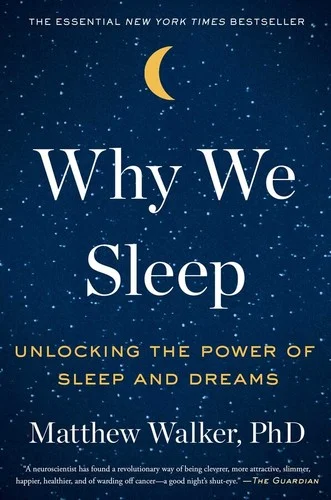
Matthew Walker is professor of neuroscience and psychology at UC Berkeley, director of the Center for Human Sleep Science, and a former professor at Harvard Medical School. His book "Why We Sleep: Unlocking the Power of Sleep and Dreams" (Scribner, 2017) was a #1 New York Times bestseller that moved sleep from a narrow somnology niche into mainstream medical consciousness.
The book is not flawless. Several of Walker's claims have been criticised (most notably by Alexey Guzey, 2019), and Walker himself subsequently acknowledged inaccuracies and exaggerations. But the central thesis — that modern culture systematically undervalues the biological significance of sleep, with vast clinical consequences — survives any critical reading.
I review the book from the perspective of an endocrinologist: which claims have a reliable evidence base, which are categorical exaggerations, and which recommendations are genuinely applicable in practice. The structure is three core ideas, critique, clinical interpretation, and a practical minimum.
🌀
#first_four_phases_are_not_just_sleep
The central biological idea is that sleep is not a uniform 8-hour block but a four-phase architecture in which each phase performs a unique function. Three NREM phases (non-REM, slow-wave sleep) and one REM phase (rapid eye movement) cycle every 90 minutes or so, giving 4–6 cycles per night.
Deep NREM sleep (phase 3, slow-wave sleep) dominates the first half of the night. Its functions are consolidation of declarative memory, physical recovery (the peak of growth-hormone secretion) and clearance of brain metabolites via the glymphatic system. The latter is one of the most important discoveries of 2012: during deep sleep the interstitial space of the brain expands by 60%, cerebrospinal fluid washes through the parenchyma and removes β-amyloid, tau protein and other metabolites (Xie L et al., Science 2013, PMID 24136970[1]). Chronic deficit of deep sleep equals β-amyloid accumulation equals increased risk of Alzheimer's disease.
REM sleep dominates the second half of the night. Its functions are consolidation of procedural and emotional memory, creative integration (the binding of distant associations), and emotional regulation through the attenuation of amygdalar reactivity to traumatic memories. Walker frames REM as "overnight therapy" — in PTSD patients REM is disrupted, and restoration of REM (for example through prazosin to dampen adrenergic activation) clinically correlates with symptom improvement.
🌀
#second_sleep_debt_is_a_clinical_risk_factor
The second key idea is that chronic sleep deficit is not a "private matter" but a clinically relevant risk factor, comparable in magnitude to smoking or untreated hypertension.
Walker assembles several key data sets: - One hour of sleep deletion — a 24% increase in infarct risk over the next 12 months. This is the effect of the daylight-saving time shift: data on more than 1.5 million hospitalisations shows a seasonal peak of infarcts on the Monday after the spring transition (Sandhu A et al., Open Heart 2014) - One night of 4 hours of sleep — a 70% fall in NK-cell activity (antitumour immunity). Chronic sleep deficit is associated with higher risks of colorectal, breast and prostate cancer - Five hours of sleep in men for a week — a fall in testosterone equivalent to a man ten years older. Every night of normal 8-hour sleep delivers the main nocturnal surge of testosterone secretion (Leproult R, Van Cauter E, JAMA 2011, PMID 21632481[2]) - Sleep of less than 6 hours is associated with insulin resistance, impaired glucose tolerance and a doubled risk of type 2 diabetes in prospective cohorts
| Sleep deficit | Effect |
|---|---|
| −1 hour | +24% infarct risk over 12 months |
| One 4-hour night | −70% NK-cell activity |
| 5 h/week (men) | testosterone of a man 10 years older |
| < 6 hours | ×2 type 2 diabetes risk |
Sleep loss also produces an acute cognitive effect comparable to alcohol intoxication: 17 hours of wakefulness equals the cognitive profile of a 0.5‰ blood alcohol concentration, 24 hours equals 0.8‰ (Dawson D, Reid K, Nature 1997). Driving after a night shift is statistically more dangerous than driving while drunk.
A typical scenario: a 45-year-old man, insulin resistance (HOMA-IR 4.8), visceral obesity, erectile dysfunction, fatigue. Sleep — 5.5 hours on average due to work schedule. Prescribe metformin and testosterone replacement? Restore sleep first to 7.5 hours over eight weeks. Often insulin falls, testosterone rises spontaneously and erectile function returns without pharmacology. If after sleep is normalised the parameters remain disturbed, then add therapy.
🌀
#third_quality_and_rhythm_matter_more_than_quantity
The third idea is that eight hours of sleep does not by itself guarantee its effectiveness. Quality and alignment with the circadian rhythm are critical.
Biologically this is mediated by the suprachiasmatic nucleus of the hypothalamus (SCN), the master circadian pacemaker that synchronises peripheral clocks across the body (liver, adrenal, gut, immune cells). The SCN is calibrated primarily by light via the retinohypothalamic tract. Morning light of 10,000 lux within the first 30–60 minutes after waking is the principal zeitgeber that advances the sleep phase. Blue-spectrum light (450–495 nm) from screens in the evening conversely suppresses melatonin secretion and delays the phase (Cajochen C et al., J Appl Physiol 2011, PMID 21415172[3]).
Walker highlights several important phenomena: - Social jet lag — the misalignment between biological chronotype and social schedule. "Night owls" forced into early work accumulate sleep debt and chronic desynchronisation between internal clocks and behaviour. This is associated with metabolic syndrome, depression and obesity (Roenneberg T et al., Curr Biol 2012, PMID 22578422[4]) - Shift work — a biological anomaly. The WHO has classified shift work as a probable carcinogen (group 2A). In medical workers after years of shift work the risks of breast cancer, metabolic disorders and cardiovascular events are elevated - Light, temperature and noise — three key parameters of the sleep environment. Optimum: complete darkness (blackout curtain or mask), 18–20°C, silence or white noise
🌀
#critique
Walker's book attracted well-founded criticism. The best-known review by Alexey Guzey (2019, alexeyguzey.com/why-we-sleep-walker) points to several claims in which Walker turned correlation into causation, chose extreme estimates or quoted data with errors.
The most visible exaggerations: - The claim that "less than 6.75 hours of sleep shortens lifespan" rests on a J-shaped curve of mortality and sleep, but the direction of causation is not established — short sleep may be a consequence of chronic disease rather than a cause - The claim that "the link between sleep and Alzheimer's is so strong that one bad night raises the risk" overinterprets data on acute β-amyloid elevation that has not been translated into clinical risk - The categorical anti-pharmacological rhetoric (Walker against benzodiazepines and Z-drugs) at times ignores that for patients with severe insomnia short-term pharmacotherapy is a reasonable bridge to CBT-I
None of this overturns the main thesis. Most of Walker's clinically significant claims (sleep debt and infarct, REM and emotional regulation, glymphatic clearance) rest on solid evidence. But specific numbers from the book should be checked against primary sources, particularly in a patient consultation.
🌀
#summary
What is strong: reframing sleep as a four-phase architecture with unique functions; the concept of sleep debt as clinically relevant; the link between sleep and neurodegeneration via glymphatic clearance; the role of circadian rhythm and sleep environment.
What is critically important: the book is for a healthy person, to understand the biological significance of sleep and reorganise their lifestyle. It is not a textbook for the treatment of chronic insomnia — for which the first-line therapy is CBT-I (cognitive behavioural therapy for insomnia), not "more darkness in the bedroom". For chronic sleep disturbance lasting more than three months, refer to a sleep specialist rather than experimenting with melatonin or magnesium.
What needs caution: Walker's categorical anti-pharmacological tone; he does not realistically address scenarios where shift work is unavoidable (medicine, military service, emergency services); he does not engage with individual variability in sleep need (there are short-sleeping populations with a DEC2 mutation for whom 6 hours is biologically sufficient).
🌀
#practical_minimum
Applied to everyday practice:
🌀
#about_the_reviewer
Dr. Vladimir Pereligyn — endocrinologist. Functional medicine with a focus on preventive strategies: metabolic health, thyroid function, hormonal balance, and individualised risk profiling based on extended laboratory diagnostics. Consultations in person and online: universum.earth/consultation. App Store: Teremok (type 2 diabetes, remission).
🌀
Source
▸ Walker M. Why We Sleep: Unlocking the Power of Sleep and Dreams. Scribner, New York, 2017. ISBN 978-1501144318. 368 pages.
Further reading on the topics of this review: ▸ Xie L, Kang H, Xu Q, et al. Sleep drives metabolite clearance from the adult brain. Science 2013;342(6156):373-7. PMID 24136970[1] ▸ Sandhu A, Seth M, Gurm HS. Daylight savings time and myocardial infarction. Open Heart 2014;1(1):e000019. ▸ Leproult R, Van Cauter E. Effect of 1 week of sleep restriction on testosterone levels in young healthy men. JAMA 2011;305(21):2173-4. PMID 21632481[2] ▸ Cajochen C, Frey S, Anders D, et al. Evening exposure to a light-emitting diodes (LED)-backlit computer screen affects circadian physiology and cognitive performance. J Appl Physiol 2011;110(5):1432-8. PMID 21415172[3] ▸ Roenneberg T, Allebrandt KV, Merrow M, Vetter C. Social jetlag and obesity. Curr Biol 2012;22(10):939-43. PMID 22578422[4]
🌀
This review reflects the author's clinical interpretation and does not replace consultation with a physician. Before changing therapy, diagnostic protocols or lifestyle, discuss the plan with your treating specialist.
References
Key facts
- Sleep is not a uniform block but a four-phase architecture (three NREM + REM), cycling ~90 min, 4–6 cycles a night.
- Cutting sleep to 5–6 hours preferentially deletes REM, which concentrates in the last hours of the night.
- Deep NREM-3 drives glymphatic clearance of β-amyloid; chronic deficit raises Alzheimer's risk.
- Sleep debt is a risk factor: −1 h sleep = +24% infarct; one 4-hour night = −70% NK-cell activity.
- Eight hours alone isn't enough: quality and circadian alignment (morning light, the SCN) are critical.