In plain words: what goes away with the can
What the can gives
Short-lived alertness.
- but also a pressure spike and a load on heart rhythm
- and a daily can is linked to shorter sleep
Blood pressure
An energy drink raises blood pressure.
- after a can systolic pressure is higher
- without it there is no such rise
Heart rhythm
A larger load on the electrical cycle.
- in a blinded experiment in young people it lengthened more than on a look-alike drink
- without the can there is no such load
What raises blood pressure
Caffeine.
- taurine alone did not raise blood pressure
- caffeine did
Sleep
A daily can is linked to shorter sleep.
- about half an hour less
- an association, not a proven cause
What to drink instead
Alertness without a spike.
- water and unsweetened tea
- coffee in moderation and before noon
- a breakfast with protein
How to switch
In steps.
- first drop the evening can
- then fewer in the daytime
- add ten minutes of brisk walking
An example day
Calm energy.
- an omelette and water in the morning
- a walk in the afternoon
- a light dinner and an early bedtime
When to see a doctor
See a doctor first if:
- you have palpitations, irregular beats or fainting
- high blood pressure or pregnancy
- after a can you had chest pain or shortness of breath
Important. Important: do not change prescribed treatment on your own.
Key points
An energy drink gives a feeling of alertness, but it brings a blood pressure spike and an extra load on heart rhythm with it. The good news is that all of this goes away with the can: without an energy drink there is no pressure spike and no extra load on rhythm. And in a large survey, daily energy drinks are linked to shorter sleep. These data come from trials in people in which the drink was given once, and from large surveys that found an association.
| What | How much | Why it helps | What studies showed |
|---|---|---|---|
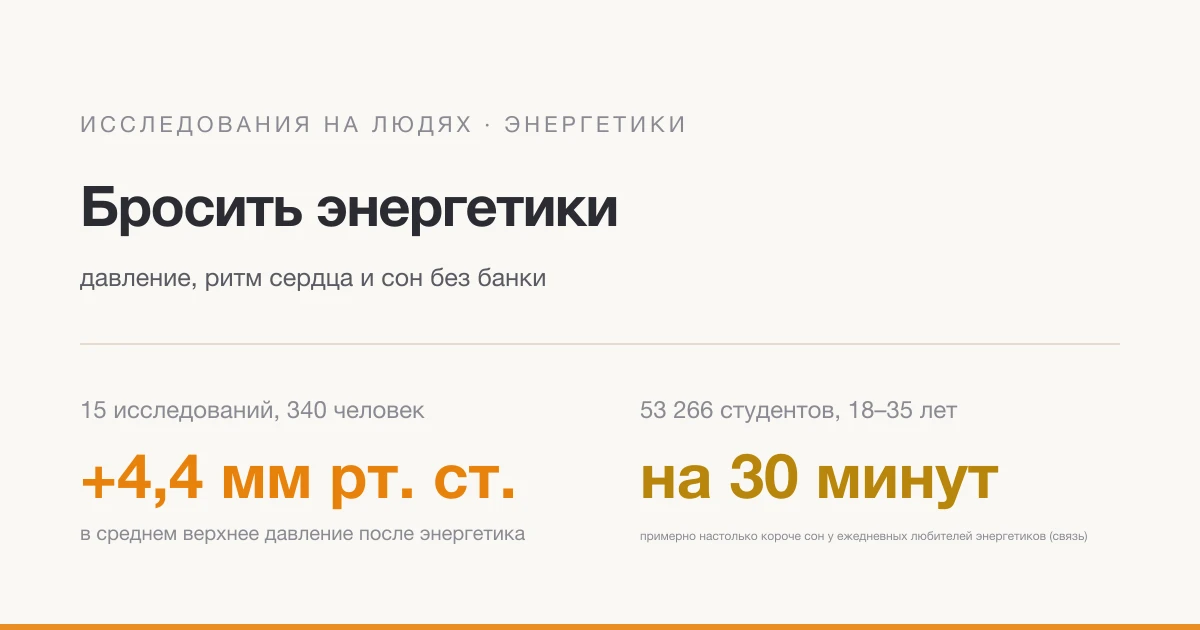
| Blood pressure without the drink | No can, no extra caffeine beyond the usual | No spike in systolic pressure | 15 prospective studies: an energy drink raised systolic by 4.44 mmHg on average (340 people) and diastolic by 2.73 (322 people) |
| Heart rhythm | No large serving within an hour | No extra load on the heart’s electrical cycle | 34 people, 946 mL in an hour: QTc +17.9 and +19.6 ms versus +11.9 ms on a look-alike drink |
| Sleep | No daily can | A daily can is linked to shorter sleep | 53,266 students: daily users slept about 30 minutes less, under 6 hours 2.07 (men) and 1.87 (women) times more often; an association |
| Replacement | Water, unsweetened tea, moderate coffee before noon | Alertness without a pressure spike | Advice, not a study figure |
What the can does to the heart
A clear example is a double-blind crossover study of 34 young people, mean age 22. Within one hour they were asked to drink 946 mL of an energy drink (containing 304–320 mg of caffeine) or a look-alike drink. The heart’s electrical activity and blood pressure were measured. The QTc interval, the time the heart needs for one electrical cycle, rose by 17.9 and 19.6 ms on two energy drinks and by 11.9 ms on the look-alike drink. Systolic pressure rose by 15.9 and 14.4 mmHg versus 9.8 (Shah SA J Am Heart Assoc 2019. PMID 31137991[1]). In no participant did QTc exceed 500 ms.
Note that blood pressure and QTc also rose on the look-alike drink, probably because of the volume of fluid and the setting of the experiment. But on the energy drink the rise was clearly larger. So it is useful to put it this way: without an energy drink this additional rise does not occur. It is not a cure, but the disappearance of an extra load.
Blood pressure: what the pooled analysis showed
So as not to rely on a single study, look at pooled data. In an analysis of 15 prospective studies, energy drinks raised systolic blood pressure by an average of 4.44 mmHg (data from 340 people) and diastolic by 2.73 mmHg (322 people), while heart rate did not change significantly (Shah SA Ann Pharmacother 2016. PMID 27340146[2]).
In another crossover trial of 38 young people, 750–1000 mL of an energy drink was drunk once. An hour later systolic pressure had risen from 116.9 to 120.7 mmHg. Interestingly, taurine and glucuronolactone separately did not raise blood pressure, but caffeine did. The insulin resistance index HOMA-IR rose more after the energy drink than after the control drinks (Basrai M J Nutr 2019. PMID 30805607[3]).
Sleep: the link with a daily can
A national study in Norway surveyed 53,266 students aged 18–35. Those who drank energy drinks daily slept on average 7 hours 6–10 minutes versus 7 hours 39 minutes among those who did not, that is about half an hour less. Sleep under 6 hours was 2.07 times more common among men and 1.87 times more common among women (Kaldenbach S BMJ Open 2024. PMID 38262632[4]). It is a one-time survey, so it shows an association: perhaps people who sleep badly reach for the can more often. The practical takeaway is simple: if you already sleep too little, start by dropping the daily can.
What you will notice in the first week
When the can goes, the first days may feel sluggish: the body is used to a daily dose of caffeine and is readjusting. This is normal and temporary. The same simple things help: water through the day, a walk in fresh air, a solid breakfast and an early bedtime. If the energy drink used to be a way of getting to the evening, think about where the tiredness comes from: too little sleep, rare meals or too little movement. By removing the cause, you also remove the need for the can. If tiredness lasts for weeks, that is a reason to talk to a doctor and check blood tests.
It helps to keep a short diary for a week: bedtime and wake-up time, how much coffee you had and how you felt during the day. After a few days you can see at what hours your hand reaches for a can, and that is the time to prepare a replacement in advance: a bottle of water, a snack with protein, a short walk. If the energy drink was part of a work break or time with friends, keep the break itself but with a different drink. When buying drinks, check the label: it states how much caffeine and sugar the can contains. This way the ritual stays and the can goes.
How to move to calm alertness
- Start by replacing the evening can with water, unsweetened tea or kefir.
- Reduce the daytime serving in steps: a can every other day, then less often, then only on occasion.
- Make the morning solid: a breakfast with protein and vegetables instead of a sweet drink.
- Add movement: ten minutes of brisk walking during the day helps you perk up.
- If you need coffee, drink it in moderation and before noon so that it does not interfere with evening sleep.
- Keep a bottle of water nearby so you drink through the day.
An example of a day without an energy drink: in the morning an omelette with herbs and a glass of water, in the afternoon a walk and a cup of coffee before noon, after lunch unsweetened green or herbal tea, in the evening a light dinner and an early bedtime. In such a day coffee stays in the first half, well away from sleep.
It helps to decide in advance what you will do when your hand reaches for a can: drink a glass of water, step outside for five minutes, eat something with protein, such as an egg or a handful of nuts. A short pause helps you not grab a can on autopilot. It is also good not to keep energy drinks at home and at work: the farther the can, the easier it is not to pick it up out of habit. If you drank an energy drink before a workout or night work, change the order of the day itself: a light snack an hour before the effort and enough sleep give support without a pressure spike or extra load on rhythm.
Who should see a doctor first
If you have palpitations, irregular heartbeat, fainting, high blood pressure, rhythm disorders, are pregnant or take prescribed treatment, discuss any energy drinks and caffeine with your doctor. If after an energy drink you had chest pain, shortness of breath, severe trembling or darkening of the eyes, do not repeat it and see a doctor. Prescribed treatment should not be changed on your own.
Bottom line
Without an energy drink the blood pressure spike and the extra load on heart rhythm go away, and a daily can is linked to shorter sleep. All this was shown in young people with a single serving and in large surveys that found an association. Replace the can with water, unsweetened tea, movement and good sleep, and drink coffee in moderation and before noon.
References
- Shah SA J Am Heart Assoc 2019. PMID 31137991
- Shah SA Ann Pharmacother 2016. PMID 27340146
- Basrai M J Nutr 2019. PMID 30805607
- Kaldenbach S BMJ Open 2024. PMID 38262632
Key facts
- In 34 young people after a large serving of an energy drink (946 mL in an hour, 304–320 mg of caffeine), the QTc interval, a measure of the heart’s electrical cycle, rose by 17.9 and 19.6 ms versus 11.9 ms on a look-alike drink; systolic blood pressure rose by 15.9 and 14.4 mmHg versus 9.8 (Shah SA J Am Heart Assoc 2019. PMID 31137991).
- Pooled analysis of 15 prospective studies: after an energy drink systolic blood pressure rose by an average of 4.44 mmHg (340 people) and diastolic by 2.73 (322 people), with no significant change in pulse (Shah SA Ann Pharmacother 2016. PMID 27340146).
- Among 53,266 students aged 18–35, daily energy-drink users slept about 30 minutes less (7:06–7:10 versus 7:39), and sleep under 6 hours was 2.07 times more common in men and 1.87 times more common in women. This is an association (Kaldenbach S BMJ Open 2024. PMID 38262632).
- In a crossover trial of 38 young people, an hour after an energy drink systolic pressure rose from 116.9 to 120.7 mmHg; taurine alone did not raise it, caffeine did (Basrai M J Nutr 2019. PMID 30805607).