Introduction: a psychiatrist on training
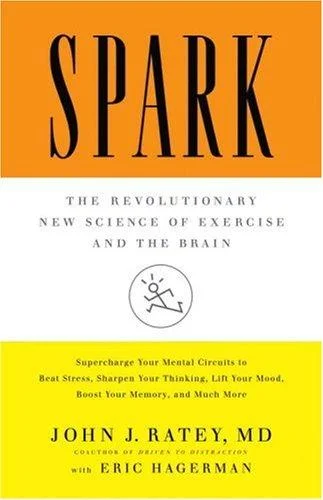
John Ratey is clinical professor of psychiatry at Harvard Medical School and a specialist in ADHD and the neurobiology of physical activity. His book "Spark: The Revolutionary New Science of Exercise and the Brain" (Little, Brown, 2008) was the first popular work to systematically synthesise the neurobiological literature on the effects of exercise on the brain.
In the 17 years since publication the book's main paradigm — BDNF as the key mechanism of exercise on the brain — has withstood serious scientific scrutiny and remained fundamentally correct. That is unusual for popular science. The book matters to an endocrinologist because metabolic health and neuropsychiatry are parts of one system, and physical activity is the single most powerful intervention affecting both.
🌀
#first_exercise_is_medicine
The central thesis: physical activity is not "lifestyle support" but a specific biological intervention with effects comparable to pharmacotherapy for several neuropsychiatric conditions.
🌀
#second_bdnf_miracle_gro
The second central concept is BDNF (brain-derived neurotrophic factor) as "Miracle-Gro for the brain". Ratey popularised this metaphor and it has stuck.
BDNF is a neurotrophin that: - Stimulates neurogenesis in the dentate gyrus of the hippocampus (one of the two regions in the adult human brain with continuing neurogenesis) - Supports synaptic plasticity — the basis of learning and long-term memory - Protects neurons from damage by oxidative stress, excitotoxicity and amyloid toxicity - Regulates mood, appetite and glucose metabolism (BDNF also has peripheral receptors)
Physical activity is the most potent known inducer of BDNF. One hour of moderate-intensity aerobic exercise raises blood BDNF by 30–80% in healthy adults (Knaepen K et al., Sports Med 2010, PMID 20726622[4]). Regular training (3–5 times per week for 8+ weeks) raises baseline BDNF and increases reactivity.
In parallel other neurotrophic factors rise: IGF-1 (insulin-like growth factor 1) — neurogenesis, neuroprotection; VEGF (vascular endothelial growth factor) — angiogenesis, cerebral perfusion; FGF-2 (fibroblast growth factor 2) — cellular proliferation; irisin — a recently discovered myokine with direct effects on neurogenesis.
This is not "supporting good wellbeing". It is direct biochemical reprogramming of the brain via physical activity.
An additional mechanism is reduction of neuroinflammation. Exercise reduces systemic pro-inflammatory markers (CRP, IL-6, TNF-α) and raises anti-inflammatory ones (IL-10). Neuroinflammation is a common mechanism in depression, neurodegeneration and cognitive impairment.
🌀
#third_naperville_cardio_before_learning
The third part of the book is a practical illustration. Ratey documents Naperville Central High School (Illinois) — the Zero-Hour PE programme. Pupils take intensive cardio (running, stationary bike, swimming) before academic classes start.
Results: over eight years of the programme the school went from ordinary to #1 in the international TIMSS test in mathematics and science among eighth-graders. Obesity among students fell from 30% (national norm) to 3%. Disciplinary incidents fell by 67%.
Naperville is a case study, not an RCT, so causation is not strictly established. But parallel laboratory data support the interpretation: 20 minutes of aerobic exercise immediately before a cognitive task improves executive function, attention and processing speed (Tomporowski PD et al., Educ Psychol Rev 2008).
The biological mechanism: acute increase in cerebral blood flow + rise in BDNF + catecholaminergic activation + reduction in anxiety. These effects persist for 60–120 minutes after exercise — a window for learning.
🌀
#critique
Ratey's book is foundational and scientifically grounded but has limitations:
- A 2008 book — over 17 years the neurobiology of exercise has substantially deepened. Understanding of myokines (irisin, BAIBA, FGF21), the microbiome and mitohormesis has been updated - Not all exercise is equally good for the brain. Excessive endurance training in a hypertraining mode can yield the opposite effect through chronic cortisol - The effect of exercise on the brain is not fully separable from co-occurring factors: the training environment, social interaction, motivation, sleep — all contribute. The pure effect of "bare" exercise is smaller than in RCTs with complex interventions - The book at times tilts toward enthusiasm — exercise is presented as almost a universal solution. It is not: severe depression, PTSD and many neurodegenerative diseases require pharmacological and psychotherapeutic treatment; exercise is an adjunct, not a substitute
Nonetheless the basic neurobiological model — BDNF and related growth factors as mediators of exercise effects on the brain — remains fundamentally sound and corroborated over the past 17 years.
🌀
#summary
What is strong: systematic description of the neurobiological effects of exercise; BDNF and related growth factors as mechanism; the parallels between exercise and pharmacotherapy for a range of neuropsychiatric conditions; a concrete illustration (Naperville).
What requires caution: some mechanisms are outdated; "exercise for everything" is in places overstated; not all forms of activity are equivalent.
What is critically important: the book is for understanding the biological significance of regular physical activity and its effect on the brain. It is not a textbook for the treatment of clinical depression or neurodegeneration — the standards remain in the relevant specialties. But as a mandatory component of preventive, therapeutic and rehabilitative strategy, exercise belongs in every patient's plan.
🌀
#practical_minimum
Applied to daily clinical practice:
| Neuroprotective dose | Value |
|---|---|
| Aerobic (60–70% HRmax) | 150 min/week |
| Resistance | 2×/week |
| HIIT | 1–2×/week |
| Morning cardio before task | 60–120 min window |
🌀
#about_the_reviewer
Dr. Vladimir Pereligyn — endocrinologist. Functional medicine with a focus on preventive strategies: metabolic health, thyroid function, hormonal balance, and individualised risk profiling based on extended laboratory diagnostics. Consultations in person and online: universum.earth/consultation. App Store: Teremok (type 2 diabetes, remission).
🌀
Source
▸ Ratey JJ, Hagerman E. Spark: The Revolutionary New Science of Exercise and the Brain. Little, Brown and Company, New York, 2008. ISBN 978-0316113502. 304 pages.
Further reading on the topics of this review: ▸ Schuch FB, Vancampfort D, Richards J, et al. Exercise as a treatment for depression: A meta-analysis adjusting for publication bias. J Psychiatr Res 2016;77:42-51. PMID 26978184[1] ▸ Knaepen K, Goekint M, Heyman EM, Meeusen R. Neuroplasticity - exercise-induced response of peripheral brain-derived neurotrophic factor: a systematic review of experimental studies in human subjects. Sports Med 2010;40(9):765-801. PMID 20726622[4] ▸ Northey JM, Cherbuin N, Pumpa KL, et al. Exercise interventions for cognitive function in adults older than 50: a systematic review with meta-analysis. Br J Sports Med 2018;52(3):154-160. PMID 28438770[3] ▸ Larson EB, Wang L, Bowen JD, et al. Exercise is associated with reduced risk for incident dementia among persons 65 years of age and older. Ann Intern Med 2006;144(2):73-81. ▸ Pontifex MB, Saliba BJ, Raine LB, Picchietti DL, Hillman CH. Exercise improves behavioral, neurocognitive, and scholastic performance in children with attention-deficit/hyperactivity disorder. J Pediatr 2013;162(3):543-51.
🌀
This review reflects the author's clinical interpretation and does not replace consultation with a physician. Before changing therapy, diagnostic protocols or lifestyle, discuss the plan with your treating specialist.
References
- Schuch FB, Vancampfort D, Richards J, et al. Exercise as a treatment for depression: A meta-analysis adjusting for publication bias. J Psychiatr Res 2016;77:42-51. PMID 26978184
- PMID 10547175
- Northey JM, Cherbuin N, Pumpa KL, et al. Exercise interventions for cognitive function in adults older than 50: a systematic review with meta-analysis. Br J Sports Med 2018;52(3):154-160. PMID 28438770
- PMID 20726622
Key facts
- Physical activity is a powerful antidepressant, anxiolytic and nootropic, comparable in effect to pharmacotherapy for several conditions.
- BDNF is 'Miracle-Gro for the brain': it drives neurogenesis and synaptic plasticity; exercise is its most potent inducer.
- One hour of aerobic exercise raises blood BDNF by 30–80%; IGF-1, VEGF, FGF-2 and irisin rise in parallel.
- Cardio before a cognitive task improves learning (Naperville); the effect lasts 60–120 minutes — a window for work.
- Exercise is a mandatory component of the plan, but an adjunct, not a substitute, in severe conditions.