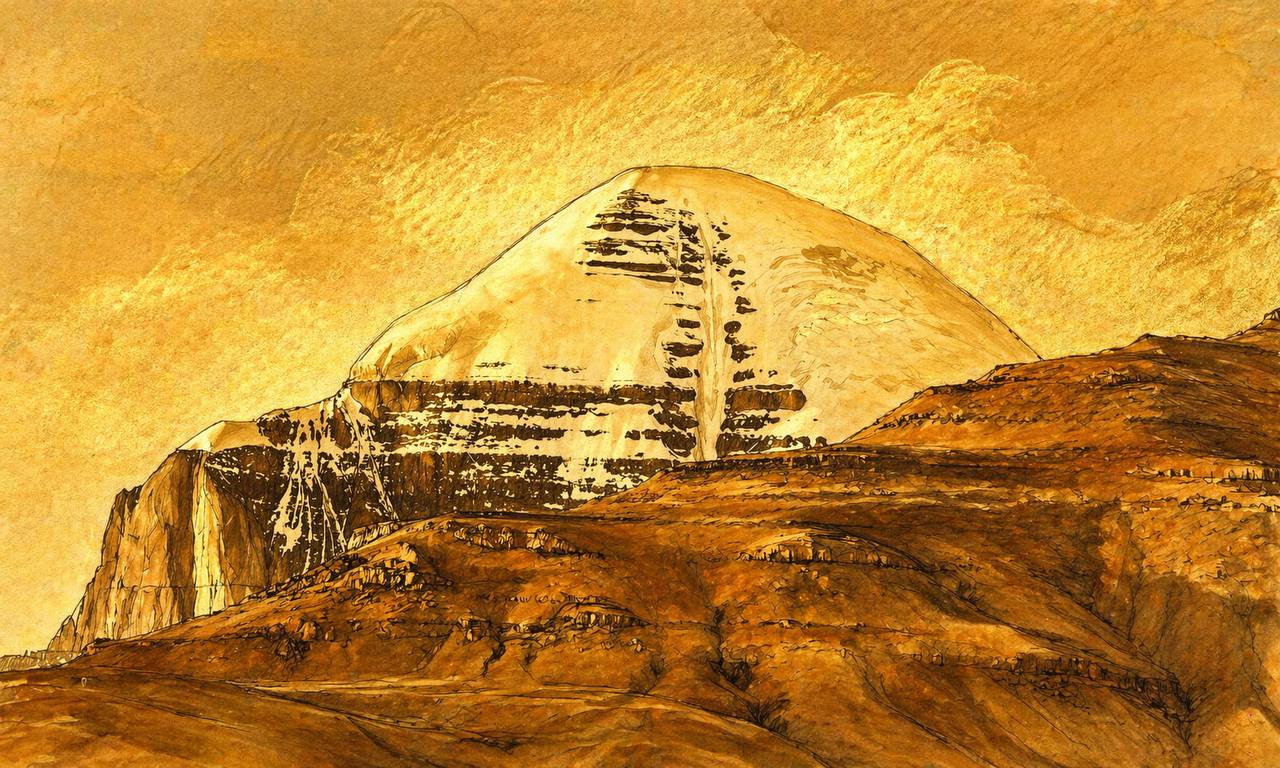
Wellness Kailash: Inner Kora + Cordyceps
Summer expedition — hot springs, the sacred circle, Tibetan medicine
Tour Program
Detailed description of each day of travel
Arrival in Lhasa
The group meets at Lhasa Gonggar International Airport. Transfer to a hotel in the city centre. Rest after the flight — adaptation to the 3,650 m altitude begins immediately. In the evening: group introductions, a detailed programme briefing, acclimatisation instructions, and distribution of oxygen cylinders for personal use in the hotel.
Lhasa — gentle acclimatisation and Tromzikhang
The first full day at altitude. In the morning, an unhurried walk along Barkhor Street around the Jokhang Temple. After lunch, a visit to Tromzikhang market, the main local trading hub for Tibetan herbs and medicines (not the tourist Barkhor, but a market that serves Tibetans themselves). A first look at the range of cordyceps — no purchases, reconnaissance only. The Tibetan medicine specialist shows what the genuine product looks like, explains quality grades and the signs of fakes.
Yangpachen — hot springs and acclimatisation
A day trip to the Yangpachen geothermal field (90 km north-west of Lhasa, altitude 4,300 m). Open-air geothermal pools, among the most famous in Tibet. A double benefit: the therapeutic effect of the mineral hot springs plus staged acclimatisation at 4,300 m by returning to 3,650 m for the night — the classic "climb high, sleep low" protocol. Return to Lhasa in the evening.
Lhasa → Shigatse
A 360 km drive along a scenic route. Along the way, stops at Lake Yamdrok (one of Tibet's three sacred lakes, its vivid turquoise water set against snowy peaks) and at the Kamba-La pass (4,700 m — another acclimatisation step). We skip monastery visits — the focus is on the drive and rest.
Rest day in Shigatse
A full rest day after the drive. A light walk through the old town. The second cordyceps stop: a local traditional-medicine market in Shigatse. The selection is smaller than in Lhasa, but prices are 10–15% lower and fakes are rarer — the city is closer to the source (Nagchu province). A comparison with what we saw at Tromzikhang.
Shigatse → Saga
A long 450 km drive across the high-altitude plateau. The first encounter with the austere beauty of western Tibet: boundless steppe, herds of yaks, lone monasteries on the horizon. Overnight in a simple guesthouse.
Rest day in Saga
A mandatory rest day after the drive and the climb to 4,500 m. Medical check (SpO2, pulse, AMS assessment). Free time in the village. The third cordyceps opportunity: a local market where nomadic Drokpa from the surrounding mountain pastures occasionally appear with a wild-harvested product. The odds are slim, but if you are lucky it is the cleanest supply chain of all.
Saga → Lake Manasarovar
A 380 km drive to sacred Lake Manasarovar. Along the way, the first distant view of Kailash, over the Mayum-La pass (5,200 m). Arrival at the lake in the evening. Meditation at sunset — Manasarovar is considered the most sacred lake of Buddhism, Hinduism, Jainism and Bön. By tradition, its waters cleanse karmic imprints.
Full day at Manasarovar — Chiu Gompa hot springs
The main day at the sacred lake. In the morning, a ritual bathe in the waters of Manasarovar (the water is cool, but immersion is traditionally considered essential). A visit to Chiu Gompa monastery on the north-western shore — a small monastery built on a cliff above the cave where Padmasambhava meditated. Right by the lake beneath the monastery are small hot springs in a cave (the second spring of the route). Meditation with a view of Kailash.
Manasarovar → Darchen
A short 110 km drive to Darchen — the base camp of Kailash. Check-in at a guesthouse. In the afternoon, a visit to the local shops in the village. The fourth and most interesting cordyceps stop: here nomadic harvesters from the surrounding valleys sell their product "from source", often without middlemen. Together with the expert, we decide where and how much to buy (drawing on all four stops).
Tirthapuri — hot springs and the sacred triangle
A day trip to Tirthapuri (70 km west of Darchen, about 1.5 hours' drive). This is the third point of the sacred Kailash–Manasarovar–Tirthapuri pilgrimage, corresponding to mind/enlightenment. Geysers, hot springs straight from the earth, Padmasambhava's meditation cave, and a small monastery on the site of his practice. The third and most sacred springs of the route — therapeutic and ritual bathing in one. Return to Darchen in the evening.
Rest day in Darchen — preparing for the Inner Kora
A full day of rest and preparation. A final medical check of the group (SpO2, pulse, altitude-sickness assessment). A briefing on the Inner Kora route — a short but energetically intense path, not physically hard yet demanding focus. Free time. The final cordyceps decision — purchasing from the chosen supplier.
THE INNER KORA (Nandi Parikrama)
The main ritual day of the expedition. The Inner Kora is the pilgrim's circuit around Mount Nandi, which stands right before the south face of Kailash as its "guardian". Formally this is a kora not around Kailash itself (the full circle is the outer kora) but around Nandi — yet it is precisely this route that brings the pilgrim as close to the south face of Kailash as physically possible. 13 chortens (stupas) line the path. The distance is 8–10 km at 5,200–5,500 m. The physical demand is moderate, but the energetic one is at its peak. Traditionally the Inner Kora is open only to pilgrims who have completed 13 outer koras; for our group it is made possible by a special permit obtained from the Chinese authorities in advance. Return to Darchen in the evening.
Rest day in Darchen after the kora
A day of full recovery after the Inner Kora. Relaxation, group reflection on the experience, free time. A last chance to visit the local cordyceps and souvenir sellers.
Darchen → Saga
The start of the return journey. A farewell look at Kailash. A long 450 km drive back across the same high-altitude plateau.
Rest day in Saga
A rest day after the long return drive. Descending from the Kailash zone is easier than the ascent, but a day of rest is essential to round off the expedition properly.
Saga → Shigatse
A 450 km drive back to Shigatse. The descent from 4,500 m to 3,840 m brings noticeably easier breathing and better sleep. In the evening: a shower and a proper bath, for the first time in many days.
Shigatse → Lhasa — farewell dinner
The final 360 km drive back to Lhasa. Check-in at the hotel. In the evening, a farewell group dinner at a Tibetan restaurant with traditional cuisine and a cultural programme. Closing the expedition experience and sharing impressions.
Departure home
Transfer to Lhasa Gonggar Airport according to your departure time. End of the expedition.