Introduction: the heart as a resonant organ
Centenarians from five longevity zones — Okinawa (Japan), Sardinia (Italy), Ikaria (Greece), Loma Linda (USA, Adventists), and Nicoya (Costa Rica) — live to 100+ years not because of one diet or one sport. Their advantage is simultaneous synchronization of several health axes: sleep, movement, nutrition, stress, social bonds, nature, and meaning.
The American Heart Association (AHA) formalized this logic in the concept of Life's Essential 8 (the 2022 update to Simple 7): eight components of cardiovascular health — diet, physical activity, nicotine exposure, sleep, BMI, lipids, glycemia, and blood pressure. Each component is scored on a 0–100 scale, and the total score predicts cardiovascular events and all-cause mortality with high accuracy (Lloyd-Jones DM, Circulation 2022, PMID 35766027[1]).
Liebig's law (the law of the minimum): the functional level of a system is determined by its weakest axis. If six of seven pillars are ideal but the seventh has failed, the overall result is pulled toward the weakest one. This is the inverse of the classic optimization logic of “improve what is already best.”
🌀
Social isolation = 15 cigarettes per day
The most counterintuitive finding in cardiology over the past 15 years: social isolation increases mortality to a degree comparable with smoking 15 cigarettes daily (Holt-Lunstad J, PLoS Medicine 2010, PMID 20668659[2] — meta-analysis of 148 studies, 308 000 participants).
Mechanism: chronic loneliness increases cortisol, activates the sympathetic nervous system, raises blood pressure, accelerates atherosclerosis, reduces expression of anti-inflammatory genes, and increases expression of pro-inflammatory genes. This is systemic allostatic load, which damages vessels faster than many classic risk factors.
In other words, the heart cannot be “cured” with a statin if six other axes are desynchronized. Cardioprotection is a regimen, not an intervention.
🌀
Seven pillars: each is an independent predictor
Each of the seven axes (or eight in the AHA framework) independently increases or decreases cardiovascular risk by 20–60%.
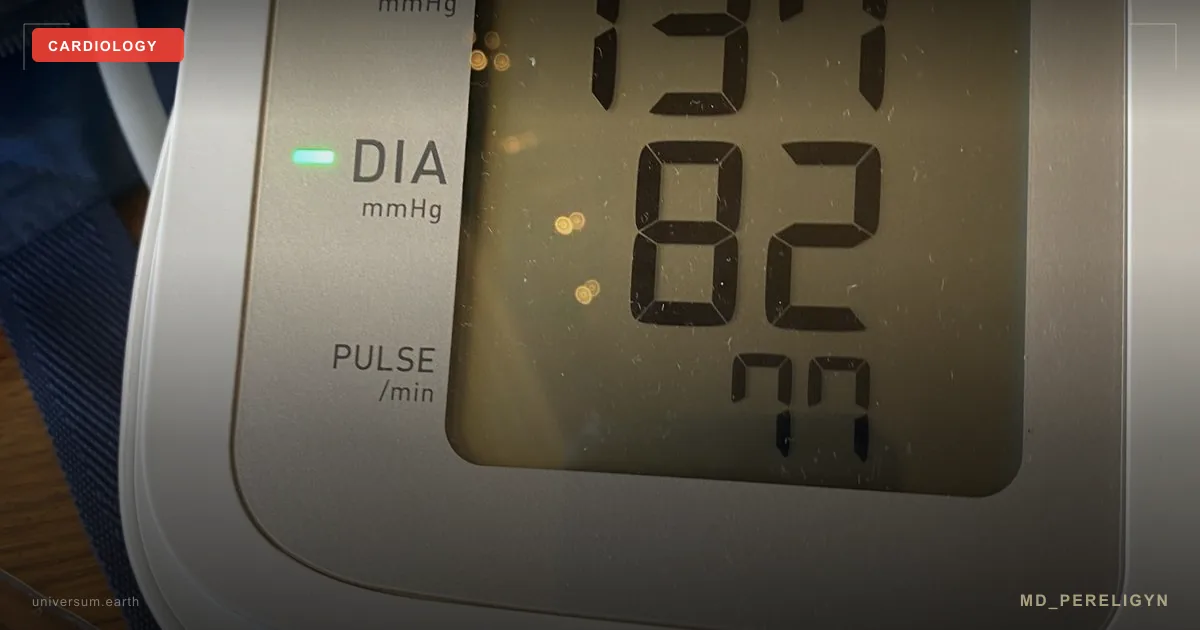
•Sleep 7–9 hours with bedtime before 23:00 — the melatonin and endothelial repair window. Regular sleep <6 hours increases the risk of coronary heart disease by 48% (Cappuccio FP, Eur Heart J 2011, PMID 21300732[3]). Circadian rhythm synchronizes all other axes. •Movement — not only structured training, but also daily activity (walking, stairs, gardening). Minimum target: 150 minutes of moderate-intensity activity + 2 strength sessions per week (AHA, 2022). •Nutrition — Mediterranean / DASH pattern. Fish 2 times/week (omega-3), extra-virgin olive oil, berries and cocoa (polyphenols), nuts 30 g/day, legumes, and minimal processed foods and fast carbohydrates. •Stress and breathing — nasal breathing with prolonged exhalation for 5 minutes/day activates the vagus nerve and lowers sympathetic tone. HRV (heart rate variability) is a biomarker of the integrated stress state. •Lipids and glycemia — LDL-C <100 mg/dL (1.8 mmol/L in high risk, 1.4 mmol/L in very high risk), HbA1c <5.7%, fasting insulin <10 μIU/mL. Metabolic health is the foundation. •Blood pressure — target <130/80 in high-risk patients (SPRINT, NEJM 2015, PMID 26551272[4]). Self-monitoring at home in the morning and evening. •Connection and meaning — daily social contact, oxytocin, ikigai (the Japanese concept of “the reason you get up in the morning”).
The eighth AHA axis — avoidance of nicotine — is so critical that it is often considered separately. Smoking disrupts all other axes at once: it damages the endothelium, raises blood pressure, impairs sleep, lowers HRV, and accelerates atherosclerosis.
🌀
Drivers of desynchronization
Eight factors of modern life systematically disrupt synchronization across the seven axes.
•Chronic sleep deficiency — late bedtime, blue screens after 22:00, irregular schedule. One hour of sleep loss reduces cognitive control and stress resilience the next day. •Sedentary lifestyle — >8 hours of sitting per day increases the risk of coronary heart disease by 14% independently of exercise (Diaz KM, Ann Intern Med 2017, PMID 28892811[5]). •Ultra-processed food (UPF) — a 10% increase in the share of UPF in the diet is associated with a 12% higher risk of cardiovascular events (Srour B, BMJ 2019, PMID 31142457[6]). •Chronic stress without recovery — high cortisol, sympathetic dominance, low HRV. Allostatic load damages the endothelium faster than lipids do. •Social isolation — especially after 60 years of age. Equivalent to 15 cigarettes/day. •Deficiency of sunlight and vitamin D — <30 ng/mL increases cardiovascular risk by 30%. •Circadian rhythm desynchronization — shift work, frequent flights, night shifts. Direct impairment of endothelial function and glucose metabolism. •Digital overload and attention fragmentation — constant notifications, absence of deep work, anxiety. Sympathetic dominance without breaks.
🌀
Synchronization markers: what to measure
Objective assessment of the seven pillars is a set of simple biomarkers that can be tracked every 3–6 months.
| Marker | Target |
|---|---|
| LDL-C | <100 mg/dL |
| HbA1c | <5.7% |
| HOMA-IR | <2.5 |
| Omega-3 index | >8% |
| RMSSD (HRV) | >30 ms |
| Home BP | <130/80 |
▸Sleep — Oura ring, Whoop, Apple Watch: duration, stages, recovery. Target sleep score >75, REM 1.5–2 h, deep sleep 1–1.5 h. ▸Movement — steps/day (target 8 000–10 000), VO2max (any fitness test), grip strength (>30 kg in women, >40 kg in men). ▸Nutrition — omega-3 index >8%, homocysteine <10 μmol/L, ferritin 50–100 ng/mL (not higher in the presence of inflammation), vitamin B12 >400 pg/mL. ▸Stress and HRV — RMSSD on Oura/Whoop in the morning after waking. Target >30 ms. Low HRV = sympathetic dominance. ▸Lipids — LDL-C <100 mg/dL (or an individualized target), one-time Lp(a), apoB <80 mg/dL, sdLDL. ▸Glycemia — HbA1c <5.7%, fasting insulin <10, HOMA-IR <2.5, and, if possible, CGM for 2 weeks to assess glycemic spikes. ▸Blood pressure — home monitor, morning and evening measurements for 7 days once per quarter. ▸Social engagement — subjective scale: number of meaningful contacts per week, presence of ikigai, relationship satisfaction.
This is not a “standard cardiology panel” but a cardiometabolic health dashboard. Every 3–6 months, we reassess the axes, identify the weakest one, and work on it first.
🌀
Holistic protocol: restoring the weakest axis
The principle of the md_pereligyn protocol: audit → Liebig's law → restore the weakest axis first. Not optimization of what is best, but elevation of what is weakest.
1. Sleep — the repair window
▸Bedtime before 23:00 — melatonin window 22:00–02:00; deep sleep is maximal in the first third of the night. ▸Regular schedule — ±30 minutes of bedtime and wake-time variability. ▸Cool bedroom (18–20°C), darkness, no electronics after 21:00. ▸Magnesium (glycinate) 400 mg before sleep — calms the central nervous system and supports the GABAergic system. ▸Glycine 3 g or L-theanine 200 mg — for difficult sleep initiation. ▸Morning light therapy 10 000 lux for 15–20 minutes — circadian rhythm synchronization.
2. Movement — not only exercise
▸8 000–10 000 steps/day — daily activity, not only the gym. ▸Aerobic activity 150 min/week — walking, swimming, cycling in zone 2 (you can talk but not sing). ▸Strength training 2–3 times/week — squats, deadlifts, presses. Supports muscle mass and insulin sensitivity after 40. ▸HIIT 1–2 times/week — increases VO2max and optimizes mitochondria. ▸Interrupt sitting every 30–45 minutes — stand up and walk for 2–3 minutes.
3. Nutrition — Mediterranean / DASH pattern
▸Fatty fish (salmon, sardine, mackerel) 2 times/week — omega-3 EPA+DHA. ▸Extra-virgin olive oil 30–60 mL/day — monounsaturated fats, polyphenols. ▸Berries and cocoa — anthocyanins and flavonoids, endothelial protection. ▸Nuts 30 g/day — almonds, walnuts, hazelnuts. LDL-C reduction by 5–10%. ▸Legumes 3–4 times/week — fiber, protein, low glycemic index. ▸Minimal UPF and fast carbohydrates — fructose, refined sugar, trans fats. ▸Meal timing — 8–12-hour eating window, last meal 3 hours before sleep.
4. Stress and breathing
▸Nasal breathing with prolonged exhalation — 5 minutes in the morning and evening. Vagus nerve activation. ▸Box breathing (4-4-4-4) — for acute stress. ▸Meditation 10–20 minutes/day — lower cortisol, higher HRV. ▸Digital hygiene — no phone during the first and last hour of the day. Notifications off. ▸Nature 30+ minutes/day — forest, park, sea. Lower cortisol, higher parasympathetic activity.
5. Metabolic health
▸Glycemic control — HbA1c <5.7%, fasting insulin <10, restriction of fast carbohydrates and fructose. ▸Lipid control — LDL-C according to the individualized target, omega-3 index >8%, apoB <80. ▸Blood pressure control — target <130/80 in high-risk patients. Home monitoring. ▸Reduction of visceral fat — waist circumference <94 cm (men), <80 cm (women).
6. Connection and meaning
▸Daily meaningful contact — call, meeting, conversation. Not social media. ▸Ikigai — weekly reflection: what gives me deep meaning, what I get up for in the morning. ▸Volunteering or mentorship — social engagement lowers mortality by 20–30% (House JS, Science 1988, PMID 3399889[7]). ▸Therapy or coaching for anxiety/depression — mental health is part of cardiology.
7. Nature and sun
▸30+ minutes/day in the sun — endogenous vitamin D, circadian synchronization. ▸Walk in a green area 3–5 times/week — lower cortisol, attention restoration. ▸Cold exposure 1–2 times/week — cold shower, open sea, brown fat activation. ▸Sauna 2–4 times/week — 50% reduction in cardiovascular mortality with 4+ sessions/week (Laukkanen JA, JAMA Intern Med 2015, PMID 25705824[8]).
🌀
What does NOT work (and why)
▸Optimizing one axis while others fail — a perfect diet without sleep does not produce a long-term effect. Liebig's law: the weakest axis limits the result. ▸Isolated use of supplements without lifestyle work — omega-3 without sleep and movement works 2–3 times less effectively than within a regimen. ▸Chronic overstrain in one axis — for example, excessive training (>15 h/week of intense activity) may increase cortisol and provoke sympathetic dominance. ▸Substitution of real connection with social media — passive content consumption does not provide oxytocin and does not reduce allostatic load. ▸Ignoring the social axis — in socially isolated men 50+, myocardial infarction risk is 30–50% higher even with ideal lipids and blood pressure. ▸Rigid optimization without sustainability — a regimen that cannot be maintained for 5+ years does not provide long-term benefit. A modest but sustainable protocol is better.
🌀
When to seek care
▸Chronic fatigue and reduced performance without an obvious cause ▸Insomnia, nocturnal awakenings, early-morning awakening ▸Poorly controlled arterial hypertension ▸Metabolic syndrome, prediabetes, visceral obesity ▸Family history of cardiovascular events before age 60 ▸Chronic stress, anxiety, emotional burnout ▸Social isolation or a feeling of “life without meaning” ▸A desire to build a personalized cardioprotective protocol for the next 5–10 years
I perform a complete audit of the seven pillars: laboratory panel (lipids with Lp(a) and sdLDL, HbA1c, insulin, omega-3 index, homocysteine, hsCRP, vitamin D), assessment of circadian rhythm and HRV, lifestyle analysis, and development of a personalized synchronization protocol.
🌀
Conclusion
The heart is a resonant organ. It reflects the synchrony of all body systems: sleep, movement, nutrition, stress, metabolism, social bonds, and meaning. A 100-year lifespan is not a cardiologist's feat; it is a regimen built across seven (or eight) axes simultaneously.
Liebig's law: health level is determined by the weakest axis. Ideal lipids do not compensate for chronic insomnia. An expensive diet does not work in social isolation. The gym does not offset chronic stress. Restoring the weakest axis first is the only strategy that produces a multiplicative effect.
The principle of the md_pereligyn protocol: quarterly audit of the seven pillars, identification of the weakest axis, restoration of that axis to the level of the others, then reassessment. This is not a quick sprint but a long-term regimen.
Cardioprotection is a regimen, not an intervention.
🌀
Sources
▸Lloyd-Jones DM, Allen NB, Anderson CAM, et al. Life's Essential 8: updating and enhancing the American Heart Association's construct of cardiovascular health. Circulation 2022;146:e18–e43. PMID 35766027[1] ▸Holt-Lunstad J, Smith TB, Layton JB. Social relationships and mortality risk: a meta-analytic review. PLoS Medicine 2010;7:e1000316. PMID 20668659[2] ▸Cappuccio FP, Cooper D, D'Elia L, et al. Sleep duration predicts cardiovascular outcomes: a systematic review and meta-analysis. Eur Heart J 2011;32:1484–1492. PMID 21300732[3] ▸Mozaffarian D. Dietary and policy priorities for cardiovascular disease, diabetes, and obesity. Circulation 2016;133:187–225. PMID 26746178[9] ▸Estruch R, Ros E, Salas-Salvadó J, et al. Primary prevention of cardiovascular disease with a Mediterranean diet (PREDIMED). N Engl J Med 2018;378:e34. PMID 29897866[10] ▸Diaz KM, Howard VJ, Hutto B, et al. Patterns of sedentary behavior and mortality in U.S. adults. Ann Intern Med 2017;167:465–475. PMID 28892811[5] ▸Srour B, Fezeu LK, Kesse-Guyot E, et al. Ultra-processed food intake and risk of cardiovascular disease: NutriNet-Santé. BMJ 2019;365:l1451. PMID 31142457[6] ▸Laukkanen JA, Khan H, Zaccardi F, Laukkanen T. Association between sauna bathing and fatal cardiovascular events. JAMA Intern Med 2015;175:542–548. PMID 25705824[8] ▸SPRINT Research Group. A randomized trial of intensive versus standard blood-pressure control. N Engl J Med 2015;373:2103–2116. PMID 26551272[4] ▸House JS, Landis KR, Umberson D. Social relationships and health. Science 1988;241:540–545. PMID 3399889[7]
Related articles: Endothelium: the Foundation of Vascular Health, Cholesterol Without Statins.
🌀
FAQ
Which axis should I start with if all seven need work? Liebig's law: start with the weakest one. Perform an audit — assess sleep, movement, nutrition, stress, lipids, glycemia, blood pressure, and social bonds. The axis with the lowest score is the entry point. Do not try to optimize everything at once — that is a path to burnout and relapse after 6–8 weeks.
Which is more important — nutrition or sleep? Sleep. Chronic sleep deficiency increases appetite for fast carbohydrates, reduces insulin sensitivity, raises cortisol and blood pressure, and damages the endothelium. An ideal diet in the setting of 5 hours of sleep does not produce a long-term effect. Restoring sleep is the foundation on which the other axes work.
How long does it take to see the effect of synchronization? Early shifts appear after 4–8 weeks: HRV increases, sleep deepens, blood pressure stabilizes, and morning fatigue resolves. Objective biomarkers (HbA1c, LDL-C, omega-3 index) change over 3–6 months. Deep synchronization and a sustainable regimen require 12–18 months.
Can one axis compensate for another? For example, can an ideal diet compensate for sleep deprivation? No. Each axis works through independent mechanisms. Diet affects lipids, glycemia, and the endothelium. Sleep affects circadian rhythm, DNA repair, hormones, and immunity. These are parallel pathways, not interchangeable ones. A weak axis always pulls the system down — Liebig's law.
How can I assess my Life's Essential 8 score? The My Life Check calculator (AHA) on heart.org provides a 0–100 score across eight components. A score >80 indicates ideal cardiovascular health, 50–79 intermediate health, and <50 low health requiring systematic work. I perform an extended audit with a laboratory panel and an individualized protocol.
This article is for informational purposes and does not replace medical consultation. Before starting any nutraceuticals, changing medication therapy, or undergoing diagnostic procedures, discuss the plan with your treating physician.
Key facts
- Social isolation raises mortality to the level of smoking 15 cigarettes daily (meta-analysis of 148 studies, 308,000 participants).
- Regular sleep under 6 hours increases coronary heart disease risk by 48%.
- Liebig's law: health level is set by the weakest axis, which is restored first.
- Sauna 4+ times per week reduces cardiovascular mortality by 50%.
- Sitting >8 hours per day raises coronary heart disease risk by 14%, independent of exercise.