Introduction: Calories Are Not the Whole Story
Over the past 50 years, the global prevalence of obesity has tripled. The standard explanation — overeating and sedentary lifestyle — fails to account for several observations: obesity is rising even in newborns and laboratory animals on controlled diets; people with identical caloric intake and activity levels gain weight differently; the obesity pandemic accelerates in parallel with the growth of synthetic chemical production.
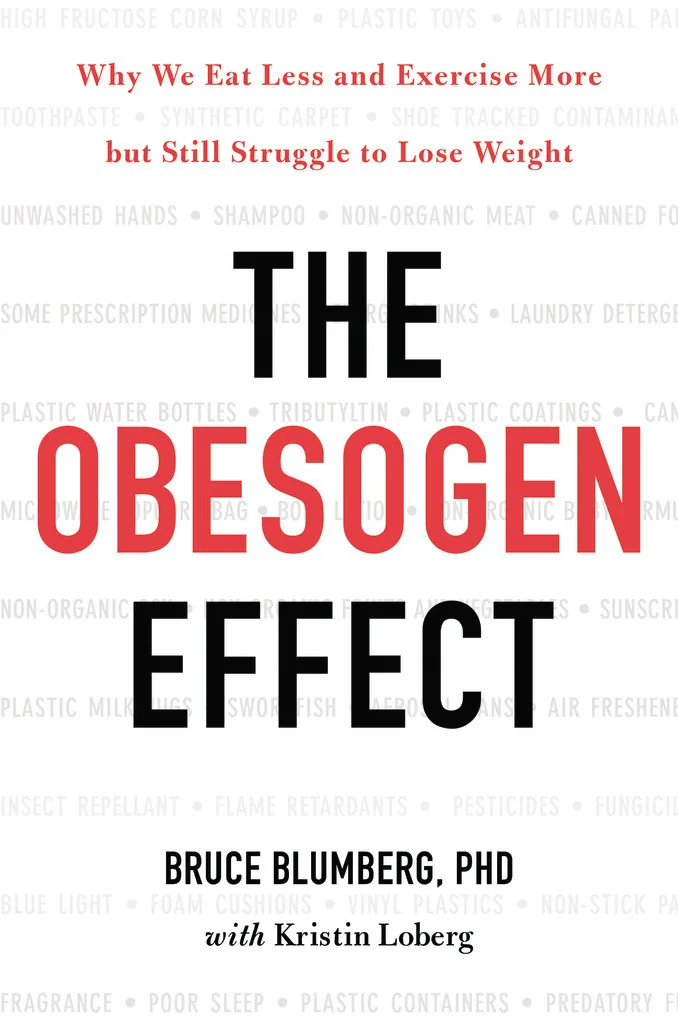
Professor Bruce Blumberg, an endocrinologist-researcher at the University of California, Irvine, proposed the missing piece of the puzzle. In 2006, he coined the term obesogen — a chemical that disrupts normal development and function of adipose tissue, reprogramming metabolism toward fat storage. His book The Obesogen Effect (2018) is the first popular-science review of 15 years of research published in Nature, The Lancet, Environmental Health Perspectives, and dozens of peer-reviewed journals.
🌀
What Are Obesogens: Four Mechanisms of Action
Obesogens are a subclass of endocrine-disrupting chemicals (EDCs) that specifically disrupt adipose tissue metabolism. Blumberg describes four key mechanisms:
1. Increasing Fat Cell Numbers (Adipogenesis)
Normally, the number of adipocytes (fat cells) in adults remains relatively stable — only their size changes. Obesogens such as tributyltin (TBT) activate nuclear receptors PPARγ and RXR, triggering differentiation of mesenchymal stem cells into new adipocytes instead of bone or muscle cells. A study from Blumberg's lab in Molecular Endocrinology (2006) showed that TBT at doses below the "safe" threshold increased adipocyte numbers by 30–50%.
2. Disrupting Appetite Hormones (Leptin and Ghrelin)
Leptin is the satiety hormone secreted by adipose tissue; ghrelin is the hunger hormone released by the stomach. BPA (bisphenol A) and its analogues (BPS, BPF) disrupt leptin signaling, creating leptin resistance: the brain cannot "hear" the satiety signal despite high circulating leptin levels. The result — chronic hunger despite excess fat stores.
3. Shifting the Metabolic Set Point
The body maintains weight around a specific set point. Obesogens, acting on the hypothalamus (the center of energy balance regulation), shift this set point upward. Blumberg presents data showing that mice exposed to TBT in utero weigh 20% more than controls throughout their entire lives — even on identical diets with identical physical activity.
4. Epigenetic Inheritance
The most alarming mechanism: obesogens modify the epigenome — chemical marks on DNA (methylation) and histones that regulate gene activity. Maternal exposure to TBT during pregnancy causes obesity not only in the first generation of offspring (F1), but also in grandchildren (F2) and great-grandchildren (F3) — without repeated exposure. A study from Blumberg's lab in Environmental Health Perspectives (2013) was the first to demonstrate transgenerational inheritance of obesity through epigenetic mechanisms.
🌀
Where Obesogens Hide: Major Sources
| Category | Substances | Where Found |
|---|---|---|
| Food | Pesticides (atrazine, DDT), fungicides (triflumizole), growth hormones | Conventional fruits/vegetables, factory-farmed meat, dairy products |
| Plastics & Packaging | BPA, BPS, BPF, phthalates | Plastic bottles, food containers, can linings, thermal receipt paper |
| Personal Care | Parabens, triclosan, phthalates, UV filters | Shampoos, lotions, deodorants, toothpastes, sunscreens |
| Environment | PFAS (forever chemicals), flame retardants (PBDE), TBT | Non-stick coatings, water-resistant fabrics, furniture foam, household dust, tap water |
Blumberg emphasizes the principle "the dose does not make the poison" for EDCs: unlike classical toxicology, endocrine disruptors can be more active at low doses than at high doses (non-monotonic dose-response curve). This means that "safe" concentrations set by regulators may be biologically active.
🌀
Blumberg's Three-Step Plan
In the concluding section of the book, Blumberg proposes a practical plan to minimize exposure:
Step 1: Diet (Eat Clean)
- Prioritize organic produce, especially from EWG's "Dirty Dozen" (strawberries, spinach, apples, grapes) - Minimize foods in plastic packaging and canned goods - Filter tap water (activated carbon + reverse osmosis) - Reduce consumption of factory-farmed animal products - Fermented foods and fiber to support detoxification via the microbiome
Step 2: Plastics (Lose the Plastic)
- Glass or stainless steel food storage containers - Never heat food in plastic (BPA/phthalate migration increases 55-fold when heated) - Ditch plastic water bottles — glass or steel - Avoid thermal receipt paper (contains BPA/BPS) - Do not use plastic wrap in contact with fatty foods
Step 3: Personal Space (Clean Up Your Act)
- Audit personal care products: use EWG Skin Deep app to check ingredients - Avoid products listing "parfum/fragrance" (masks phthalates) - Natural cleaning agents (vinegar, baking soda, castile soap) - Wet mopping instead of dry sweeping (household dust concentrates flame retardants and PFAS) - Ventilate rooms — volatile organic compounds (VOCs) off-gas from furniture and finishes
🌀
Critical Assessment
The scientific basis for obesogens continues to strengthen. The Endocrine Society's consensus statement (2015, 2020) recognizes EDCs as a significant risk factor for obesity and metabolic syndrome. A meta-analysis in Obesity Reviews (2019) confirmed the association between BPA exposure and increased body mass index in 32 of 38 studies.
That said, Blumberg is a researcher, not a clinician, and his recommendations have limitations: the individual contribution of obesogens to a specific patient's obesity is difficult to quantify; eliminating all EDCs is practically impossible; and caloric balance remains the central factor. The book should be read not as a replacement for dietetics, but as a supplement — yet another modifiable risk factor.
🌀
Conclusion
Obesity is not a willpower deficit. It is the result of interplay between genetics, nutrition, physical activity, the microbiome, and the chemical environment. Blumberg's book fills a critical gap in understanding the obesity pandemic and offers concrete, evidence-based steps for reducing obesogen exposure.
For clinicians: screening for EDC exposure (lifestyle history, occupation, household chemicals) should become part of metabolic assessment in patients with obesity — alongside evaluation of diet, activity, and hormonal profile.
---
🌀
PPARγ/RXR Activation: The Molecular Step the Book Names but Does Not Explain
Tributyltin (TBT) and several bisphenols act as high-affinity, dual ligands for the peroxisome proliferator-activated receptor gamma (PPARγ) and its obligate heterodimer partner, retinoid X receptor (RXR). PPARγ is the master transcription factor of adipogenesis: when activated in a mesenchymal stem cell, it commits that cell to the adipocyte lineage rather than to bone, muscle, or cartilage. TBT binds PPARγ and RXR with nanomolar affinity, which is several orders of magnitude below circulating concentrations of endogenous fatty-acid ligands PMID: 36740725. This is the mechanistic basis for the claim repeated throughout the obesogen literature that the cell makes a one-way decision: once a precursor commits to becoming a pre-adipocyte under PPARγ activation, it cannot revert.
The downstream cascade is well characterized. PPARγ activation up-regulates C/EBPα, FABP4 (aP2), adiponectin, LPL, and GLUT4 transcription, which together build a triglyceride-storing cell. The same pathway is the therapeutic target of thiazolidinediones (pioglitazone, rosiglitazone) — drugs that improve insulin sensitivity precisely by expanding subcutaneous adipose tissue. Obesogens exploit the same biology without the metabolic benefits seen with the prescription ligands.
The non-monotonic dose-response that endocrinology textbooks now treat as a feature, not an artifact, has a receptor-level explanation. At low doses, the chemical occupies PPARγ; at higher doses, it triggers receptor down-regulation, cytotoxicity, or competing estrogen receptor effects that mask the adipogenic signal. The result is a U-shaped or inverted-U curve, where the highest experimental dose can show less effect than the lowest. Regulatory thresholds based on linear extrapolation from high-dose toxicology will systematically underestimate low-dose endocrine outcomes — this is the practical reason the book's critique of "safe" exposure limits is not rhetorical.
For clinical reasoning, the implication is concrete: a patient asking whether their daily plastic-bottle and receipt-paper exposure can matter at "low" doses is asking a biologically valid question. The dose-response curve for PPARγ-mediated adipogenesis does not behave like the curve for acute toxicity.
🌀
Which Obesogen Biomarkers Are Actually Measurable in a Clinical Setting
The book lists chemicals but does not tell the reader which can be quantified in a person and against what reference distribution. The following are the biomarkers with established population data in NHANES and European cohorts.
Urinary bisphenol A (total, free + conjugated). Detectable in over 90% of adult Americans. NHANES geometric mean is approximately 1.5–2.5 µg/L; the 95th percentile sits near 10–15 µg/L. Half-life is short (~6 hours), so a single spot urine reflects the prior day's exposure. Higher urinary BPA quartiles are associated with increased adiposity and impaired insulin signaling in adipose explants PMID: 38048832.
Urinary phthalate metabolites (MEHP, MEHHP, MEOHP from DEHP; MBP from DBP; MEP from diethyl phthalate). Half-lives are 6–24 hours. Higher sums of high-molecular-weight phthalate metabolites have been associated with greater BMI and waist circumference in NHANES cycles, particularly in adult women.
Serum perfluoroalkyl substances (PFOA, PFOS, PFHxS, PFNA). Unlike bisphenols and phthalates, PFAS have half-lives measured in years (PFOS ≈ 5 years, PFOA ≈ 2–4 years). A serum measurement is a long-term exposure marker. Higher baseline PFAS concentrations have been associated with greater weight regain after dietary intervention in prospective cohorts.
Practical caveats for the clinician: single-spot urinary measurements of short-half-life chemicals have substantial within-person variability. For meaningful classification, averaging two or three samples spaced over weeks reduces misclassification. Serum PFAS, by contrast, is stable enough that a single draw is informative. None of these biomarkers has a regulatory "treatment threshold" — they are used for exposure ranking, not as diagnostic cut-offs.
🌀
Leptin Resistance: The Hypothalamic Circuit the Book Treats as a Black Box
The book describes leptin resistance as "chronic hunger despite excess fat." The mechanism deserves more precision because it determines what does and does not reverse with exposure reduction.
Leptin is secreted by adipocytes in proportion to fat mass and signals satiety through the long-form leptin receptor (LepRb) on POMC and AgRP neurons in the arcuate nucleus of the hypothalamus. LepRb activates JAK2-STAT3 signaling, which drives POMC transcription (anorexigenic) and suppresses NPY/AgRP (orexigenic). In obesity, circulating leptin is elevated but the hypothalamic response is blunted — the classic resistance phenotype.
Three converging mechanisms break this signal. First, SOCS3 (suppressor of cytokine signaling 3) is induced by leptin itself and provides negative feedback; chronically high leptin keeps SOCS3 elevated, which uncouples LepRb from STAT3. Second, PTP1B (protein tyrosine phosphatase 1B) dephosphorylates JAK2 and further dampens the signal. Third, hypothalamic ER stress and low-grade inflammation triggered by saturated fatty acids and lipopolysaccharide translocation from the gut activate IKKβ/NF-κB and contribute to LepRb signal degradation PMID: 29562733.
Where obesogens enter this circuit is now mapped at multiple steps. Prenatal BPA exposure alters POMC and AgRP neuron development in rodent models and is associated with disturbed hypothalamic methylation patterns. Phthalate metabolites have been linked to altered hypothalamic-pituitary axis function in adolescents. The clinical signature — high fasting leptin (often >25 ng/mL in women, >15 ng/mL in men) with normal or slightly elevated insulin and a high leptin-to-adiponectin ratio — overlaps with classic diet-induced resistance but adds a developmental component that diet alone cannot reverse.
This matters for patient expectations. A patient told that their hunger is leptin resistance should also be told that the receptor itself is not damaged, that weight loss reduces leptin and partially restores signaling, and that the recovery curve is typically months, not weeks.
🌀
How Fast Can Urinary Biomarkers Fall: The Intervention Evidence
The book's three-step plan (eat clean, lose the plastic, clean up personal care) needs an estimate of effect size. Controlled intervention studies in this area are small but consistent.
Short dietary interventions that replace canned food and plastic-packaged food with fresh, unpackaged equivalents reduce urinary BPA by 50–66% within 3–5 days in family-cohort studies. Switching to phthalate-free personal-care products produces a 27–44% drop in urinary MEP and other phthalate metabolites within one week. These effect sizes are reproducible because of the short half-lives — the body clears these compounds quickly when intake stops.
PFAS behave differently. Because of multi-year serum half-lives, behavioral intervention produces no measurable serum decline in three months. Documented routes for accelerated clearance are limited; cholestyramine and phlebotomy have small-trial evidence in occupational populations, but neither is standard care, and both require physician supervision.
Drinking-water filtration is the single highest-yield intervention for PFAS exposure where municipal water is contaminated. Activated carbon block filters reduce PFOA and PFOS by 70–90%; reverse-osmosis systems exceed 95%. For bisphenols and phthalates, the dominant route is dietary (canned and ultra-processed food) and dermal (thermal receipts, certain personal-care emulsifiers), not water.
Practical patient guidance with realistic time frames: urinary BPA and phthalates respond within one week to behavior change and can serve as a feedback loop. Serum PFAS will not change on this time scale, and patients should be told so explicitly to prevent disappointment with self-testing. Body burden of organochlorines and lipophilic PFAS declines slowly with weight loss, since adipose tissue is the storage compartment — rapid weight loss can transiently increase circulating concentrations as the chemicals mobilize.
🌀
Clinical Assessment for the Patient with Suspected Obesogen-Linked Weight Resistance
A structured approach lets the clinician separate exposure-driven obesity from the more common drivers (caloric surplus, sleep restriction, untreated hypothyroidism, medication-induced weight gain) without overstating what the biomarker evidence can prove.
Exposure biomarkers worth considering (in research-aware practice, not routine care): two spot urinary BPA and phthalate metabolite panels spaced two weeks apart; serum PFOA/PFOS if drinking-water source is high-risk; lipid-adjusted serum DDE/PCB if age >50 or high-fish-diet history.
The goal of this framework is calibration. Obesogens are a real and quantifiable contributor to metabolic disease; they are not a diagnosis that absolves the standard work-up. The clinician who can hold both ideas simultaneously gives the patient the most accurate picture.
References
- PMID: 36740725. PMID 36740725
- PMID: 38048832. PMID 38048832
- PMID: 29562733. PMID 29562733
- PMID: 30831435. PMID 30831435
- PMID: 39519589. PMID 39519589
Key facts
- Obesogen (Blumberg's 2006 term) is an endocrine disruptor that reprograms adipose tissue toward fat storage, via four mechanisms.
- TBT activates PPARgamma and RXR and, below the 'safe' threshold, increases adipocyte numbers by 30-50% (Molecular Endocrinology, 2006).
- Mice exposed to TBT in utero weigh 20% more than controls for life, on identical diets and activity.
- Maternal TBT exposure causes obesity in F1, F2, and F3 offspring without re-exposure — epigenetic inheritance.
- Heating food in plastic raises BPA/phthalate migration 55-fold; a meta-analysis linked BPA to higher BMI in 32 of 38 studies.