Introduction: the heart should not be a metronome
Common intuition says: “a healthy heart beats evenly, like a clock.” This is physiologically incorrect. The heart of a healthy person constantly adjusts each beat to microfluctuations in breathing, vascular tone, hormonal milieu, and emotional state. Each R-R interval differs from the adjacent one by 20–100 ms.
This variability is called HRV (heart rate variability) and represents a direct indicator of autonomic nervous system balance — the ratio between parasympathetic (vagal) and sympathetic tone. The higher the HRV, the stronger the parasympathetic tone, the more flexibly the system responds to stressors, and the faster it recovers.
Each 1 standard deviation decrease in SDNN in population cohorts is associated with a 32% increase in the risk of a first CV event (Hillebrand S, Europace 2013, PMID 23370966[1]). At the same time, HRV measurement is now available through wearable devices (Apple Watch, WHOOP, Oura) with acceptable accuracy.
🌀
Physiology: why HRV reflects health
Each heartbeat is controlled not only by the sinus node but also by continuous modulation from the autonomic nervous system. The vagus nerve (n. vagus) slows the rhythm through muscarinic receptors in the sinus node; sympathetic fibers accelerate it through β1-adrenergic receptors.
At rest and during deep inhalation, vagal influence predominates and the rhythm slows. During exhalation, vagal influence weakens and the rhythm accelerates slightly. This phenomenon is called respiratory sinus arrhythmia and forms the basis of short-term HRV.
▸High HRV means that the vagus nerve works efficiently, parasympathetic tone is well developed, and the system responds to any stimulus quickly and appropriately. ▸Low HRV means dominance of sympathetic tone, vagal depletion, and rigidity of response. This is typical of chronic stress, overfatigue, infection, early heart failure, prediabetes, and metabolic syndrome.
The polyvagal hypothesis (Thayer JF, Int J Cardiol 2010, PMID 19910061[2]) explains the association between HRV and lifespan through a unified mechanism: the vagus regulates not only heart rhythm but also the anti-inflammatory reflex, endothelial function, intestinal peristalsis, and insulin resistance. Low HRV is an indicator of systemic autonomic dysregulation, not a local cardiac problem.
🌀
Metrics: what exactly to measure
HRV is not a single number but a family of metrics, each corresponding to a specific analysis duration and a specific component of autonomic balance.
▸RMSSD (root mean square of successive differences) — the root mean square of successive differences. A short-term (5 minutes) marker of parasympathetic activity. Adult norm: 20–50 ms at night. This is the main metric displayed by Apple Watch, WHOOP, and Oura. ▸SDNN (standard deviation of NN intervals) — the standard deviation of all R-R intervals over 24 hours. A global marker of overall variability (both parasympathetic and sympathetic). Norm: >100 ms. The standard metric for Holter ECG monitoring. ▸LF/HF ratio (low frequency / high frequency) — spectral analysis. LF (0.04–0.15 Hz) is indirectly associated with sympathetic activity + the baroreflex, while HF (0.15–0.4 Hz) is associated with parasympathetic activity. Interpret the ratio cautiously: the simplification “LF=sympathetic, HF=parasympathetic” is physiologically incorrect. ▸pNN50 — the percentage of NN intervals that differ from the adjacent interval by more than 50 ms. An alternative to RMSSD, easier to interpret in short recordings. ▸SDANN — the standard deviation of average NN intervals in 5-minute segments. A marker of circadian and hormonal modulations.
For daily monitoring, the most practical metric is nighttime RMSSD. It is measured during sleep (minimal artifacts from movement and emotions), is relatively stable, and reflects current vagal tone well.
🌀
Age norms (nighttime RMSSD)
HRV physiologically declines with age — this is a natural process of reduced vagal tone. Compare your value with the age norm, not with an absolute number.
| Age | Nighttime RMSSD |
|---|---|
| 20–30 y | 50–80 ms |
| 30–40 y | 40–65 ms |
| 40–50 y | 30–55 ms |
| 50–60 y | 25–45 ms |
| 60–70 y | 20–35 ms |
| 70+ y | 15–30 ms |
•20–30 years: 50–80 ms •30–40 years: 40–65 ms •40–50 years: 30–55 ms •50–60 years: 25–45 ms •60–70 years: 20–35 ms •70+ years: 15–30 ms
Triggers for evaluation: a 2-fold decrease from the individual age-normal level, or a sharp drop of 30%+ over 2–4 weeks. This is a signal of overtraining, infection, psychoemotional stress, early infection (COVID and influenza are detected by an HRV drop 1–2 days before symptoms), decompensation of hidden cardiac pathology, or metabolic dysregulation.
🌀
Where to measure
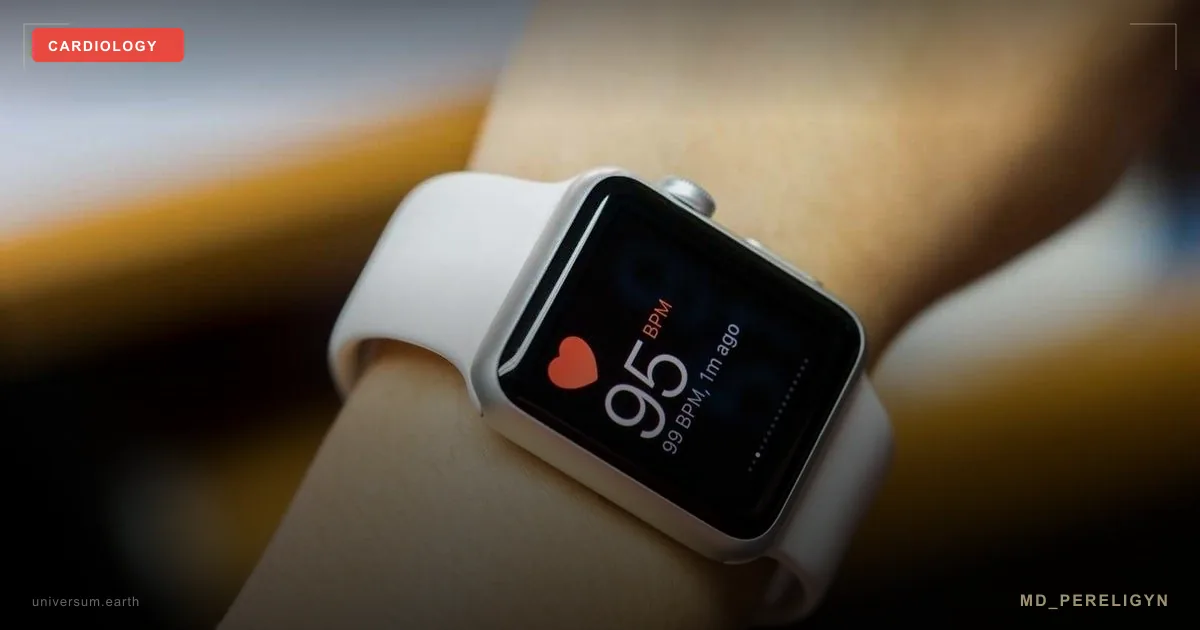
Today, HRV monitoring is available at the consumer level. Accuracy is sufficient for trends, although absolute values are not comparable between devices.
▸Apple Watch — nighttime RMSSD in the Health app, acceptable accuracy, free if you already have the device. The algorithm averages several short sessions during the night. ▸WHOOP — the best consumer-grade accuracy for nighttime HRV, a long 5–10 minute recording during deep sleep, direct integration into the Recovery score. Subscription model. ▸Oura Ring — stable nighttime measurement during sleep, correlation with medical ECG ~0.9. Convenient for sleep and basic metrics. ▸Polar H10 + apps (Elite HRV, HRV4Training) — a chest strap with medical-grade accuracy, morning 1–2 minute standing/sitting measurements. The best price-to-accuracy ratio for serious monitoring. ▸Garmin Body Battery — nighttime HRV + daytime monitoring, for athletes with training context. ▸24h Holter ECG — the gold standard for SDNN, medical accuracy. Prescribed by a cardiologist when autonomic neuropathy is suspected or for risk assessment.
For daily practice, one trusted device is enough. The key is consistency (one device, identical recording conditions) for trend interpretation.
🌀
Holistic protocol: how to increase HRV
1. Regular aerobic exercise
▸Zone 2 — 150 minutes/week — an exercise intensity at which HR remains at 60–70% of maximum. You can maintain a conversation and breathe through your nose. At this heart rate, mitochondria rely on fats, sympathetic activation is moderate, and the post-exercise parasympathetic rebound is strong. ▸HIIT 1–2 times per week — short intervals of maximal intensity increase aerobic capacity and stimulate long-term growth of vagal tone. ▸Strength training 2–3 times/week — supports muscle mass, insulin sensitivity, and mitochondrial density.
The paradox: on the day of a hard workout, HRV falls. This is normal and expected — an acute sympathetic response. After 24–48 hours, HRV should exceed baseline (supercompensation). If this does not happen within 3–4 days, it indicates overfatigue.
2. Breathing practices
▸Resonance frequency breathing at 6 breaths/minute for 10–20 minutes/day — the frequency at which the baroreflex is maximally synchronized with breathing. Acute HRV increase by 2–3 times, chronic potentiation of the vagus. Proven effect on anxiety, hypertension, and depression. ▸Box breathing (4-4-4-4) — stabilization during stress, vagal activation. ▸Wim Hof / hyperventilation — acute episodes of cold tolerance and an adrenaline peak; not for daily practice.
3. Cold exposure
▸Cold shower for 1–3 minutes at the end of a regular shower — a strong vagal stimulus, catecholamine activation followed by parasympathetic recovery. ▸Ice baths at 10–15 °C for 2–5 minutes 2–3 times/week — a more pronounced effect on HRV, but requires adaptation. ▸Contrast shower — a less aggressive alternative.
4. Sleep
▸7–9 hours on a stable schedule — not “catching up on sleep on weekends,” but the same bedtime/wake time ±30 minutes. ▸Dark room, cool temperature 18–20 °C — optimization of sleep architecture and nighttime RMSSD. ▸No screens 60 minutes before sleep — blue light suppresses melatonin, reduces deep sleep, and lowers nighttime HRV. ▸Workouts should end 3+ hours before sleep if you are sensitive.
5. Nutrition and nutraceuticals
▸Omega-3 EPA+DHA 2 g/day — nighttime RMSSD increase by 5–15% over 8–12 weeks. ▸Magnesium (glycinate / taurate) 400 mg in the evening — relaxation, vagal support, improved deep sleep. ▸Vitamin D up to 60–80 ng/mL — correlation with HRV. ▸Mediterranean / DASH pattern — general support for autonomic regulation. ▸Alcohol — each serving lowers nighttime HRV by 7–15%. For serious HRV work — zero or 1–2 servings/week at most.
6. Stress management
▸Meditation / mindfulness 10–20 minutes/day — HRV increase comparable to the effect of aerobic training, especially in patients with chronic stress. ▸HRV biofeedback — apps with resonance breathing + real-time visual HRV feedback. The fastest way to learn to consciously increase vagal tone. ▸Working with boundaries, delegation, schedule — nonpharmacological tools without which no protocol will produce a sustained effect.
🌀
What does NOT work
▸A single measurement “when I remembered” — one number without a trend is not representative. Minimum: 14 days with one device under identical conditions. ▸Comparison with a friend or an internet table — absolute values depend strongly on device, anatomy, and training status. The personal trend is informative. ▸HRV without sleep and without exercise — optimizing HRV without working on sleep and aerobic exercise does not work. It is not “another supplement,” but a system indicator. ▸Alcohol as “relaxation” — subjectively relaxing, objectively crushes nighttime HRV by 30–50% and keeps it low for 36–48 hours. ▸Overtraining to “boost HRV” — the opposite effect. If morning RMSSD remains below baseline for 4–7 days, reduce the load. ▸HRV as a replacement for medical diagnostics — low HRV signals dysregulation, but does not replace ECG, echocardiography, and hormonal profiling when symptoms are present.
🌀
When to seek care
▸Stable decrease in nighttime HRV by 30%+ from your baseline over 2–4 weeks without an obvious cause ▸Chronically low HRV (RMSSD <15 ms at night in an adult aged 30–50 years) despite attempts at the protocol ▸Suspected autonomic neuropathy (diabetes, Parkinson’s disease, postural orthostatic tachycardia syndrome) ▸Resistant hypertension + low HRV — diagnosis of the autonomic component ▸Chronic fatigue, overtraining syndrome, post-COVID syndrome ▸Family history of sudden cardiac death + low HRV
I perform a comprehensive assessment of autonomic regulation with HRV interpretation in the context of the cardiovascular, metabolic, and endocrine profile, and develop a personalized protocol to increase vagal tone.
🌀
Conclusion
HRV is the most underestimated biomarker in preventive cardiology. It reflects not local heart function but the state of the autonomic nervous system as a whole. Low HRV precedes clinical symptoms by years and functions as an early signal of dysregulation.
Metrics (RMSSD, SDNN, LF/HF), age norms, wearable devices, and an improvement protocol through aerobic exercise, breathing, cold exposure, sleep, and nutrition form a practical prevention tool available today to anyone with a smartwatch.
The key practice is the trend over 2–4 weeks, not one number. Low HRV without an obvious cause is a reason to reduce load and check your health status.
🌀
Sources
▸Tsuji H, Larson MG, Venditti FJ, et al. Impact of reduced heart rate variability on risk for cardiac events. The Framingham Heart Study. Circulation 1996;94:2850–2855. PMID 8941112[3] ▸Hillebrand S, Gast KB, de Mutsert R, et al. Heart rate variability and first cardiovascular event in populations without known cardiovascular disease: meta-analysis and dose-response meta-regression. Europace 2013;15:742–749. PMID 23370966[1] ▸Shaffer F, Ginsberg JP. An overview of heart rate variability metrics and norms. Front Public Health 2017;5:258. PMID 29034226[4] ▸Thayer JF, Yamamoto SS, Brosschot JF. The relationship of autonomic imbalance, heart rate variability and cardiovascular disease risk factors. Int J Cardiol 2010;141:122–131. PMID 19910061[2] ▸Lehrer PM, Vaschillo E, Vaschillo B, et al. Heart rate variability biofeedback. Appl Psychophysiol Biofeedback 2003;28:13–23. PMID 12737093[5]
Related articles: Endothelium: the foundation of vascular health, Cholesterol without statins.
🌀
FAQ
What HRV should be considered normal? It depends on age and metric. For nighttime RMSSD: 20–30 years — 50–80 ms, 40–50 years — 30–55 ms, 60+ — 20–35 ms. Compare it with your own baseline over 14+ days, not with a friend and not with a table of absolute norms. The trend is more important than one measurement.
Can HRV be increased after age 50+? Yes. Zone 2 aerobic exercise (150 minutes/week), resonance breathing (6 breaths/minute), cold exposure, omega-3 (2 g/day), magnesium, and sleep work increase nighttime RMSSD by 20–40% over 8–12 weeks even in patients aged 60+. The age norm declines, but improvement within your group is possible.
How often should I measure it? Measure nighttime RMSSD daily on one device. Analyze the trend over 7–14 days. A single measurement “when I remembered” is not representative. Acute drops (infection, stress, alcohol) are informative as signals, but for long-term decisions, rely on the moving average.
HRV dropped sharply — what should I do? During the first 24 hours: reduce training load, go to bed earlier, avoid alcohol, and assess infection status. If the drop persists for 3+ days without an obvious cause, it is a reason to check ferritin, TSH, CRP, fasting glucose, and schedule a consultation. An HRV drop 1–2 days before symptoms often detects the onset of infection (including COVID).
Should I buy WHOOP/Oura/Apple Watch specifically for HRV? To start, Apple Watch is enough if you already have one. For serious work on sleep and recovery — Oura Ring or WHOOP. For medical-grade accuracy — Polar H10 + Elite HRV. The key is consistency with one device, not choosing the best one.
This article is for informational purposes only and is not a substitute for professional medical advice. Discuss any nutraceutical, medication adjustment, or diagnostic procedure with your treating physician before starting.
Key facts
- HRV is the variability of R-R intervals; each differs by 20–100 ms — a direct indicator of autonomic balance.
- Each 1 SD decrease in SDNN is associated with a 32% higher risk of a first CV event.
- Adult norm: nighttime RMSSD 20–50 ms; 24-hour SDNN >100 ms.
- Age norms (RMSSD): 20–30 y 50–80 ms, 40–50 y 30–55 ms, 60+ 20–35 ms.
- Omega-3 2 g/day raises nighttime RMSSD 5–15% over 8–12 weeks; alcohol lowers it 7–15% per serving.