Introduction: A Slandered Ally
When a patient receives a lipid panel marked “total cholesterol 6.2 mmol/L,” in most offices this automatically leads to a statin prescription. Yet total cholesterol is an extremely limited metric. About 25% of all cholesterol in the body is found in nervous tissue, where it forms myelin sheaths. Sex hormones, cortisol, aldosterone, bile acids, and vitamin D are impossible without cholesterol.
It is not a “pollutant,” but a structural material. Decades of data show that intact LDL (low-density lipoproteins) in a clean biological environment does not initiate atherogenesis. The problem is not the marker itself, but the context: oxidation, inflammation, glycation, and a shift in the lipoprotein profile toward small dense particles.
This article explains why total cholesterol is misleading, which subfractions truly determine risk, and what an extended lipid panel looks like in my practice.
🌀
What Cholesterol Does in the Body
Before discussing “lowering,” it is important to understand what is being lowered:
▸Structural basis of the cell membrane — cholesterol ensures membrane fluidity and the function of membrane receptors (insulin, thyroid, adrenergic receptors). ▸Precursor of sex hormones — testosterone, estradiol, and progesterone are synthesized from cholesterol via pregnenolone. ▸Precursor of glucocorticoids and mineralocorticoids — cortisol and aldosterone are impossible without cholesterol. ▸Raw material for bile acids — without them, absorption of fat-soluble vitamins (A, D, E, K) is impaired. ▸Precursor of vitamin D — synthesis in the skin under UV exposure requires 7-dehydrocholesterol. ▸Myelin sheaths of nerves — about 25% of all body cholesterol is located in the CNS.
When HMG-CoA reductase is aggressively suppressed by a statin, all these functions are affected at the same time. This is not an argument against statins as a class; it is an argument against hunting a total cholesterol number in isolation without assessing real risk.
🌀
Why Total Cholesterol Is Misleading
Total cholesterol = HDL + LDL + 0.2 × triglycerides. It is an arithmetic sum that combines fundamentally different particles:
▸HDL — anti-atherogenic particles that remove cholesterol from the vascular wall back to the liver. High HDL is a protective factor. ▸Large buoyant LDL — relatively safe particles that poorly penetrate the endothelium. ▸Small dense LDL (sdLDL) — atherogenic particles that easily penetrate the subendothelial space and undergo oxidation. ▸Lp(a) — an independent genetic risk factor not reflected in a standard lipid panel. ▸Triglycerides — an indicator of insulin resistance and rapid carbohydrate intake.
Two patients with the same total cholesterol of 6.2 mmol/L may have fundamentally different risks. One has high HDL, large buoyant LDL, and low Lp(a) — minimal risk. The other has low HDL, high sdLDL, Lp(a) > 100 nmol/L, and hsCRP 4 mg/L — catastrophic risk. The total cholesterol number is the same.
ApoB <90 mg/dL predicts cardiovascular risk better than total cholesterol (Sniderman AD, JAMA Cardiol 2019, PMID 31642874[1]). Each atherogenic particle (LDL, VLDL, Lp(a)) carries exactly one apolipoprotein B-100 protein. ApoB concentration = the number of atherogenic particles. This is a direct quantitative risk marker.
🌀
What Turns LDL into an Atherogen
An LDL particle by itself is a transport container for cholesterol. What makes it atherogenic is not the cholesterol inside, but what happens to the particle in the vascular bed.
•Oxidation — by products of trans fats (partially hydrogenated oils), tobacco smoke, and hyperglycemia. Oxidized LDL (oxLDL) is recognized by macrophage scavenger receptors that lack saturation feedback. Macrophages absorb oxLDL without restriction and become foam cells — the core of a future plaque. •Inflammation — elevated hsCRP (high-sensitivity C-reactive protein) activates endothelial adhesion molecules (VCAM-1, ICAM-1), attracts monocytes, and increases macrophage uptake of oxLDL. hsCRP > 3 mg/L is associated with high vascular risk. •Glycation — high glucose (HbA1c > 6%) modifies the ApoB receptor. Glycated LDL is recognized less effectively by the liver, circulates longer, and oxidizes more easily. •Small dense particles (sdLDL) — form in insulin resistance and high triglycerides. An sdLDL size <25.5 nm allows them to pass through the endothelium more easily than large buoyant LDL. This is the main atherogenic subfraction shift. •Homocysteine — high homocysteine (>10 μmol/L) damages the endothelium and promotes LDL oxidation. •Antioxidant deficiency — low vitamin C, a low omega-3 index, and low glutathione reduce LDL resistance to oxidation.
This is the logic of the md_pereligyn protocol: remove the oxidative and inflammatory context, and even moderately elevated total cholesterol stops being a problem.
🌀
Extended Lipid Panel: What to Order
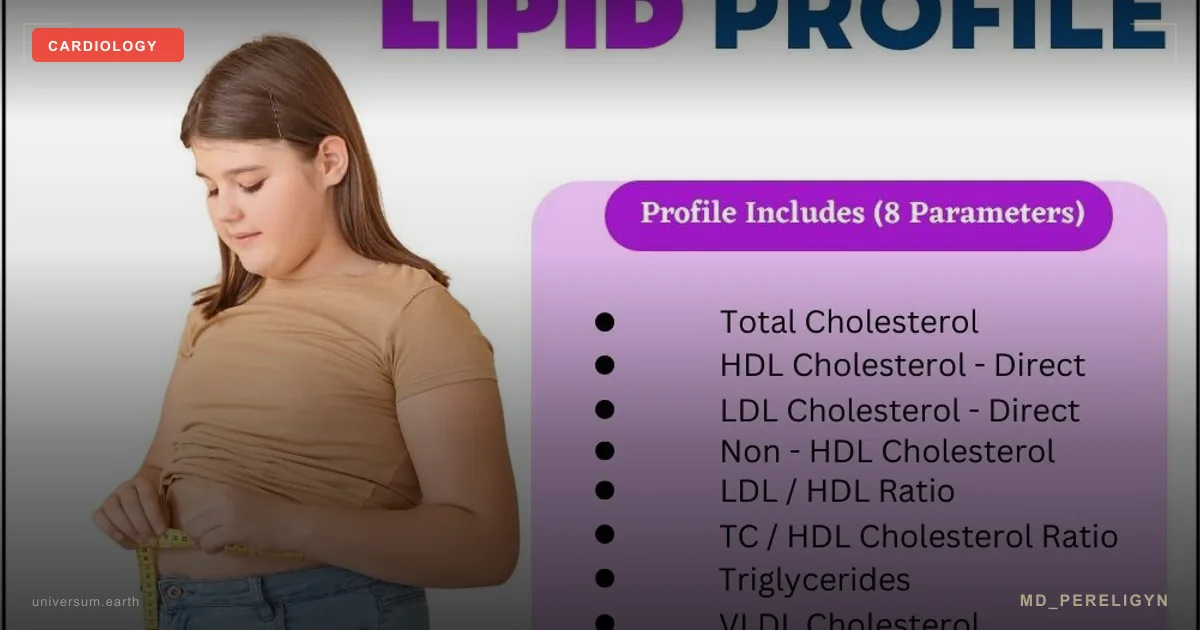
A standard lipid panel (total cholesterol, HDL, calculated LDL, triglycerides) is the minimum from the 1980s. Modern vascular screening includes:
| Marker | Target |
|---|---|
| ApoB | <90 mg/dL |
| ApoA1 | >120 mg/dL |
| sdLDL-C | <25 mg/dL |
| oxLDL | <60 U/L |
| Lp(a) | <30 mg/dL |
| hsCRP | <1 mg/L |
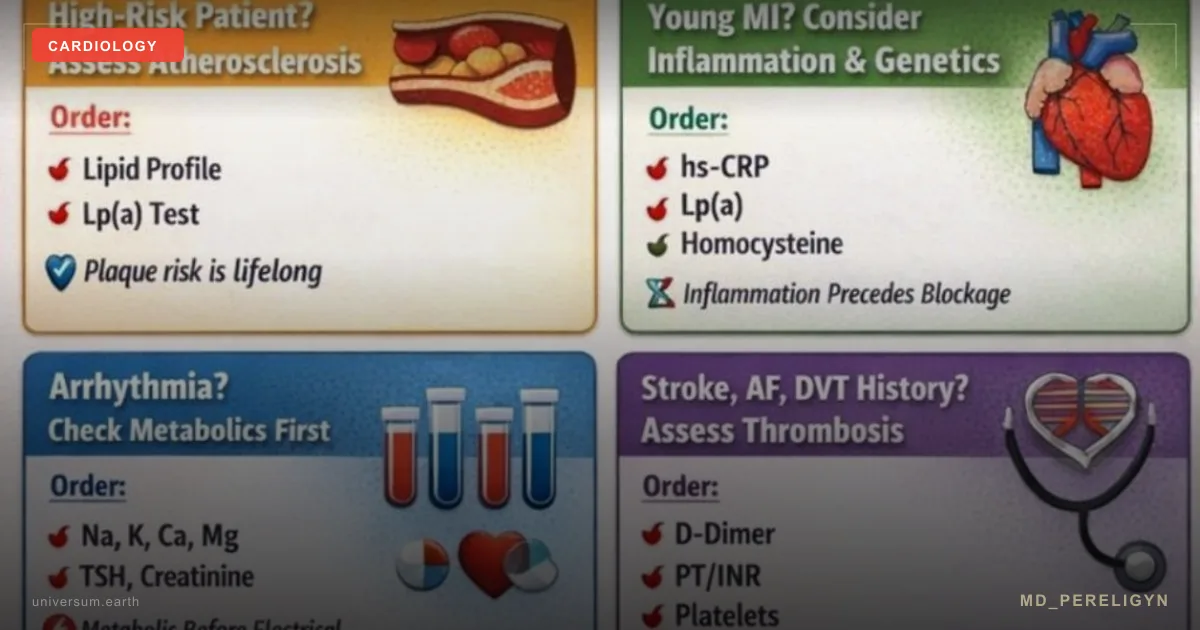
▸ApoB — target <90 mg/dL (low risk), <80 mg/dL (moderate risk), <70 mg/dL (high risk). A direct count of atherogenic particles. ▸ApoA1 — target >120 mg/dL. The main HDL protein. ▸ApoB / ApoA1 ratio — target <0.7. Predicts risk better than the total cholesterol-to-HDL ratio. ▸Small dense LDL (sdLDL-C) — target <25 mg/dL. Available in major laboratories (Quest, LabCorp, Synevo). ▸Oxidized LDL (oxLDL) — target <60 U/L. A direct marker of atherogenic particle modification. ▸Lp(a) — target <30 mg/dL (or <75 nmol/L). Tested once in a lifetime — genetically determined and changes little over life. >50 mg/dL is an independent risk factor for myocardial infarction and aortic stenosis. ▸Triglycerides/HDL — target <2.0 (mg/dL) or <0.87 (mmol/L). An indirect indicator of insulin resistance and sdLDL predominance. ▸hsCRP — target <1 mg/L. A marker of systemic inflammation. ▸Homocysteine — target <8 μmol/L. A marker of methylation and endothelial toxicity. ▸HbA1c, fasting insulin, fasting glucose — assessment of the glycation context. ▸Omega-3 index — target >8%. A marker of membrane protection from oxidation.
In my practice, I order this panel at the first vascular risk consultation. Total cholesterol alone is a 1985 diagnosis.
🌀
A Holistic Protocol for Reducing Vascular Risk
Principle: treat the context, not the number. Restore endothelial function, reduce oxidative burden, and decrease sdLDL and oxLDL.
1. Nutrition Against Oxidation and Glycation
▸Mediterranean / DASH pattern — olive oil, fish, vegetables, nuts, legumes. Cardiovascular mortality reduction by 30% (Estruch R, NEJM 2018, PMID 29897866[2]). ▸Eliminate trans fats — partially hydrogenated oils, margarine, fast food. Every 2% of calories from trans fats increases CHD risk by 23% (Mensink RP, Am J Clin Nutr 2003, PMID 12716665[3]). ▸Limit omega-6 — sunflower, corn, and soybean oil. A shift in the omega-6/omega-3 ratio toward a pro-inflammatory profile. ▸Limit rapid carbohydrates and fructose — increase triglycerides, sdLDL formation, and ApoB glycation. ▸Polyphenols — berries, dark chocolate (>70%), green tea, red wine in moderate amounts.
2. Antioxidant Protection of the LDL Particle
▸Vitamin E (mixed tocopherols) 400 IU/day — integrates into the LDL membrane and protects it from oxidation. Isolated α-tocopherol does not work — a mixture of γ- and δ-fractions is needed. ▸Vitamin C 500–1000 mg/day — regenerates oxidized vitamin E. ▸Coenzyme Q10 (ubiquinol) 100–200 mg/day — especially during statin therapy (statins suppress CoQ10 synthesis). ▸N-acetylcysteine (NAC) 600–1200 mg/day — a glutathione precursor.
3. Omega-3 — Reducing Triglycerides and sdLDL
▸EPA+DHA 2–4 g/day — triglyceride reduction by 25–35%, with a shift in LDL distribution toward large buoyant particles. ▸In the REDUCE-IT trial, 4 g EPA (icosapent ethyl) reduced cardiovascular events by 25% in patients with triglycerides 135–499 mg/dL (Bhatt DL, NEJM 2019, PMID 30415628[4]). ▸Check the omega-3 index every 4–6 months; target >8%.
4. Milk Thistle and Bergamot — Native Ligands
▸Bergamot (citrus extract) 500–1000 mg/day — lowers LDL by 15–25% and raises HDL. The active components — brutieridin and melitidin — inhibit HMG-CoA reductase more gently than statins. ▸Milk thistle (silymarin) 200–400 mg/day — supports hepatic lipid metabolism.
5. Lowering Lp(a)
Lp(a) is genetically determined, and most classic interventions do not affect it.
▸Niacin (nicotinic acid) 1–2 g/day — lowers Lp(a) by 20–30%, but tolerability is poor (flushing, hepatotoxicity). I do not recommend it without medical supervision. ▸Icosapent ethyl (purified EPA) 4 g/day — modest reduction, with the main effect mediated through oxPL-apoB. ▸The future: pelacarsen (antisense oligonucleotide) — clinical trials show an 80% reduction in Lp(a). FDA approval is expected in the coming years. ▸Today, the main strategy for high Lp(a) is aggressive control of all other risk factors (ApoB, hsCRP, BP).
6. Movement and Insulin Sensitivity
▸Aerobic exercise 150+ min/week — raises HDL and lowers triglycerides. ▸Resistance training 2–3 times/week — improves insulin sensitivity and reduces the sdLDL fraction. ▸HIIT — in adapted patients, produces the strongest effect on the omega-3 index and triglycerides.
7. Sleep and Stress
▸Sleep 7–8 hours — less than 6 hours increases hsCRP and triglycerides. ▸Cortisol control — chronic stress increases BP, insulin resistance, and the pro-inflammatory background.
8. Statins — When They Are Justified
I am not against statins as a class. They are justified in:
▸Familial hypercholesterolemia (LDL >190 mg/dL, genetically confirmed) ▸LDL >190 mg/dL regardless of other factors ▸CAC-score >100 Agatston units ▸Prior myocardial infarction or stroke (secondary prevention) ▸Type 2 diabetes combined with other risk factors
They are not justified for primary prevention in patients with low real risk (low ApoB, low sdLDL, low hsCRP, CAC = 0), even if total cholesterol is 6.5 mmol/L.
🌀
What Does NOT Work (and Why)
▸Isolated lowering of total cholesterol without assessing subfractions — the patient may still have high ApoB, sdLDL, and Lp(a) despite “normal” total cholesterol. ▸Low-fat diet — increases triglycerides, lowers HDL, and increases the sdLDL fraction. ▸Replacing saturated fats with omega-6 (sunflower oil) — does not reduce cardiovascular mortality (Ramsden CE, BMJ 2016, PMID 27071971[5]). ▸Isolated high-dose α-tocopherol — may increase mortality (Miller ER, Ann Intern Med 2005, PMID 15537682[6]). A mixture of tocopherols is needed. ▸Aspirin “just in case” — in patients without clear risk, bleeding harms exceed benefit (USPSTF 2022). ▸Phytosterols in large doses — lower LDL, but increase cholesterol absorption into the endothelium, which creates an ambiguous net effect on plaque. ▸Trusting total cholesterol alone as a target — this is an outdated model.
🌀
When to Seek Care
▸Family history of CHD, myocardial infarction, or stroke before age 60 ▸Total cholesterol >6.2 mmol/L when ApoB, sdLDL, and Lp(a) are unknown ▸Lp(a) > 50 mg/dL ▸Repeated hsCRP > 2 mg/L ▸Metabolic syndrome, prediabetes, type 2 diabetes ▸Triglycerides > 150 mg/dL ▸Waist circumference > 94 cm (men) / > 80 cm (women) ▸A statin prescription without an extended lipid panel and CAC-score
I perform full vascular screening (ApoB, sdLDL, oxLDL, Lp(a), hsCRP, omega-3 index, homocysteine, HbA1c, insulin) and create a personalized protocol to reduce real risk, not the total cholesterol number.
🌀
Conclusion
Cholesterol is not the enemy, but the structural material of every cell membrane. LDL becomes atherogenic not by itself, but in the context of oxidation, inflammation, glycation, and a shift toward small dense subfractions.
Total cholesterol in 2026 is an outdated marker. Real vascular risk is reflected by ApoB, sdLDL, oxLDL, Lp(a), hsCRP and the omega-3 index. Treat the context, not the number. Restoring the endothelium, reducing oxidative burden, Mediterranean-type nutrition, and controlling insulin sensitivity stop atherosclerosis more reliably than chasing the “normal” total cholesterol range.
🌀
Sources
▸Goldstein JL, Brown MS. The LDL receptor. Arterioscler Thromb Vasc Biol 2009;29:431–438. PMID 19299327[7] ▸Mensink RP, Zock PL, Kester AD, Katan MB. Effects of dietary fatty acids and carbohydrates on the ratio of serum total to HDL cholesterol. Am J Clin Nutr 2003;77:1146–1155. PMID 12716665[3] ▸Ridker PM, Danielson E, Fonseca FA, et al. Rosuvastatin to prevent vascular events in men and women with elevated CRP. NEJM 2008;359:2195–2207. PMID 18997196[8] ▸Sniderman AD, Thanassoulis G, Glavinovic T, et al. Apolipoprotein B particles and cardiovascular disease. JAMA Cardiol 2019;4:1287–1295. PMID 31642874[1] ▸Bhatt DL, Steg PG, Miller M, et al. Cardiovascular risk reduction with icosapent ethyl. NEJM 2019;380:11–22. PMID 30415628[4] ▸Estruch R, Ros E, Salas-Salvadó J, et al. Primary prevention of cardiovascular disease with a Mediterranean diet. NEJM 2018;378:e34. PMID 29897866[2]
Related articles: Endothelium: The Foundation of Vascular Health, Cholesterol Without Statins.
🌀
FAQ
My total cholesterol is 6.5 mmol/L — is this dangerous? Total cholesterol of 6.5 mmol/L by itself does not determine risk. You need ApoB, sdLDL, Lp(a), hsCRP, and the omega-3 index. If ApoB <80 mg/dL, sdLDL <25, Lp(a) <30, hsCRP <1, omega-3 >8% — real risk is low. If ApoB >100, sdLDL >35, Lp(a) >75, hsCRP >3 — risk is high, and total cholesterol is only the tip of the iceberg here.
ApoB or LDL — which is more accurate? ApoB. Each atherogenic particle (LDL, VLDL, Lp(a)) carries exactly one ApoB-100 protein. ApoB concentration = the number of atherogenic particles. LDL cholesterol reflects cholesterol mass, but not the number of particles. At the same LDL cholesterol level, a patient with a larger number of small particles (high ApoB) has substantially higher risk.
Should I take a statin if total cholesterol is 6.5 and ApoB is normal? Not necessarily. The decision requires an extended lipid panel, CAC-score, and assessment of 10-year risk (ASCVD calculator accounting for hsCRP and Lp(a)). With low ApoB, CAC = 0, and low hsCRP, primary prevention with a statin is rarely justified. The decision is always individual and made with a physician, not based on a single number.
Lp(a) is high — what should I do? Lp(a) is genetically determined and difficult to lower in isolation. Strategy: aggressive control of the other modifiable factors (ApoB <70, hsCRP <1, BP <120/80, HbA1c <5.4%, omega-3 >8%, smoking cessation). Niacin lowers Lp(a) by 20–30%, but tolerability is poor. Pelacarsen (an antisense oligonucleotide) is awaiting FDA approval and may potentially lower Lp(a) by 80%.
Which tests are enough to take once in a lifetime? Lp(a) — once in a lifetime, because it is genetically determined. Genetic testing for familial hypercholesterolemia (LDLR, APOB, PCSK9) — once if there is a family history. The other markers (ApoB, sdLDL, hsCRP, omega-3) — every 6–12 months during the active phase of the protocol, then annually for monitoring.
This article is informational and does not replace medical consultation. Before starting any nutraceuticals, changing medication therapy, or undergoing diagnostic procedures, discuss the plan with your treating physician.
Key facts
- Total cholesterol = HDL + LDL + 0.2 × triglycerides — an arithmetic sum of particles with opposite risk.
- About 25% of all body cholesterol is in nervous tissue, where it forms myelin sheaths.
- ApoB <90 mg/dL predicts cardiovascular risk better than total cholesterol; ApoB = number of atherogenic particles.
- Small dense LDL (sdLDL) <25.5 nm penetrate the endothelium more easily than large buoyant LDL.
- Statins are justified at LDL >190 mg/dL, CAC-score >100, prior infarction, or type 2 diabetes with risk factors.